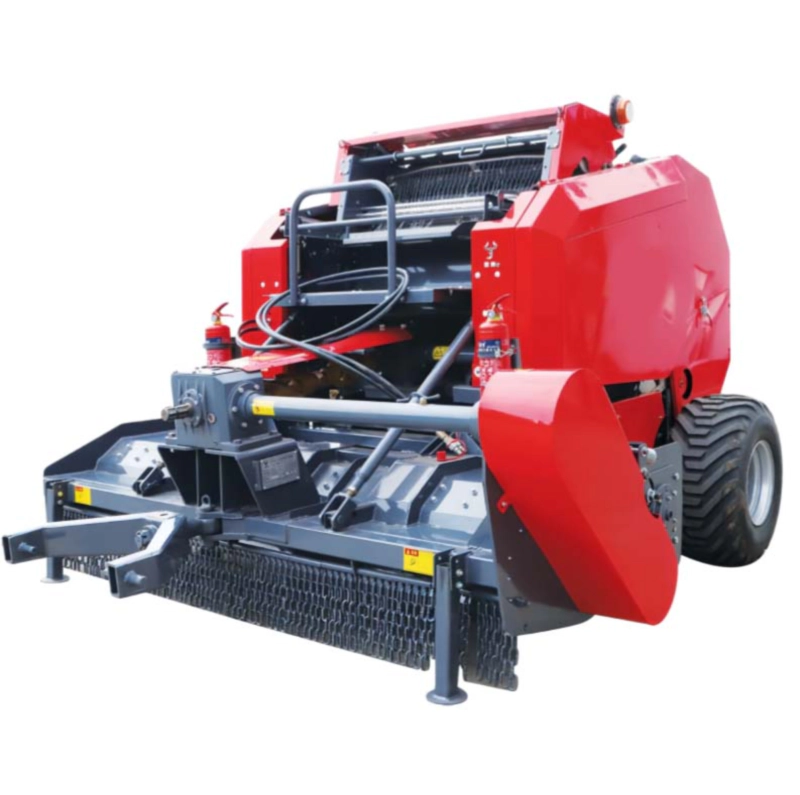
9YG-1.0C Round Baler
9YG-1.0C Round Baler — hammer-claw pickup collects standing corn stalks directly, no swathing. Dual-sided 16A chain, sensor density 115–200 kg/m³. ≥95HP. 40–80 bales/h.
9YG-1.0C Round Baler: The Professional Standing Corn Stalk Baler That Eliminates the Swathing Step
A hammer-claw pickup with interchangeable spring-tooth head, triple-stage auger feeder, dual-sided 16A heavy-duty chain compression system, and sensor-controlled density — designed to collect and bale standing corn stalks directly from the field, cutting total stalk collection cost by up to 30%.
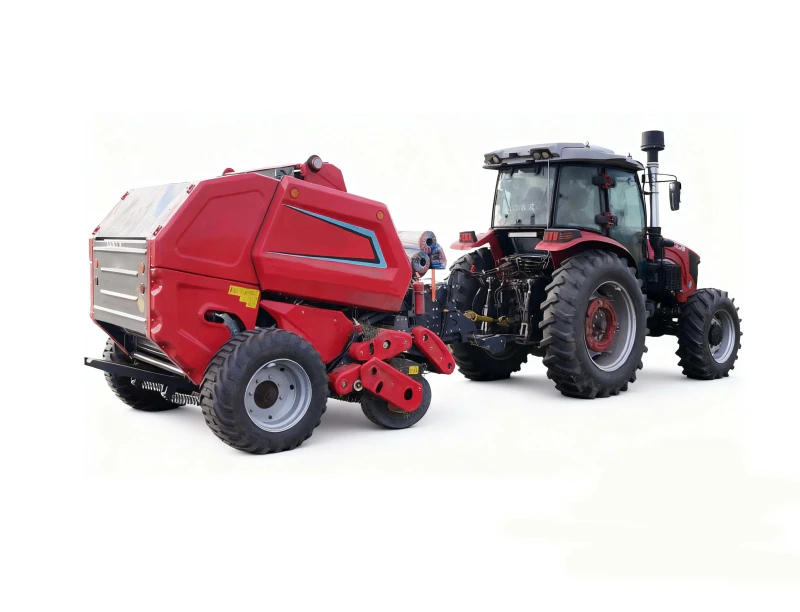
1. Introduction: Why Standing Corn Stalk Collection Demands a Specialist Machine
Corn stalk collection has historically required two machine passes per field: first a dedicated stalks cutter or chopper to sever and lay the material in windrows, then a separate baler pass to collect and compress it. This two-pass approach adds fuel cost, machine hours, and labor time that compound significantly across large corn-growing areas. More importantly, it creates a window between cutting and baling where cut stalks lose moisture, reducing biomass value and increasing the risk of field contamination from material scattered by wind before the baler arrives. For straw recycling operations, biomass energy producers, and large farms seeking to commercialize corn residue, the two-pass constraint represents a genuine operational bottleneck that a standard spring-tooth pickup round baler cannot resolve.
The 9YG-1.0C Round Baler addresses this constraint directly with a hammer-claw pickup system engineered specifically for standing corn stalks. By gripping, severing, and feeding upright stalks directly into the compression chamber in a single machine pass, the 9YG-1.0C eliminates the cutting and swathing step entirely — reducing the total cost of corn stalk collection by up to 30% and completing the field in approximately half the machine time required by the conventional two-pass approach. The machine’s interchangeable pickup design allows rapid switching between the hammer-claw head for corn stalk operations and a standard spring-tooth head for conventional windrowed hay and straw, making it a versatile tool capable of serving diverse seasonal applications from the same equipment investment. Browse our full round baler product range to compare the 9YG-1.0C alongside standard-pickup models by application and power requirement.
The dual-sided 16A heavy-duty chain compression system and sensor-controlled density management deliver bale density of 115–200 kg/m³ and individual bale weight of 100–200 kg — consistently exceeding the 75–150 kg output of conventional competitors — from a 3198 kg structural platform matched to tractors of 69.8 kW (95 HP) and above.
2. How the 9YG-1.0C Works: Direct-From-Field Stalk Collection Cycle
Stage 1 — Hammer-Claw Direct Stalk Pickup
As the tractor pulls the 9YG-1.0C forward at 5–20 km/h, the 2400mm-wide hammer-claw pickup engages standing corn stalks directly from the field — no prior cutting or windrow formation required. The pickup features 20 individual hammer claws arranged across the full working width. Each claw is engineered to grip, shear, and feed upright stalks with a powerful downward and rearward sweeping action that overcomes the rigidity and root resistance of standing mature corn. The hammer geometry prevents individual stalks from tangling across adjacent claws, maintaining clean, continuous intake across the full 2400mm span. The wide pickup width covers two standard corn rows simultaneously on most row spacing configurations, giving the 9YG-1.0C significantly higher field coverage per pass than narrower alternative machines in this class. When operating in conventional windrowed crop applications — hay, wheat straw, rice straw — the hammer-claw head can be exchanged for a standard spring-tooth pickup head in approximately 30 minutes without special tools, converting the machine to a standard trailed baler configuration.
Stage 2 — Triple-Stage Feeding and Heavy-Duty Compression
Material from the hammer-claw pickup enters the triple-stage auger, tine roller, and drum feeding system. This three-stage architecture manages the transition of standing stalk material — which arrives at the feeder in a more upright, irregular orientation than windrowed material — into the compression chamber in a controlled, even flow. The transverse auger first gathers and converges the stalk volume toward the centre of the intake channel, compensating for the lateral spread inherent in direct standing-stalk collection. Tine rollers then provide active forced conveyance through the intake transition, gripping irregular stalk segments and maintaining positive material advancement even when individual stalks resist due to their fibrous, woody structure. The drum stage completes the entry into the 1250mm wide, φ1000mm diameter compression chamber, where 16 drums — each 222mm in diameter — driven by the dual-sided 16A heavy-duty chain system rotate continuously to build a tight cylindrical core from the inside outward.
The dual-sided 16A heavy-duty chain drive is the compression system’s defining structural feature. By running heavy-duty chains on both the left and right sides of the drum array simultaneously — rather than the single-sided or belt-drive configurations used by many competing machines — the 9YG-1.0C achieves higher and more evenly distributed compression force across the full 1250mm bale width. This bilateral drive architecture directly produces the higher density output (115–200 kg/m³) and heavier individual bale weight (100–200 kg) that distinguish the 9YG-1.0C’s output from lighter-built alternatives, and is the mechanism that makes consistently dense corn stalk bales achievable despite the material’s inherent resistance to compression.
Stage 3 — Sensor Density Control, Net Wrap, and Ejection
Throughout the compression cycle, the sensor-controlled density system monitors chamber pressure and adjusts the hydraulic circuit to maintain the operator-set target within the 115–200 kg/m³ range. When the bale reaches its preset size (Φ1000 × 1250mm), the automatic net wrap system applies 2000 × 1.25m net wrap around the completed bale in a controlled spiral that fully covers the face and outer edge. The hydraulic rear gate opens, the finished bale ejects onto the field, and the gate closes automatically — the machine is ready for the next cycle without any field stop by the operator.
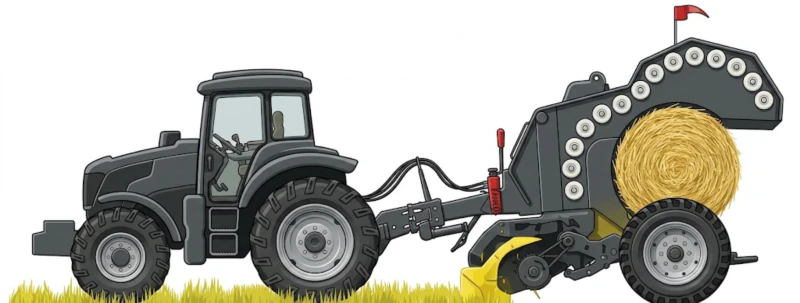
In a conventional two-pass operation, cutting and swathing typically accounts for 35–45% of total stalk collection fuel and labor cost. Eliminating this pass with the 9YG-1.0C does more than reduce machine hours: it removes the time window between cutting and baling during which cut stalks scatter, dry unevenly, or absorb field moisture — preserving biomass quality and reducing field residue loss. For biomass energy operators paying per tonne of dry matter delivered, this quality preservation advantage has direct commercial value in addition to the operating cost reduction. Compare all available straw baling options in our complete forage baler catalogue.
3. Complete Technical Specifications
The following table contains the complete engineering specification sheet for the 9YG-1.0C Round Baler, transcribed from factory test documentation under standard operating conditions at rated power input.
| No. | Parameter | Unit | Specification |
|---|---|---|---|
| 1 | Model Name | / | 9YG-1.0C Round Baler |
| 2 | Hitch Type | / | Trailed |
| 3 | Pickup Width | mm | 2400 |
| 4 | Pickup Type | / | Hammer Claw Type (Interchangeable with Spring Tooth) |
| 5 | Feeder Type | / | Auger + Tine Roller + Drum Type |
| 6 | Baling Chamber Type | / | Drum Type |
| 7 | Baling Chamber Width | mm | 1250 |
| 8 | Baling Chamber Diameter | mm | φ1000 |
| 9 | Number of Rolling Components | pcs | 16 (Drums) |
| 10 | Rolling Drum Diameter | mm | φ222 |
| 11 | Tying Method | / | Automatic Net Wrap |
| 12 | Required Power | kW / HP | ≥69.8 / 95 |
| 13 | Structural Weight | kg | 3198 |
| 14 | PTO Speed | r/min | 540 |
| 15 | Overall Dimensions (L×W×H) — Working State | mm | 3800 × 2850 × 2200 |
| 16 | Bale Density Control | / | Sensor Control |
| 17 | Bale Size (Diameter × Width) | mm | Φ1000 × 1250 |
| 18 | Bale Density | kg/m³ | 115–200 |
| 19 | Productivity | bales/h | 40–80 |
| 20 | Wheel Track | mm | 2100 |
| 21 | Working Speed | km/h | 5–20 |
| 22 | Net Specification (Length × Width) | m | 2000 × 1.25 m / bale |
| 23 | Number of Hammer Claws | pcs | 20 |
4. Three Core Technology Highlights
Highlight 1: Interchangeable Hammer-Claw and Spring-Tooth Pickup System
The 20-claw hammer-claw pickup is the central innovation that defines the 9YG-1.0C as a specialist standing corn stalk baler. The hammer-claw geometry is engineered specifically for the mechanical challenge that conventional spring-tooth pickups cannot handle: gripping, shearing, and feeding upright stalks at 5–20 km/h without tangling or clogging. Each claw profile delivers a powerful downward sweeping action that overcomes the tensile strength of corn stalk root anchorage, engaging the full 2400mm working width simultaneously. The 40% efficiency increase over conventional spring-tooth pickups in direct stalk collection applications means the same tractor and operator can complete a given corn field area in approximately 60% of the time required by a standard baler working the same material in two passes.
The interchangeable design addresses the seasonal versatility requirement that corn stalk operations create: during wheat and rice harvest seasons, or when baling windrowed hay and alfalfa, the hammer-claw head can be removed and replaced with a standard spring-tooth pickup in approximately 30 minutes without special tools, converting the 9YG-1.0C to a standard windrowed-material baling configuration. This interchangeability means one machine investment serves multiple seasonal applications — corn stalk collection in autumn, hay and straw baling in spring and summer — eliminating the need for separate machines for each crop type.
Highlight 2: Dual-Sided 16A Heavy-Duty Chain Compression System
The compression architecture of the 9YG-1.0C is specifically designed to handle the density resistance of corn stalks — fibrous, woody material that requires significantly higher compression force than hay or wheat straw to achieve commercial-grade bale density. The front and rear compression chambers both utilize bilateral 16A heavy-duty chains running on both the left and right sides of the drum array simultaneously. This dual-sided drive configuration increases total compression torque compared to single-sided alternatives, and distributes compression force more evenly across the full 1250mm bale width — preventing the uneven density distribution that single-sided drive systems produce when compressing rigid, non-uniform material like corn stalk segments.
The practical output of this compression architecture is bale density of 115–200 kg/m³ and individual bale weight of 100–200 kg — comparing directly against the 80–150 kg/m³ density and 75–150 kg bale weight typical of market competitors using lighter-duty drive systems. For biomass energy operations where payment is per tonne of dry matter delivered, this density advantage means fewer vehicle trips per tonne and lower transport cost per unit of energy content. For straw recycling processors requiring consistent bale weight and geometry for automated handling systems, the 9YG-1.0C’s uniform output reduces sorting and rehandling at the processing facility.
Highlight 3: Sensor-Controlled Density for Standardized Commercial Output
The integrated sensor-controlled density system monitors compression chamber pressure in real time across the full baling cycle, maintaining the operator-set target within the 115–200 kg/m³ range regardless of variation in stalk diameter, moisture content, or feed rate. This automation is particularly important in corn stalk baling, where windrow density varies more than in conventional hay — rows with higher stalk yield produce denser windrows that would push density above target on mechanically controlled machines, while sparse rows would produce undersized light bales. The sensor system compensates for this variation automatically, producing consistent bale weight and geometry from the first bale to the last regardless of field yield variation.
5. Three Core Product Advantages
Advantage 1: Revolutionary Single-Pass Process That Cuts Collection Cost by Up to 30%
The fundamental commercial advantage of the 9YG-1.0C is not a marginal efficiency improvement over existing corn stalk balers — it is the elimination of an entire process step. By collecting and baling standing stalks directly without a prior cutting and swathing pass, the total cost structure of corn stalk collection changes fundamentally. Fuel and machine time for the cutting pass are removed entirely. Labor scheduling is simplified because one operator can complete pickup and baling in a single pass rather than coordinating separate cutting and baling crews or machine shifts. The compressed time from harvest to bale-on-ground also reduces the window in which stalk material can deteriorate, scatter, or absorb post-harvest rainfall — preserving dry matter quality and reducing field residue that must be managed before the next crop.
Advantage 2: Higher-Density, Heavier Bales That Improve Transport and Storage Economics
The dual-sided 16A chain compression system produces bales at 115–200 kg/m³ and 100–200 kg per bale — heavier and denser than the 75–150 kg output of most market competitors. The transport economics of this density advantage scale proportionally with collection volume: at 80% of a typical competitor’s bale weight, a transport vehicle carries 25% fewer bales per load, adding 25% to the number of transport trips required per hectare collected. For straw recycling contractors and biomass operations where transport cost is the primary operating expense after machine depreciation, the weight advantage of the 9YG-1.0C’s output compounds into significant annual savings at commercial production volumes. The higher density also improves stack stability — heavier, denser bales maintain their geometry under stack compression better than lighter alternatives, reducing deformation loss during storage.
Advantage 3: Heavy-Duty Structure with Wide Tractor Power Compatibility
The 9YG-1.0C is matched to tractors of ≥69.8 kW (95 HP) — a power level sufficient to drive the dual-sided compression system at full rated compression force while also managing the higher mechanical resistance of standing stalk collection. The heavy-duty structural design with 3198 kg operating weight reflects appropriate sizing for the peak torque demands of corn stalk compression: lightweight structures that experience cyclic loading from high-resistance material develop fatigue at frame nodes over commercial operating seasons, producing the alignment drift and bearing failures that increase maintenance cost. The 9YG-1.0C’s structural reserve ensures sustained reliability across the high-cycle corn stalk collection periods that represent its primary commercial application.
6. How the 9YG-1.0C Compares to Market Alternatives
| Comparison Dimension | 9YG-1.0C Round Baler | Typical Market Competitors |
|---|---|---|
| Pickup System |
✓ Hammer Claw / Spring Tooth Interchangeable
Directly collects standing corn stalks and standard windrowed crops from the same machine. |
✗ Fixed Spring Tooth Only
Requires prior cutting and swathing before pickup. Not capable of standing stalk collection. |
| Operation Process |
✓ Single Pass — Collect and Bale Simultaneously
Eliminates cutting pass. Up to 30% total collection cost reduction. |
✗ Two-Pass Operation Required
Separate cutting and baling passes double machine time, fuel, and labor cost. |
| Compression System |
✓ Dual-Sided 16A Heavy-Duty Chain Drive
Higher and more evenly distributed compression force. Handles rigid corn stalk segments reliably. |
✗ Single-Sided Chain or Belt Drive
Lower compression force and uneven lateral distribution on rigid materials. |
| Bale Density |
✓ 115–200 kg/m³ (Sensor Controlled)
Consistent across field yield variation. Uniform output for commercial buyers and processors. |
✗ Typically 80–150 kg/m³
Lower and less consistent. Manual adjustment required for different windrow densities. |
| Individual Bale Weight |
✓ 100–200 kg per bale
Higher weight per bale improves transport economics: more dry matter per vehicle load. |
✗ Typically 75–150 kg per bale
Lower weight requires more vehicle trips per tonne. Higher transport cost per unit of product. |
7. Field Application Scenarios
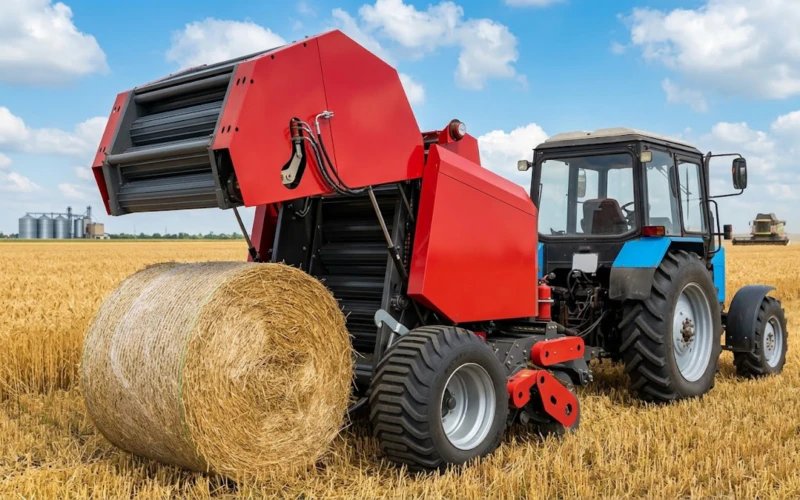
Biomass Energy and Industrial Straw Processing
Biomass energy plants and industrial straw processors require consistent high-density bales that maximize dry matter content per transport trip. The 9YG-1.0C’s 115–200 kg/m³ output at 100–200 kg per bale directly optimises feed stock delivery economics compared to lighter-density alternatives. The single-pass operation eliminates the moisture variability that the two-pass process introduces between cutting and baling, preserving the consistent moisture content that biomass processors require for predictable calorific value. For straw recycling operations managing large corn-growing areas on seasonal contracts, the 40% efficiency improvement of the hammer-claw pickup over standard spring-tooth corn stalk collection compresses the harvest window, reducing weather risk and enabling completion of contracts within the narrow post-harvest period before field preparation for the next crop.
Corn Stalk Feed and Silage for Livestock Operations
Corn stover — the stalks, leaves, and husks remaining after grain harvest — represents a significant roughage resource for livestock operations in corn-growing regions. Collecting and baling this material promptly after grain harvest, before rain and field traffic further degrades it, preserves its feeding value for cattle and other ruminants. The 9YG-1.0C’s one-pass collection dramatically accelerates the time from grain harvest to baled stover, reducing the post-harvest degradation window. For high-moisture corn stalk silage applications, the sensor-controlled density system maintains compression appropriate for anaerobic fermentation quality when bales are promptly film-wrapped after ejection.
Multi-Season Flexible Operation with Interchangeable Pickup
With the spring-tooth pickup head installed, the 9YG-1.0C operates as a standard round baler for windrowed hay, wheat straw, rice straw, and alfalfa — extending its productive season beyond the autumn corn stalk window. The 30-minute no-tool head exchange means the machine can switch between applications without extended downtime, and the sensor density control, automatic net wrap, and dual-sided chain compression deliver the same quality output in windrowed applications as in corn stalk collection. For farms or contractors that process both corn residue and other forage crops across the calendar year, this dual-application capability delivers substantially better return on equipment investment than a dedicated single-purpose corn stalk collector.
8. Manufacturing Quality, Certification, and After-Sales Commitment
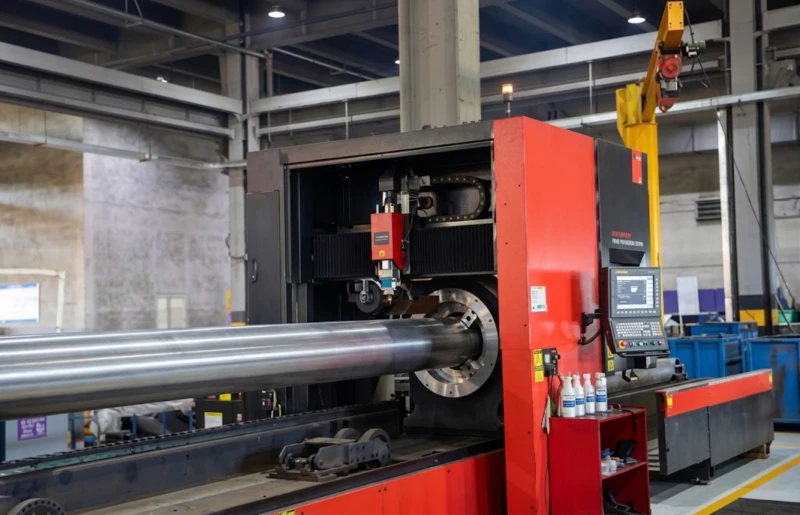
The 9YG-1.0C is manufactured under ISO 9001 quality management system certification, covering the complete production process from raw material procurement through precision machining, assembly, and final commissioning. This certification provides traceable quality control at every stage, not just end-of-line inspection.
9. Related Product: Heavy-Duty PTO Drive Shaft for Corn Stalk Operation
The 9YG-1.0C operates at 540 r/min PTO input speed and requires ≥69.8 kW (95 HP) of tractor power for rated performance. Corn stalk collection generates significantly higher peak torque spikes than standard hay baling — the hammer-claw mechanism encountering dense stalk clusters and the compression system handling rigid, fibrous segments both generate sudden load events that demand a driveshaft rated for the full torque range at 540 r/min. A correctly specified, dynamically balanced pto shaft is a prerequisite for protecting both the baler gearbox and the tractor PTO mechanism from the impact damage that undersized or worn driveshafts transfer during these peak torque events.
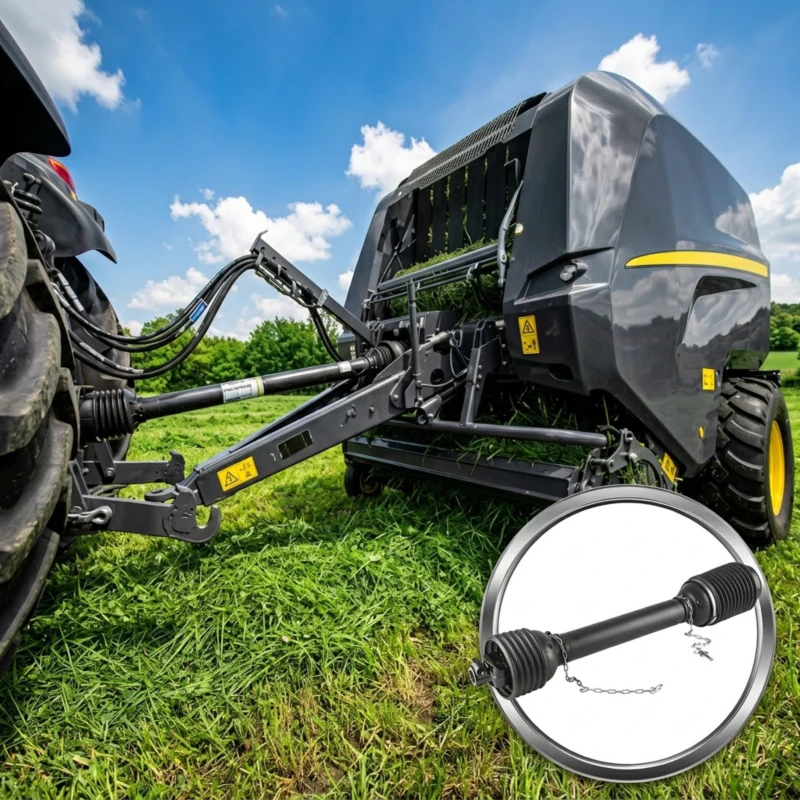
Shaft Specification Requirements for This Application
Material rating: Spline sleeves and cross shafts from 42CrMo alloy steel provide over 50% higher torsional strength than standard 45# steel — appropriate for the peak torque demands of corn stalk collection and compression at 540 r/min with ≥69.8 kW power input.
Dynamic balance at 540 r/min: A shaft dynamically balanced to ≥2500 r/min test speed ensures smooth operation across the full 540 r/min working range, eliminating the vibration that accelerates bearing wear at both the tractor PTO and baler input shaft.
Overload protection: The friction clutch or shear-pin protection must be rated and calibrated for the torque range of corn stalk operation at this power level. Confirm the device specification before operating in high-density corn stalk conditions.
Spline compatibility: The 9YG-1.0C accepts both 6-spline and 21-spline standard interfaces. Confirm which spline type your tractor’s PTO output uses before selecting a driveshaft. Power compatibility range: 69.8–110 kW (95–150 HP).
10. Frequently Asked Questions (FAQ)
The hammer-claw design grips, shears, and feeds upright standing stalks directly — something a spring-tooth pickup cannot do, as spring tines are designed for lifting windrowed material rather than severing anchored standing stems. In direct corn stalk collection, the hammer-claw pickup increases efficiency by approximately 40% compared to the two-pass process required when using a spring-tooth machine. The claw geometry prevents tangling across adjacent pickup positions, maintaining clean continuous intake across the full 2400mm working width even in high-yield dense stalk conditions.
Experienced operators complete the hammer-claw to spring-tooth changeover in approximately 30 minutes using the quick-connect interface. No special tools are required. The changeover process is documented in the user manual with step-by-step illustrated instructions. For operators performing the changeover for the first time, allow 45–60 minutes and refer to the manual throughout the process.
Reduce operating speed to 5–10 km/h for high-moisture stalk material. Lower the density setting by one level compared to dry stalk operation to prevent over-compression that squeezes sap from the material and causes surface adhesion. Clean the compression chamber and feeder channel promptly after each session processing high-moisture material to prevent mold and corrosion accumulation. For silage quality, film-wrap bales within four hours of ejection to initiate anaerobic fermentation before oxygen penetration causes spoilage.
Check chain tension every 50 operating hours and lubricate every 200 hours under standard operating conditions. In harsh corn stalk dust environments, reduce the lubrication interval to every 100 hours. Inspect chain links for fatigue cracks and deformed side plates at each lubrication service. Replace chains showing elongation beyond the specified tolerance limit — a stretched chain skips sprocket teeth under load, causing sudden compression force loss and uneven bale density.
Yes — 95 HP is the rigorously tested minimum configuration that provides adequate power reserve across standard corn stalk collection conditions. For particularly high-yield stalk fields, fields with higher than average stalk moisture, or operation at the upper end of the working speed range, a tractor of 100–110 HP (75–82 kW) provides additional reserve that improves sustained output and reduces tractor thermal load during extended high-cycle periods.
First, inspect and clean the density sensors — accumulated stalk chaff on sensor faces produces false low-pressure readings that cause the hydraulic system to under-compress. After cleaning, recalibrate the density setting through the control panel. If density variation persists after cleaning and recalibration, it may indicate a hydraulic circuit issue, sensor calibration drift beyond self-correction range, or uneven chain tension between the left and right compression drive sides. In these cases, contact after-sales service for professional adjustment.
Normal operation is confirmed on slopes up to 15°. On slopes approaching 15°, reduce working speed to the lower half of the operating range to maintain stable traction and prevent lateral load shifts in the compression chamber. On steeper slopes, material distribution across the chamber width becomes uneven, producing asymmetric bale formation. Do not operate on slopes exceeding 15° under any circumstances.
Follow this diagnostic sequence: (1) Confirm the net roll is not exhausted — check remaining length indicator. (2) Inspect the net path for obstructions — stalk fragment accumulation at guide rollers is the most common cause of net system failure. Clear any obstruction and verify rollers spin freely before resetting. (3) Restart the net system controller. If these steps do not resolve the failure, or if the fault recurs after clearing, contact after-sales service — repeated net system faults may indicate a sensor, solenoid valve, or mechanical drive issue requiring professional diagnosis.
Four steps protect the machine through the off-season: (1) Thoroughly clear all stalk material from inside and outside the machine, including the hammer-claw pickup, feeder channel, compression chamber, and net dispenser area. (2) Lubricate all grease points; apply anti-rust oil to the pickup claws, drive chains, and all exposed metal surfaces. (3) Store on a dry, level surface — slope storage allows hydraulic fluid to shift in cylinders, causing air infiltration that degrades system response at next startup. (4) Cover with a tarpaulin to prevent UV degradation of seals and plastic components. Before first operation next season, check chain tension, hydraulic fluid level, and sensor cleanliness before powering on. For further guidance, contact our technical support team.
Ready to Cut Corn Stalk Collection Cost by Up to 30% with One Machine Pass?
The 9YG-1.0C eliminates the cutting and swathing step, delivers 115–200 kg/m³ density from the dual-sided 16A chain system, and switches to standard windrowed-crop operation in 30 minutes. Purpose-built for standing corn stalk collection — versatile enough for every crop in your calendar.