How to Choose a Forage Baler: 7 Factors Every Buyer Must Evaluate Before Purchase
Selecting the appropriate forage baler represents one of the most consequential equipment decisions farmers will make, with implications affecting productivity, quality, and profitability for a decade or longer. The diversity of available baler types, specifications, and features can overwhelm even experienced operators evaluating equipment options. This comprehensive guide systematically examines seven critical evaluation factors that enable farmers to make informed baler selection decisions aligned with their specific operational requirements, financial constraints, and long-term production objectives.
Factor One: Harvesting Scale and Annual Acreage
The single most important determinant of appropriate baler selection is the total annual acreage requiring harvest. Harvesting scale directly influences equipment size, sophistication, and investment justification. Farms harvesting 20 to 50 acres annually require fundamentally different equipment compared to operations processing 300 or more acres. Understanding your precise harvesting requirements provides the foundation for all subsequent selection decisions.
Small farm and hobby farm operations harvesting 20 to 50 acres annually typically find mini round balers or hiring custom harvesting services more economically appropriate than large equipment investments. These operations often maintain small livestock herds and produce forage primarily for on-farm consumption rather than commercial marketing. Equipment investment justification requires accurate accounting of total harvesting volume—not merely estimated acreage.
Mid-size operations harvesting 100 to 200 acres represent the largest market segment for full-size balers. These farms typically maintain 30 to 75 head of cattle, operate dairy operations, or engage in modest hay marketing. Standard single-chamber square or round balers provide economically appropriate equipment choices with payback periods of 5 to 8 years.
Large-scale commercial operations harvesting 300 or more acres justify investment in advanced equipment including dual-chamber systems, specialized shredding equipment, or large-diameter round balers. These operations often achieve payback periods of 3 to 5 years through productivity advantages and quality premiums, making premium equipment investment economically sound.
Factor Two: Tractor Horsepower and Equipment Compatibility
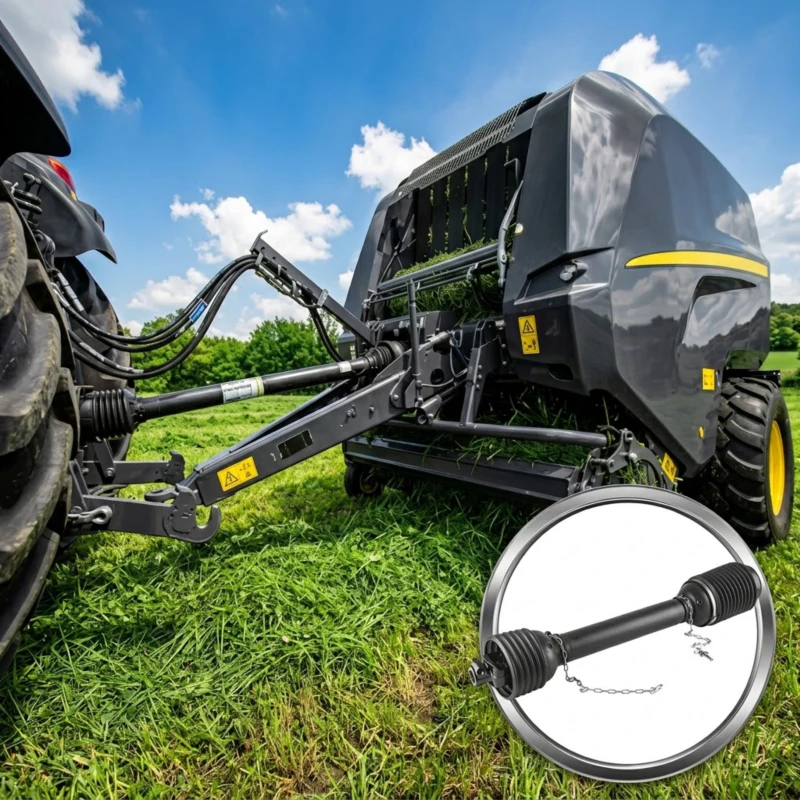
Critical Reality: Your existing tractor horsepower fundamentally constrains available baler options. Attempting to operate equipment exceeding your tractor’s capacity results in poor performance, equipment damage, and frustration. Equipment selection must align with your actual tractor capabilities, not aspirational upgrades.
Mini round balers require 25 to 50 horsepower and represent the appropriate choice for farmers with smaller tractors. Standard round balers demand 50 to 100 horsepower, with most operating optimally at 70 to 90 horsepower. Large square balers typically require 70 to 110 horsepower. Dual-chamber systems demand 100 to 150 horsepower. Understanding your tractor’s actual sustained horsepower—not merely peak ratings—proves essential for realistic equipment matching.
Peak horsepower ratings represent maximum power available only at maximum engine RPM under ideal conditions. Sustained horsepower—the power available during typical field operations with varying speed demands and hydraulic loads—often proves 15 to 25 percent less than peak ratings. Conservative equipment selection using sustained horsepower ratings ensures reliable operation throughout variable field conditions.
Additionally, evaluate your tractor’s hydraulic system capacity. Modern balers require 15 to 35 gallons per minute hydraulic flow depending on baler sophistication. Tractors with undersized hydraulic systems deliver sluggish equipment response and inconsistent bale formation. Verify both PTO horsepower and hydraulic flow capacity before committing to specific baler models. Many dealers provide diagnostic tools enabling horsepower and hydraulic capacity testing before equipment purchase decisions.
Factor Three: Primary Forage Crop Type and Material Characteristics
Different forage crops present distinct harvesting challenges requiring different equipment approaches. Round balers excel with hay crops and high-moisture silage materials. The gentle roller compression system handles delicate forages without excessive leaf loss, and sealed chambers manage sticky silage materials effectively. Round balers produce 20 to 35 pound-per-cubic-foot density bales suitable for most forage applications.
Square balers perform exceptionally well with cereal straws, including wheat straw, barley straw, and oat straw. The aggressive plunger mechanism creates the density necessary for economical straw baling and produces uniform rectangular packages preferred for commercial straw marketing. Large square balers achieve 35 to 45 pound-per-cubic-foot density, enabling efficient bale transport and storage.
Operations harvesting corn stalks, sorghum stover, or other tough fibrous materials benefit significantly from shredder-equipped square balers. The shredding mechanism fragments rigid materials into short segments enabling superior compression and density. Shredder equipment investment proves economically justified when processing multiple tons of difficult materials annually.
Silage production—high-moisture forage requiring rapid baling and anaerobic storage—typically favors net-wrap-equipped systems over twine binding. The faster ejection cycle of net wrap systems and superior sealing characteristics of plastic mesh make net wrap the standard for silage operations. Round balers equipped with net wrap systems represent the conventional choice for large-scale silage producers.
Factor Four: Storage and Handling Infrastructure
Infrastructure Reality: Bale size must align with your existing storage facilities and handling equipment. Large-diameter round bales exceeding 1,200 pounds require front-end loaders or specialized bale handlers. Square bales demand structured storage arrangements. Equipment selection must accommodate your current infrastructure or include budgets for facility modifications.
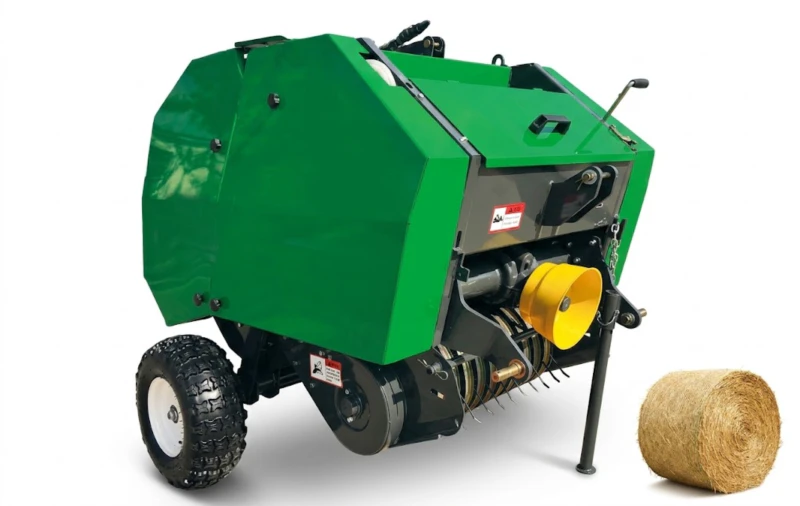
Mini round balers produce 300 to 500-pound bales manageable by individual operators without mechanical assistance. These bales fit standard pickup trucks and store in modest barn space. Small operations with limited infrastructure should consider mini balers specifically for their compatibility with basic facilities and equipment.
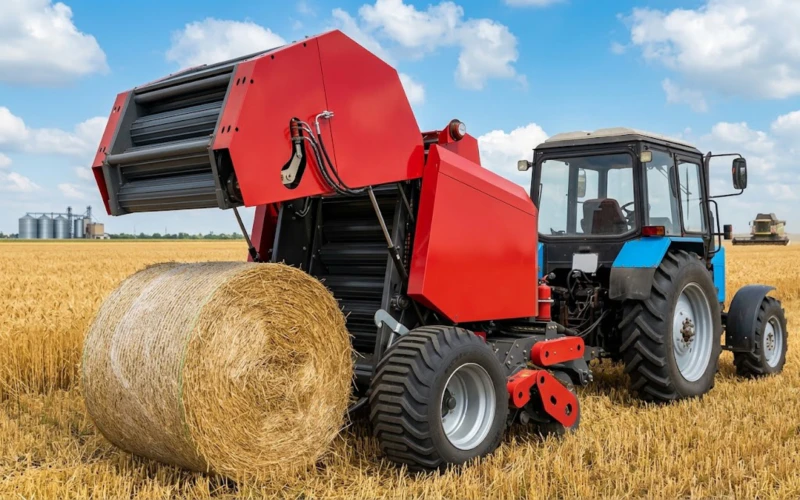
Standard round balers (48-inch diameter) produce 700 to 1,000-pound bales requiring front-end loaders or bale spears for efficient movement. Large round balers (54 to 60-inch diameter) produce 1,100 to 1,400-pound bales necessitating substantial handling equipment. Farms lacking appropriate handling machinery should either plan equipment purchase or select smaller balers compatible with existing capabilities.
Square balers, regardless of size, produce rectangular bales that stack efficiently in storage facilities. Operations with existing storage barns often find square balers appropriate due to superior space utilization. Conversely, farms with round bale storage infrastructure specifically designed for cylindrical bales should continue with round baler selection.
Additionally, consider transportation requirements. Mini bales transport via pickup trucks; standard bales require farm trailers; large square bales may necessitate specialized flatbed trailers. Matching bale size to available transportation infrastructure prevents costly logistics complications.
Factor Five: Market Orientation and Product Quality Requirements
Equipment selection should reflect whether forage is primarily for on-farm consumption or commercial marketing. On-farm operations prioritize cost minimization and functional reliability. Consistency and quality matter less when feed is matched to specific livestock requirements and consumption timing. Basic equipment performing adequately with minimal maintenance often proves most economical for on-farm applications.
Commercial forage marketing demands consistent bale quality, uniformity, and density. Hay buyers and feed mills prefer uniform bales enabling predictable nutritional content and precise weighing. Square baler equipment—producing highly uniform rectangular bales—commands market price premiums of 10 to 15 percent compared to variable round bales. Commercial producers justify premium equipment investment through higher market prices for consistent, quality forage products.
Organic certification requirements often favor smaller-scale, simpler equipment with minimal maintenance. Organic operations commonly prioritize sustainable practices over maximum productivity, making mini balers or modest single-chamber systems appropriate choices. Conversely, intensive commercial operations utilizing every productivity advantage typically invest in sophisticated dual-chamber systems or specialized equipment.
Factor Six: Maintenance Requirements and Technical Support Availability
Equipment complexity directly influences maintenance demands and technical support requirements. Mini and standard balers feature relatively simple mechanical designs enabling farmers with basic mechanical skills to perform routine maintenance independently. Mini balers typically require 2 to 4 hours annual maintenance; standard balers demand 4 to 8 hours. Farmers comfortable performing their own maintenance benefit from simpler equipment designs.
Advanced equipment incorporating electronic controls, dual-chamber systems, or specialized shredding mechanisms demands more sophisticated maintenance. Annual service typically requires 20 to 30 hours of professional technician time. Farmers lacking mechanical expertise or located far from service facilities should consider simpler equipment reducing professional maintenance dependence.
Equipment brand selection should prioritize dealer proximity and parts availability. Even superior equipment becomes problematic if local dealers cannot provide timely service or parts availability proves limited. Investigate dealer networks, parts inventory commitments, and technical support quality before committing to specific equipment brands. Established manufacturers with extensive dealer networks typically provide better long-term value than obscure brands lacking local support infrastructure.
Factor Seven: Financial Capacity and Return on Investment Timeframe
Equipment investment capacity fundamentally constrains selection options. Mini round balers cost $8,000 to $18,000—accessible for most farm operations. Standard round balers cost $35,000 to $75,000; large square balers command $45,000 to $110,000; advanced dual-chamber systems reach $120,000 to $180,000. Accurate equipment budgeting prevents overextension and ensures sustainable business operations.
Calculate realistic equipment payback periods—the time required for productivity gains and cost savings to justify equipment investment. Small operations might require 8 to 10 years for baler payback, justifying more modest equipment investment. Large commercial operations achieving payback within 2 to 3 years can justify premium equipment investments supporting operational advantages.
Consider used equipment opportunities. Five to eight-year-old balers typically cost 40 to 50 percent less than new equipment while retaining 50 to 70 percent of original functionality. Used equipment represents exceptional value for farmers with financial constraints or uncertain long-term equipment needs. Thoroughly evaluate used equipment condition before purchase, particularly bearing wear and mechanical component functionality.
Financing options including equipment rental, leasing arrangements, or cost-sharing with neighboring farmers can reduce individual capital requirements. Some operations find that hiring custom harvesting services eliminates equipment ownership requirements entirely, particularly for small acreage operations where equipment utilization remains low.
Frequently Asked Questions
The Equipment Selection Decision Framework
Successful forage baler selection requires systematic evaluation across all seven factors, with priority weighting reflecting your specific situation. For small operations, factors like harvesting scale, tractor compatibility, and infrastructure alignment dominate selection decisions. Large commercial operations weight productivity, market requirements, and financial return on investment more heavily. No single “best” baler exists—only optimal choices aligned with individual circumstances.
Consult experienced operators using equipment you are considering. Their practical insights regarding reliability, maintenance requirements, field performance, and long-term satisfaction often prove more valuable than manufacturer specifications or dealer sales presentations. Farm visit observations—seeing equipment in actual operating conditions—provide reality checks complementing technical specifications.
For comprehensive comparative information about specific baler models, detailed specifications enabling side-by-side evaluation, and expert recommendations tailored to your specific requirements, explore our extensive complete baler equipment comparison resources featuring detailed model specifications, performance metrics, and detailed product comparison tables across all major manufacturers and equipment categories.
Need Expert Guidance Selecting the Right Forage Baler?
Our equipment specialists possess extensive experience matching specific balers to diverse farm operations and production objectives. Whether you are a small-scale hobby farmer making your first equipment investment, a mid-size operation evaluating equipment upgrades, or a commercial harvester seeking maximum productivity solutions, we provide personalized consultation guiding you toward optimal equipment selection.
Contact Our Equipment Selection Advisors
Browse our detailed product comparison tools and selection guides to explore specific equipment options and narrow your selections before consulting with our specialists.
Conclusion: Making Your Optimal Equipment Selection
Forage baler selection represents a consequential business decision requiring careful evaluation of harvesting requirements, equipment capabilities, financial constraints, and long-term operational objectives. The seven evaluation factors examined in this guide provide systematic framework enabling farmers to make informed selections aligned with their specific circumstances rather than following generic industry recommendations.
Your optimal baler choice may differ substantially from neighboring operations—and that is entirely appropriate. A mini round baler may represent perfect equipment for a small hobby farm, while a large commercial operation justified purchasing sophisticated dual-chamber systems. Successful selection reflects honest assessment of your specific situation, not aspirational equipment choices exceeding practical requirements or financial capacity.
Take time during your selection process to thoroughly evaluate all seven critical factors, consult experienced equipment operators, and compare equipment options against your specific requirements. This thoughtful approach will identify equipment providing optimal value, maximum satisfaction, and sustained productivity throughout years of reliable harvesting operations. Your equipment investment, selected with appropriate diligence and aligned with realistic operational needs, will support successful forage production and profitability for many harvesting seasons to come.