
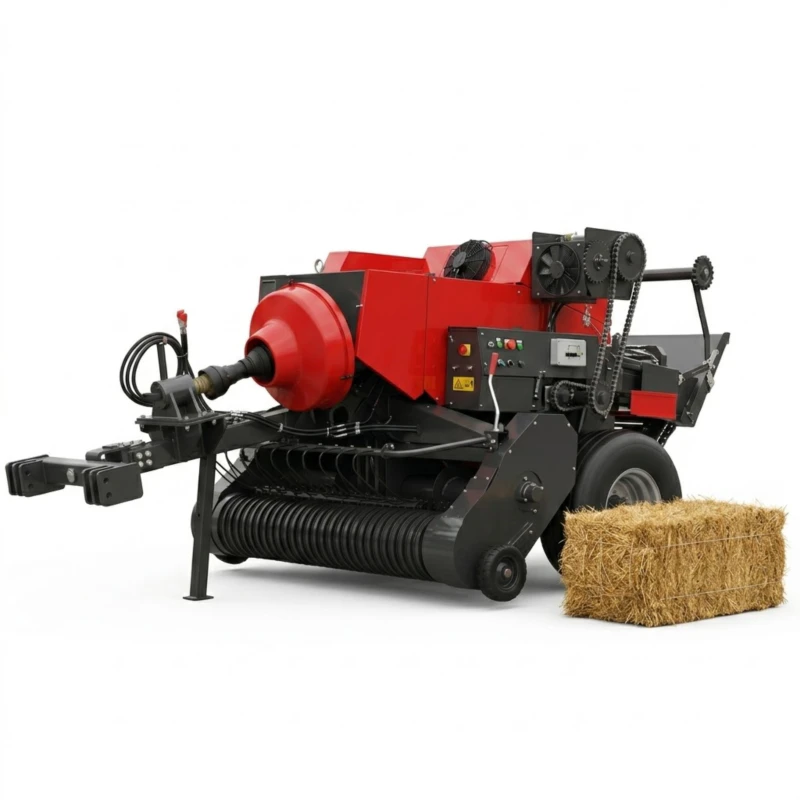
9YF-1900 Square Straw Baler
Discover the 9YF-1900 Square Straw Baler. Engineered for agility with a 1900mm pickup, 460x360mm high-density compaction, and reliable D-type knotters.
The Definitive Technical Guide to the 9YF-1900 Square Straw Baler: Unlocking Agility and Efficiency in Biomass Harvesting
Engineered for optimal maneuverability, the 9YF-1900 delivers uncompromising compaction, seamless multi-crop versatility, and heavy-duty reliability for the modern mid-to-large scale farm.
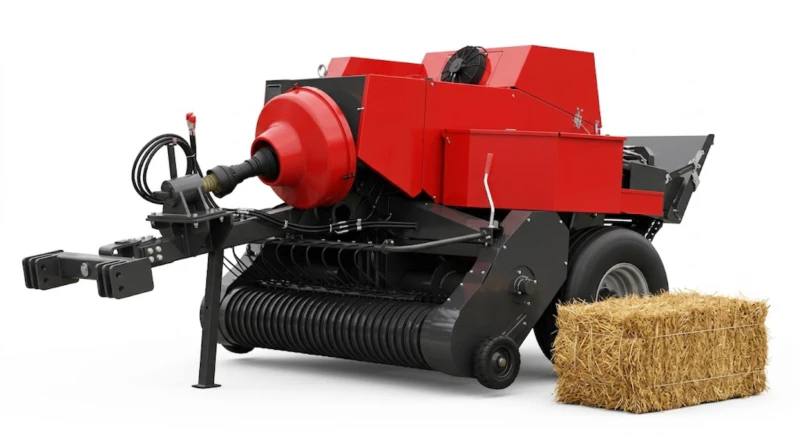
1. The Perfect Balance of Power and Agility
In agricultural machinery, bigger is not always universally better. While massive industrial balers serve their purpose on endless, flat plains, the vast majority of global farming operations require equipment that offers a delicate balance between high throughput and field maneuverability. Enter the 9YF-1900 Square Straw Baler. This machine represents the optimal “sweet spot” in forage and biomass harvesting. By maintaining the heavy-duty compaction core of larger models while slightly reducing the footprint and picking width, the 9YF-1900 provides an incredibly agile, highly efficient solution for diverse agricultural landscapes.
The demand for mechanized crop residue management has never been higher. As environmental regulations strictly prohibit the burning of field stubble, farmers are tasked with rapidly clearing wheat straw, rice straw, alfalfa, and corn stover to prepare for subsequent planting seasons. The 9YF-1900 answers this call effortlessly. It transforms scattered agricultural waste into dense, uniform, and easily transportable rectangular bales. These bales hold immense economic value, serving as premium livestock feed, dairy farm bedding, mushroom cultivation substrate, and increasingly, as vital feedstock for the booming biomass renewable energy sector.
What truly distinguishes the 9YF-1900 is its meticulously calculated geometry and power efficiency. With a compact overall length of 4965mm and an optimized weight of 1850kg, it significantly reduces soil compaction and allows for tight turning radiuses at field headlands. Furthermore, its highly accommodating power requirement (36.8 to 73.5 kW) means it pairs flawlessly with standard utility tractors. This comprehensive guide will dissect the mechanical brilliance, operational best practices, and profound economic impact of integrating the 9YF-1900 into your harvesting fleet.
2. Mechanical Mastery: The Workflow of the 9YF-1900
The internal operation of the 9YF-1900 is a showcase of mechanical synchronization. Every component, driven directly by the tractor, works in absolute harmony. The process is continuous, transitioning loose, voluminous crop material into rock-solid bales at an astonishing speed without sacrificing reliability.
The 1900mm Spring Tooth Pick-Up Reel
The gathering phase is initiated by the 1900 mm wide Spring Tooth Pick-up. This width is intentionally designed to perfectly consume standard and medium-wide windrows left by modern combine harvesters. While wider models might struggle with terrain contouring on hilly or uneven fields, the 1900mm span offers superior ground following capability. The flexible, high-tensile spring teeth gently comb the field surface, lifting the biomass effectively while leaving dirt, stones, and foreign debris behind. This ensures a clean feed, which directly translates to higher quality forage and reduced wear on the internal cutting knives.
Aggressive Fork Feeding Mechanism
To match the continuous high-volume intake of the pickup reel, the material is rapidly transitioned into the pre-compression area via a heavy-duty Fork Feeding Mechanism. Unlike passive feeding systems, the synchronized forks actively reach into the crop flow, grabbing large “flakes” of material and stuffing them directly into the path of the main plunger. This active feeding is crucial when dealing with tough, wiry crops like corn stover or damp, heavy grass that would otherwise bridge or clog in the feed throat. It ensures that the baling chamber is filled evenly from top to bottom, resulting in perfectly shaped, uniform bales.
Industrial-Grade Compression Chamber
The true workhorse of the baler is the compression chamber. The 9YF-1900 utilizes the universally accepted 460 × 360 mm cross-sectional dimension. A massive, weighted plunger—driven by an energy-storing flywheel—strokes repeatedly, crushing the incoming material against the previously compacted bale. The mechanical tension doors at the rear of the chamber can be adjusted to dictate the exact density of the bale. This specific 460×360 size is highly sought after because the resulting bales are incredibly dense and structurally sound, yet their physical dimensions make them easy to handle manually, stack stably on transport trailers, and fit perfectly into automated bale accumulators.
3. Exacting Technical Specifications
Transparency in engineering is our commitment. The data below outlines the precise technical parameters of the 9YF-1900, demonstrating its capability to handle intense commercial harvesting workloads.
| Serial Number | Item | Unit | Specification |
|---|---|---|---|
| 1 | Model Name | / | Model 9YF-1900 Square Baler |
| 2 | Hitching Method | / | Towed-type |
| 3 | Picking Width | mm | 1900 |
| 4 | Feeding Inlet Width | mm | / |
| 5 | Picker Structure | / | Spring Tooth Type |
| 6 | Feeder Structure | / | Fork Feeding Mechanism |
| 7 | Knotter Type | / | D Type |
| 8 | Number of Knotters | pc | 2 |
| 9 | Compression Chamber Section Size (W×H) | mm | 460 × 360 |
| 10 | Baling Method | / | Automatic Rope Baling |
| 11 | Matching Power Range | kW | 36.8 ~ 73.5 |
| 12 | Overall Dimension (L×W×H) | mm | 4965 × 2640 × 1750 |
| 13 | Machine Weight | kg | 1850 |
The 9YF-1900 features an incredible power-to-weight ratio. At 1850 kg and with a concise length of 4965 mm, it is remarkably lighter and shorter than ultra-wide alternatives. This weight reduction drastically cuts down on tractor fuel consumption and field rutting. Furthermore, the designated power band of 36.8 ~ 73.5 kW (roughly 50 to 100 HP) makes it the ultimate attachment for the ubiquitous utility tractors already present on almost every farm across the globe.
4. Harnessing Tractor Power: The Driveline Ecosystem
The 9YF-1900 operates as a purely mechanical towed implement, meaning its impressive baling capabilities are entirely derived from the tractor’s Power Take-Off (PTO). The baler transforms this rotational energy into the massive linear thrust required to compress tough stalks into dense squares.
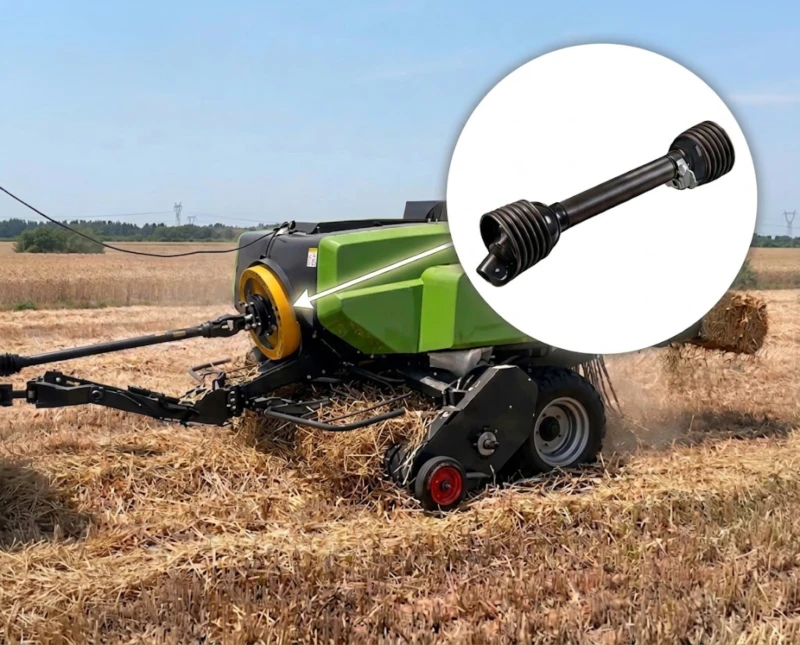
The journey of power begins at the tractor connection. Because the action of the heavy plunger causes severe, pulsating torque spikes, the 9YF-1900’s primary driveline is equipped with a heavy cast-iron flywheel and a precision shear-bolt safety clutch. The flywheel acts as an energy reservoir, smoothing out the rhythmic thumping of the plunger and preventing sudden shock loads from stalling the tractor engine. The shear bolt is a critical safety fuse; should the baler ingest a large stone, a wet lump of soil, or an impenetrable wad of crop, the bolt shears instantly, severing power and saving the internal gearbox from destruction.
Ensuring a flawless connection between the tractor and the baler is paramount. A failing universal joint or a bent driveline can vibrate a machine apart. Upgrading to or maintaining a high-torque pto shaft ensures maximum power transfer efficiency, guarantees operational safety through properly shielded spinning components, and drastically minimizes downtime during the critical, time-sensitive harvest window.
5. The D-Type Knotter: Unfailing Precision
The greatest compaction in the world is useless if the bale bursts upon exiting the chute. The tying mechanism is the most technologically intricate module of the baler. The 9YF-1900 features two heavy-duty D-Type Automatic Knotters, widely considered the gold standard for small square baling reliability.
Operating through a complex sequence of cams and gears, the tying cycle is triggered the moment the bale reaches its targeted length. In a blink of an eye, the curved baling needles surge upwards, piercing through the compressed flake to deliver the twine to the knotter head overhead. The twine disc securely grasps the twine while the polished billhook performs a rapid 360-degree rotation, forming a tight loop. Finally, the knife arm slices the twine and strips the completed knot off the billhook—all while the bale remains under thousands of pounds of pressure.
This Automatic Rope Baling system is designed to handle both traditional sisal and modern high-tensile synthetic poly twines. The robust nature of the D-type knotter ensures that mis-ties are incredibly rare, allowing the operator to focus on driving and field navigation rather than constantly looking backward to check bale integrity.
6. Multi-Crop Versatility in Action
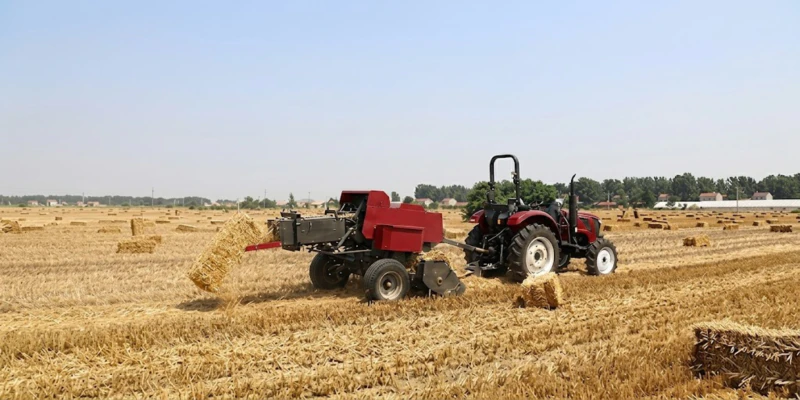
A true asset to a modern farm is one that can be deployed across multiple seasons and crop types. The 9YF-1900 is heavily engineered for multi-crop adaptability, easily transitioning from delicate forage to abrasive stalks with minimal mechanical adjustment.
Wheat, Barley, and Rice Straw
Cereal grain harvests leave behind a massive volume of slippery, hollow-stemmed straw. Because the 9YF-1900 has a lighter overall weight (1850kg), it is exceptionally suited for rice paddies and softer soils where heavier machinery would bog down. The aggressive fork feeder ensures that this slick, dry material is packed tightly, creating perfect bales for animal bedding or biomass fuel trading.
High-Value Alfalfa and Timothy Hay
For dairy nutrition, the protein-rich leaves of alfalfa are paramount. Over-handling this crop during baling shatters the leaves, leaving only the low-nutrient stems. The spring tooth pickup of the 9YF-1900 sweeps the windrow gently, feeding the crop in large, undisturbed flakes into the chamber. This preserves the nutritional integrity and the vibrant green color of the hay, maximizing its market value per ton.
Dense Corn Stover
Perhaps the most grueling test for a baler is corn stover (stalks, cobs, and leaves). It is highly abrasive and extremely difficult to cut and compress. The 9YF-1900’s heavy-duty shear knives on the plunger slice through this thick biomass with ease, creating dense, uniform bales that are highly prized by the cellulosic ethanol and bio-energy industries.
7. Forged for Durability: Inside the Factory
Agricultural machinery is subjected to some of the most punishing environments on earth—sweltering heat, choking dust, constant vibration, and abrasive crop materials. The 9YF-1900 is built to thrive under these conditions, starting on the manufacturing floor.
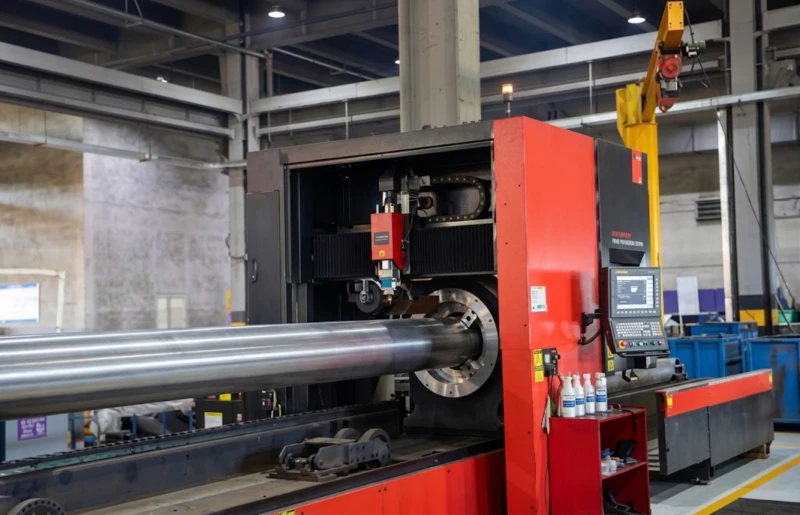
The structural integrity of the 9YF-1900 begins with its chassis, constructed entirely of high-tensile, heavy-gauge steel. The baling chamber, which absorbs the brunt of the thousands of pounds of pressure exerted by the plunger, is reinforced and precisely welded using advanced robotic CNC systems. This ensures that the internal tolerances remain absolute true, preventing premature wear on the plunger bearings and shear knives.
Quality control is rigorous. Every baler is subjected to a “run-in” phase where gearboxes are checked for thermal stability and perfect meshing. The complex D-type knotters are bench-tested for hundreds of simulated tying cycles to guarantee flawless performance out of the box. The result is a machine that requires less downtime, fewer replacement parts, and offers an extended operational lifespan.
8. Preventative Maintenance: Ensuring Peak Performance
Protecting your investment and ensuring the 9YF-1900 runs flawlessly season after season requires a disciplined approach to maintenance. Proactive care is vastly cheaper and less frustrating than mid-field emergency repairs.
9. In-Field Troubleshooting Guide
Even with perfect maintenance, dynamic field conditions (changing crop moisture, uneven windrows) require operator intuition. Here is how to diagnose and correct common baling discrepancies on the fly.
Issue 1: “Banana” Bales (Curved Shape)
If your 460×360 bales are emerging curved like a banana, one side of the chamber is receiving more crop than the other. Because the 1900mm pickup requires a decently sized windrow to fill it evenly, this issue usually stems from the tractor not being centered over the windrow, or the windrow being too sparse. Correct your driving line, or rake two small windrows together before baling.
Issue 2: Knotter Failure / Broken Twine
If a knot fails, stop immediately. Check the twine tension box; if it is pulling too tightly, the twine may snap under plunger pressure; if too loose, the billhook cannot catch it. Examine the billhook for rust or burrs—it must be polished completely smooth to allow the knot to slide off. Lastly, ensure you are using twine with the correct tensile strength rating for your crop type.
Issue 3: Frequent Shear Bolt Breakage
If the main PTO shear bolt keeps breaking, the machine is telling you it is being overloaded. You may be driving too fast for the thickness of the windrow, feeding the baler too much volume per plunger stroke. Alternatively, the baling chamber tension doors might be cranked far too tight for the moisture content of the crop. Slow down the tractor’s ground speed while maintaining PTO RPM, and back off the chamber tension slightly.
10. The Ultimate Economic and Environmental ROI
Purchasing the 9YF-1900 Square Straw Baler is a strategic investment that pays dividends through operational savings and new revenue generation.
The Economic Case: By matching perfectly with standard 36.8-73.5 kW tractors and utilizing a 1900mm width, the baler optimizes fuel consumption per bale produced. Unused straw that was historically a nuisance becomes a highly marketable, dense commodity. The standardized 460x360mm bale size ensures that transport trucks can be loaded to their absolute maximum cubic capacity, slashing logistics and freight costs per ton compared to hauling loose or poorly compacted round bales.
The Environmental Case: Mechanized baling directly combats the harmful practice of open-field stubble burning. By rapidly removing biomass, farmers prevent massive carbon dioxide and particulate matter releases into the atmosphere. The baled material can then be funneled into sustainable, circular economies—acting as carbon-neutral biofuel or returning organic matter to the soil via livestock compost. The 9YF-1900 is quite literally a tool for a greener, more sustainable agricultural future.
Maximize Your Harvest Efficiency Today
The 9YF-1900 Square Straw Baler provides the perfect blend of maneuverability, heavy-duty compaction, and multi-crop versatility. Equip your operation with machinery built for real-world farming.