Large Round Baler Buying Guide: Picking Width, Bale Diameter, and Power Matching Explained
For mid-size to large-scale forage producers, selecting the right heavy-duty round baler represents one of the most significant equipment investment decisions affecting long-term harvesting success. The comprehensive specifications of large round balers—including pickup width, bale diameter, compression chamber design, and power requirements—dramatically influence harvesting efficiency, bale quality, and operational economics. This detailed guide examines the critical selection parameters enabling farmers to identify the optimal heavy-duty round baler matching their specific operational requirements, equipment horsepower availability, and production objectives.
Understanding Heavy-Duty Round Baler Classifications
Heavy-duty round balers represent the upper tier of round baling equipment, engineered for large-scale commercial operations producing 500 or more tons of forage annually. These machines feature robust construction, powerful hydraulic systems, and advanced bale formation mechanisms enabling processing of diverse forage crops at high density and consistent quality. The designation “heavy-duty” reflects not merely increased weight—though these balers typically weigh 2,500 to 4,500 pounds—but rather the mechanical robustness enabling sustained high-volume production through extended harvesting seasons.
Heavy-duty round balers typically feature bale diameters ranging from 48 to 60 inches (approximately 1,220 to 1,520 millimeters), with corresponding bale weights of 700 to 1,400 pounds depending on crop moisture and density settings. The increased bale size compared to mid-size balers (producing 36 to 48 inch diameter bales at 400 to 800 pounds) dramatically increases per-hour forage throughput and reduces per-ton harvesting costs for large-scale operations.
The market for heavy-duty round balers includes professional harvesting contractors, large dairy operations requiring consistent silage supply, commercial hay producers marketing forage products, and agricultural cooperatives providing custom harvesting services. Each market segment requires different equipment characteristics, reflecting the diverse applications for large-capacity baling equipment.
Pickup Width Specifications and Field Coverage
Critical Parameter: Pickup width directly influences field productivity and harvesting cost-per-ton. Wider pickup mechanisms gather more windrow material per pass, enabling faster ground speed and reduced harvesting time when fields and windrow configurations permit efficient pickup operation.
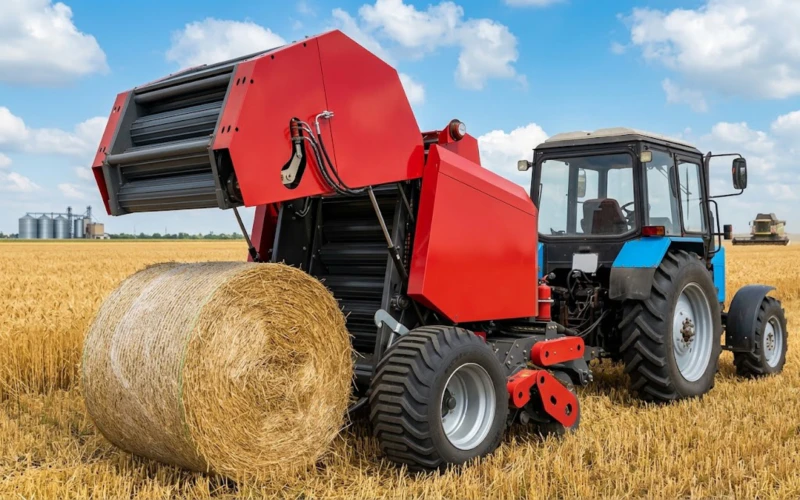
Heavy-duty round balers feature pickup widths ranging from 1.8 to 2.4 meters (approximately 72 to 94 inches), with 2.0 to 2.2 meter widths most common in mid-range heavy-duty models. The pickup width selection involves trade-offs between field coverage efficiency and field maneuverability. Wider pickups enable faster ground speed and higher hourly productivity but can struggle in fields with headland space constraints or irregular field shapes necessitating frequent turning.
The pickup mechanism design significantly influences performance with varying windrow densities and crop types. Modern heavy-duty balers employ spring-tooth tine bars with carefully engineered tine spacing and tension enabling efficient pickup of both light, fluffy hay crops and denser, heavier silage materials. Pickup float mechanisms—devices maintaining consistent ground contact while navigating terrain variations—prove especially important in irregular fields where soil elevation changes could otherwise result in inconsistent crop gathering.
Farmers should verify that available pickup width matches typical windrow width produced by their mowing equipment. A tractor with a 2.1 meter mower should pair with a baler featuring approximately 2.0 to 2.2 meter pickup width. Mismatches—excessive pickup width or inadequate width—result in either unnecessary overlap consuming fuel without productive benefit, or crop loss from incomplete windrow coverage.
Bale Diameter Selection and Production Economics
Heavy-duty round balers offer bale diameter options ranging from 48 inches (1,220 millimeters) to 60 inches (1,520 millimeters), with most models providing variable chamber systems enabling operators to adjust bale diameter within these ranges. Bale diameter selection profoundly influences production economics—larger diameter bales produce substantially higher weight per bale, directly increasing hourly production tonnage.
A 48-inch diameter bale at average density weighs approximately 700 to 900 pounds. A 60-inch diameter bale of equivalent density weighs 1,100 to 1,400 pounds—representing 35 to 50 percent weight increases. For operations harvesting 200 acres producing 500 to 600 bales, this weight difference translates to 20 to 30 tons additional production from the same acreage, representing substantial revenue increase for operations marketing forage by weight.
However, larger diameter bales present handling challenges requiring appropriately sized equipment. Bales exceeding 1,200 pounds typically necessitate dedicated front-end loaders or specialized bale handlers for efficient movement. Farms with existing small equipment may find that 48 to 54-inch diameter bales align better with available handling capabilities, even though larger diameters offer production advantages. Equipment compatibility—not merely baler capability—should influence bale diameter decisions.
Bale Density Control and Hydraulic Systems
Modern heavy-duty round balers employ sophisticated hydraulic density adjustment systems, typically featuring 12 to 20 independently controlled pressure rollers within the bale chamber. Each roller can be adjusted individually via hydraulic control systems, enabling precise management of bale density throughout the baling process. This granular control capability distinguishes advanced heavy-duty systems from simpler fixed-chamber balers where density adjustment occurs through mechanical linkages rather than hydraulic precision.
The hydraulic control system’s complexity requires more powerful tractor hydraulic pumps compared to simpler balers. Heavy-duty balers typically demand hydraulic flow rates of 20 to 35 gallons per minute, requiring tractors equipped with correspondingly sized hydraulic systems. Operators should verify their tractor’s hydraulic pump capacity before selecting specific baler models, as undersized hydraulic systems result in sluggish density adjustment and inability to maintain consistent bale formation throughout the day.
Density control precision enables operators to optimize bales for specific end uses. Light density settings (20 to 25 pounds per cubic foot) benefit dry hay applications where bales require moisture penetration during storage curing. Standard density (25 to 35 pounds per cubic foot) suits most forage applications. High-density settings (35 to 45 pounds per cubic foot) benefit silage applications requiring anaerobic sealing and operations marketing forage by weight where density premiums justify increased production costs.
Power Requirements and Tractor Compatibility
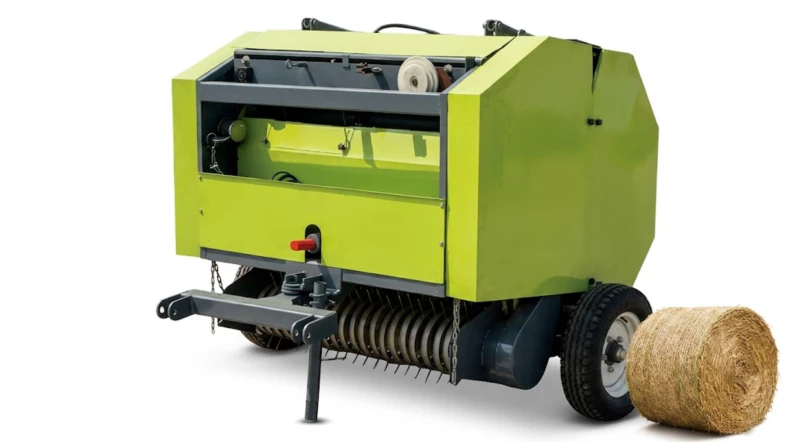
Power Reality: Heavy-duty round balers typically require 80 to 150 horsepower depending on bale diameter, pickup width, and specific mechanical features. Operators must verify that tractors provide adequate sustained horsepower, not merely peak ratings, to operate equipment reliably throughout extended harvesting days.
The distinction between peak horsepower and sustained horsepower proves critical for baler applications. Many tractors deliver peak horsepower only at maximum engine RPM under ideal conditions. Actual sustained horsepower available during field operations—particularly when ground speed fluctuates or hydraulic loads vary—may be substantially less than published specifications. Operators should consult with tractor dealers to determine actual sustained horsepower rather than relying on nameplate ratings.
Ground speed significantly influences horsepower requirements. Operating balers at maximum speed places extreme demands on tractor power resources. Conservative operators typically work at 5 to 7 kilometers per hour ground speed, which proves adequate for productive operations while reducing horsepower stress and fuel consumption. Attempting to maximize ground speed exhausts available horsepower and frequently results in PTO shaft overloading and equipment damage.
Tractor transmission type influences baler operation reliability. Hydrostatic transmissions, which provide infinite speed variation and smooth power delivery, prove particularly well-suited for baling operations. Mechanical transmissions require more operator attention to maintain consistent ground speed, complicating baling work. Operators with mechanical transmission tractors should consider implementing tractor upgrades enhancing transmission capability before committing to heavy-duty baler investment.
Wrapping Systems and Binding Options
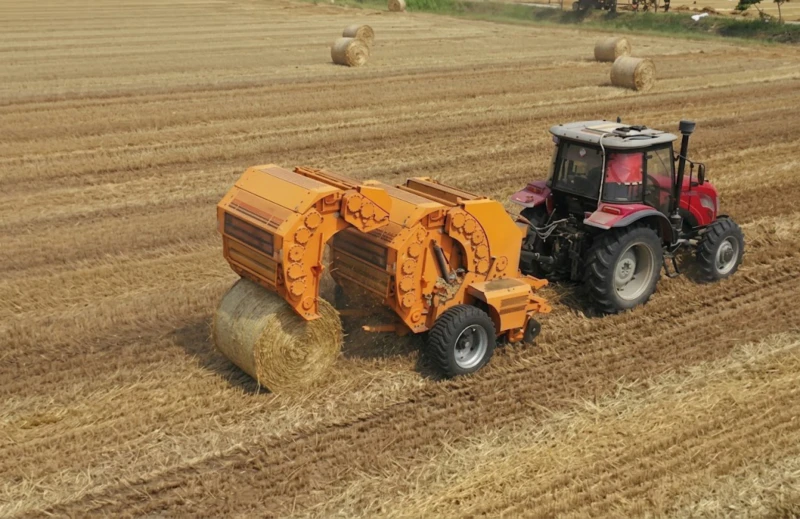
Heavy-duty round balers offer twine binding or net wrap systems as bale binding methods. Twine binding systems employ plastic or sisal twine applied via an automated knotter mechanism, costing approximately $0.08 to $0.15 per bale in consumable materials. Twine binding works well for dry hay applications and remains popular among producers emphasizing cost control.
Net wrap systems apply high-strength plastic mesh around completed bales, costing approximately $0.20 to $0.35 per bale in materials. Net wrap provides faster bale ejection and produces more uniform wrap application, particularly valuable for high-speed commercial operations. Silage balers almost universally employ net wrap due to its superior sealing properties enabling consistent anaerobic fermentation.
Many modern heavy-duty systems offer combination capabilities enabling operators to switch between twine and net wrap depending on specific bales, crops, or market requirements. This flexibility allows producers to optimize costs while maintaining product consistency across diverse market channels.
Frequently Asked Questions
Practical Selection Framework
Selecting the optimal heavy-duty round baler requires systematic evaluation across multiple parameters. Begin by determining your typical harvesting scale—the number of acres requiring baling annually and typical forage production tonnage. Operations harvesting 100 to 200 acres might adequately use mid-size balers, while 300 plus acre operations clearly justify heavy-duty equipment investments.
Evaluate your existing equipment resources, particularly tractor horsepower and hydraulic capacity. A tractor providing 100 sustained horsepower with standard hydraulic systems may struggle with the most advanced heavy-duty balers but operate excellently with conservative heavy-duty models. Matching equipment to your current resources often proves more economical than equipment upgrades justifying larger balers.
Consider your primary forage products and market requirements. Dry hay producers might prioritize twine binding and standard density capability. Silage operations demand net wrap systems and potentially higher horsepower for consistent high-density bale formation. Commercial hay producers might value consistency and bale uniformity features. Tailor your equipment selection to your specific production objectives.
Making Your Investment Decision
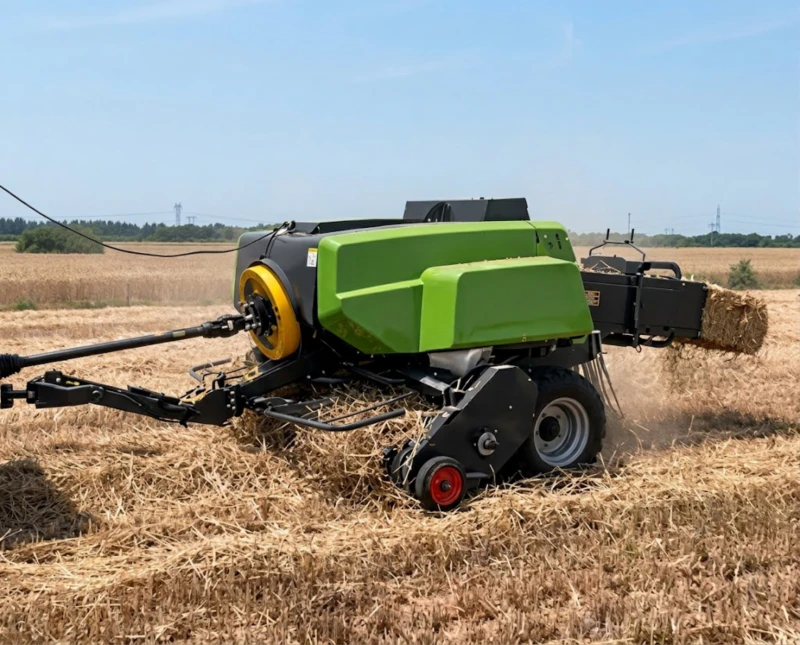
Heavy-duty round baler investment requires substantial capital outlay—typically $60,000 to $120,000 for new equipment. However, for operations harvesting 300 or more acres annually, the productivity gains and per-ton cost reductions often justify equipment investment within 3 to 5 seasons. Conduct careful financial analysis comparing equipment costs against anticipated revenue benefits before making purchase commitments.
For comprehensive information about heavy-duty round baler models, detailed specifications, and complete performance comparisons, explore our extensive commercial round baler equipment guide featuring detailed specifications, user testimonials, and performance data for heavy-duty systems across diverse harvesting applications.
Ready to Upgrade to Heavy-Duty Round Baling Equipment?
Our equipment specialists understand the critical requirements of large-scale forage operations. Whether you are evaluating heavy-duty balers for the first time or upgrading from mid-size systems, we provide expert consultation to identify the optimal equipment matching your harvesting scale, tractor capabilities, and production objectives.
Contact Our Equipment Selection Specialists
Explore our complete inventory of heavy-duty round baling equipment and discover the optimal system for your large-scale forage operation.
Conclusion: Optimizing Equipment Investment for Large-Scale Operations
Heavy-duty round balers represent powerful tools enabling large-scale forage producers to maximize harvesting efficiency and minimize per-ton production costs. The comprehensive specifications encompassing pickup width, bale diameter, hydraulic systems, and power requirements demand careful evaluation to ensure equipment aligns with your specific operational characteristics and production objectives.
Successful heavy-duty baler selection requires honest assessment of your harvesting scale, existing equipment resources, and market requirements. Operations harvesting 300 or more acres annually will find compelling economic justification for heavy-duty equipment investment. Smaller operations might discover that mid-size balers or custom harvesting services provide more cost-effective solutions.
Whether you operate a large commercial hay operation, manage a dairy requiring consistent silage production, provide custom harvesting services to neighboring farms, or lead an agricultural cooperative, heavy-duty round baler selection represents a decision with lasting implications for operational efficiency and profitability. Take time to evaluate all relevant parameters, consult experienced operators using the specific equipment you are considering, and ensure that your final selection aligns with both your current operational requirements and anticipated growth trajectories. Your investment in the right heavy-duty baling equipment today will support decades of productive harvesting operations, enabling sustained success in increasingly competitive agricultural markets.