Round Baler PTO Requirements: How to Match Baler Power Demand to Your Tractor
Matching tractor power delivery capabilities to round baler mechanical requirements represents one of the most critical yet frequently misunderstood equipment compatibility decisions in forage harvesting. Many farmers inadvertently select balers exceeding their tractor’s actual power capacity, resulting in compromised bale formation, inconsistent production, equipment damage, and frustrating field performance throughout harvesting seasons. This comprehensive technical guide examines how to accurately determine tractor horsepower availability and match this power precisely to specific round baler models, ensuring optimal equipment compatibility and sustained reliable operation.
Understanding Tractor Power Specifications
Tractor horsepower appears in two distinct categories that farmers must understand to make realistic equipment compatibility assessments. Flywheel horsepower represents the maximum power available at the engine crankshaft when the engine operates at maximum RPM under ideal laboratory conditions. This peak rating often appears prominently in tractor advertising and marketing materials but rarely reflects actual power available during field operations.
Power take-off (PTO) horsepower represents the practical power available at the tractor’s PTO shaft—the connection point where baling equipment receives mechanical power. PTO horsepower is typically 5 to 15 percent less than flywheel horsepower due to mechanical losses within the tractor’s transmission and driveline components. A tractor rated at 100 horsepower flywheel might deliver only 85 to 95 horsepower at the PTO shaft. This distinction proves critical for accurate equipment compatibility assessment.
Sustained horsepower during actual field operation often proves even lower than theoretical PTO ratings. Tractors deliver peak horsepower only at maximum engine RPM under ideal conditions. Actual field operation—with varying ground speed, hydraulic load fluctuations, and non-ideal field conditions—frequently results in 15 to 25 percent reduction from peak PTO horsepower ratings. Farmers selecting equipment must conservatively account for these real-world power reductions.
Engine type significantly influences power delivery characteristics. Modern turbo-charged diesel engines maintain consistent power delivery across varying RPM ranges, providing more reliable sustained power compared to naturally aspirated gasoline engines that experience significant power variations with RPM changes. Farmers with older tractors or naturally aspirated engines should plan for additional horsepower reserve when selecting baling equipment.
PTO Shaft Standards and Compatibility
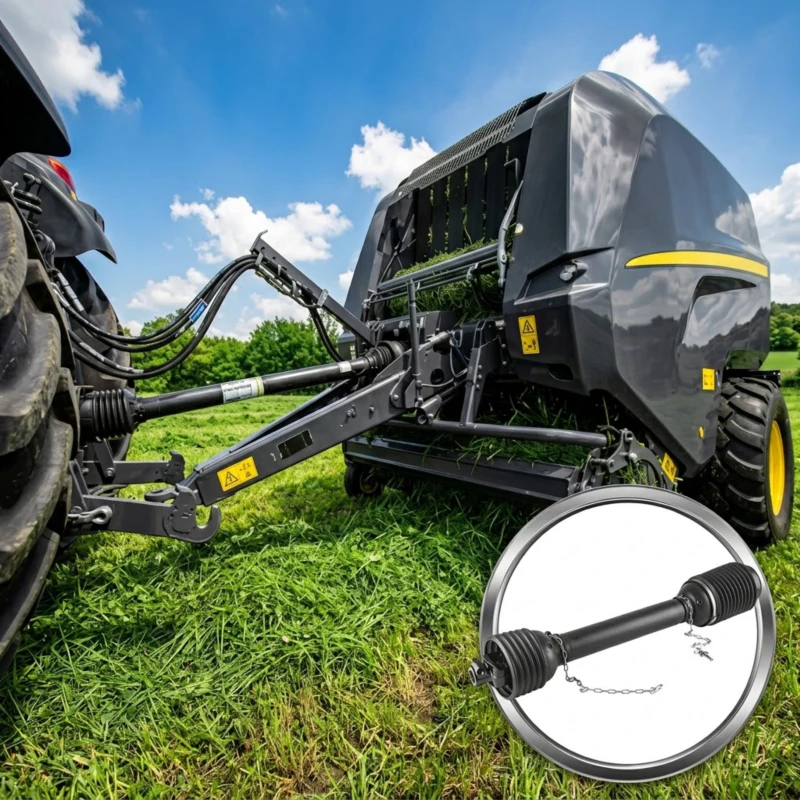
Universal Standard: The 540 RPM PTO shaft represents the universal standard for agricultural equipment, providing compatibility between virtually all tractor brands and forage harvesting equipment. Most round balers operate optimally at 540 RPM, though some large models feature 1,000 RPM capability for specific applications.
The 540 revolution-per-minute power take-off shaft has been standardized across the agricultural industry for decades, enabling farmers to operate equipment from diverse manufacturers on any tractor equipped with standard PTO capability. This standardization represents one of the most valuable features of modern agricultural equipment—ensuring that equipment investments remain compatible across multiple tractor generations and brands.
Most round balers operate at 540 RPM, which has become the industry standard for forage harvesting equipment. The 540 RPM speed was originally selected to balance equipment throughput, material compression rates, and overall productivity. Some larger commercial balers feature dual-speed capability, enabling operation at both 540 RPM and 1,000 RPM for specific applications or field conditions. However, 540 RPM remains the default standard for the overwhelming majority of round baler equipment.
When selecting round balers, verify that both your tractor and prospective baler equipment feature compatible PTO specifications. Older tractors may feature non-standard PTO configurations or reduced shaft diameters that complicate equipment connections. Modern standard PTO shafts feature 1 3/8 inch diameter with 6-spline configuration, enabling quick-connect coupling to virtually all contemporary equipment. Before purchasing balers, verify your tractor’s PTO specifications match standard modern equipment requirements.
Round Baler Power Requirements by Size Category
Round baler mechanical power requirements vary substantially based on baler size, bale density settings, and specific equipment features. Mini round balers producing small-diameter bales (24 to 28 inches) require the least power, typically demanding 25 to 50 horsepower at the PTO shaft. These compact balers operate efficiently on smaller farm tractors, making them ideal for farmers with limited horsepower resources.
Standard round balers producing 48 to 54-inch diameter bales require 50 to 100 horsepower, with most models operating optimally at 70 to 90 horsepower. These balers represent the most common category in agricultural use, suitable for mid-size farms harvesting 100 to 250 acres annually. At 70 to 90 horsepower, standard round balers deliver excellent productivity while remaining compatible with tractors in the 80 to 100 horsepower range commonly found on established farm operations.
Large round balers producing 54 to 60-inch diameter bales demand 90 to 150 horsepower, with power requirements increasing with bale diameter and density. A 60-inch diameter baler equipped with high-density compression systems and advanced hydraulic features may require 130 to 150 horsepower for optimal performance. These large balers suit commercial operations and farms equipped with powerful modern tractors (120 to 150 horsepower range).
Horsepower requirements increase substantially when balers are equipped with advanced features such as variable density adjustment systems, net wrap mechanisms, or specialized shredding equipment. A standard 48-inch baler might require 70 horsepower, while an equivalent model equipped with hydraulic density control and net wrap might demand 85 to 90 horsepower. Feature additions typically increase power requirements by 10 to 20 percent compared to basic models.
Calculating Your Tractor’s Available PTO Horsepower
Accurately determining your tractor’s available PTO horsepower requires consulting manufacturer documentation rather than relying on marketing materials or casual knowledge. Tractor specification sheets include both flywheel horsepower and PTO horsepower ratings. PTO horsepower typically equals 85 to 95 percent of flywheel horsepower, with exact ratios varying by tractor design and transmission type.
Locate your tractor’s owner manual or specification documentation—available from manufacturer websites or dealer offices. These documents clearly state PTO horsepower specifications. If documentation is unavailable, contact authorized tractor dealers who can access manufacturer databases providing exact specifications for your tractor model and serial number. Guessing horsepower based on general knowledge proves dangerously unreliable.
Once you have determined your tractor’s PTO horsepower rating, apply a conservative 20 to 30 percent safety margin when selecting equipment. If your tractor provides 90 PTO horsepower, select balers requiring approximately 65 to 70 horsepower maximum. This conservative approach ensures adequate power reserves accommodating wear effects over equipment lifespan, lower-than-rated performance in challenging field conditions, and seasonal power demand variations.
Conservative horsepower selection provides multiple practical benefits. Equipment operates more efficiently with available power reserves, resulting in better bale formation, higher quality output, and reduced mechanical strain. Conservative operation reduces fuel consumption compared to maximum-effort equipment operation. Equipment lifespan extends when not constantly operating at peak stress levels. Farmers should never select equipment approaching or exceeding tractor capacity limits.
Ground Speed and Power Requirements
Ground speed during baling operations profoundly influences power requirements. Most round balers operate at ground speeds between 4 and 8 kilometers per hour, with optimal speeds varying by baler model, crop density, and operator preference. Operating at maximum theoretical speed dramatically increases horsepower demands and frequently exceeds tractor capacity limits.
A round baler operating at 4 kilometers per hour might require 60 horsepower. The same baler at 6 kilometers per hour might demand 80 horsepower, and at 8 kilometers per hour could exceed 100 horsepower. The horsepower requirement increases non-linearly—doubling ground speed more than doubles power requirements due to increased material throughput and pickup efficiency demands.
Conservative ground speed operation proves advantageous for multiple reasons. Lower speeds allow consistent bale formation ensuring higher quality output. Equipment operates within comfortable power margins, reducing mechanical strain. Operators can respond more effectively to field conditions and bale inconsistencies. Many experienced operators deliberately select slower ground speeds, achieving better results than pushing balers to maximum speed capabilities.
Farmers should evaluate equipment power requirements at realistic operating speeds rather than theoretical maximums. If you typically operate equipment at 5 to 6 kilometers per hour, evaluate horsepower requirements at that speed rather than the 8 kilometers per hour maximum. This realistic assessment ensures equipment compatibility with actual operating practice rather than theoretical possibilities.
Hydraulic System Requirements
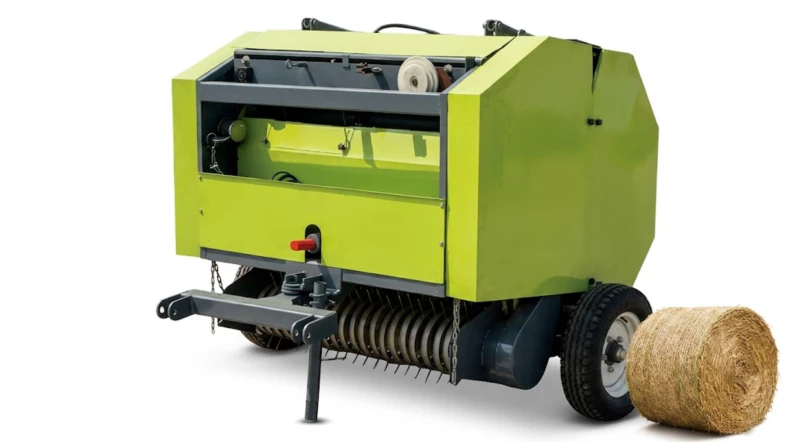
Modern round balers employ sophisticated hydraulic systems enabling variable density control, pickup adjustment, and other operational features. Hydraulic power requirements prove just as important as PTO horsepower when assessing equipment compatibility. Many tractors provide adequate PTO power but insufficient hydraulic capacity, resulting in sluggish equipment response and inconsistent bale formation.
Standard round balers typically require 15 to 25 gallons per minute hydraulic flow at normal operating pressure. Advanced models with multiple density control circuits might demand 25 to 35 gallons per minute. Verify your tractor’s hydraulic pump capacity against baler hydraulic requirements before equipment selection. Undersized hydraulic systems deliver inadequate flow resulting in slow density adjustment and poor overall equipment response.
Beyond flow rate requirements, verify that your tractor’s hydraulic system can sustain these flow rates throughout extended harvesting operations. Some tractors provide adequate peak hydraulic flow but overheat when maintaining flow continuously for extended periods. Discuss your specific tractor model with equipment dealers who can assess whether your hydraulic system will sustain baler operations throughout full harvesting days without thermal issues.
Common Power Matching Mistakes
The most prevalent error farmers make involves confusing flywheel horsepower with PTO horsepower. A farmer knows their tractor produces 100 horsepower flywheel power but fails to account for transmission losses, resulting in actual PTO horsepower of approximately 85 to 90 horsepower. Selecting balers based on 100 horsepower ratings when only 85 horsepower is available at the PTO shaft inevitably results in equipment compatibility problems.
A second common mistake involves ignoring sustained horsepower reductions during field operation. A tractor might deliver peak power for brief periods, but actual field operation at sustained high power levels frequently proves impossible. Operating at maximum ground speed through dense windrows, over rough terrain, or in challenging field conditions pushes tractors to their limits and beyond. Selecting equipment assuming peak power availability throughout all conditions proves dangerously optimistic.
Farmers frequently overlook hydraulic system requirements when selecting equipment. A baler might fit within tractor horsepower capacity but exceed hydraulic system flow capacity. This results in sluggish equipment response, inconsistent bale formation, and operator frustration despite adequate PTO power. Always verify both horsepower and hydraulic specifications.
Equipment aging effects receive insufficient consideration in equipment selection decisions. A tractor that matched new baler requirements perfectly may struggle with the same baler after 10 to 15 years of operation as engine wear reduces power output and transmission efficiency declines. Selecting equipment with adequate power margins accommodates this inevitable aging effect.
Frequently Asked Questions
Making Accurate Power Matching Decisions
Accurate power matching requires three fundamental steps: first, determine your tractor’s actual PTO horsepower through manufacturer documentation; second, assess your typical operating conditions including ground speed, windrow density, and field terrain; third, select equipment with appropriate horsepower specifications providing 20 to 30 percent power reserve.
Consult with experienced equipment dealers who can assess your specific situation comprehensively. Provide dealers with accurate tractor specifications, typical field conditions, anticipated bale size requirements, and production volume targets. Professional dealers can recommend equipment specifically matched to your operational circumstances rather than generic category suggestions.
For detailed specifications on round baler power requirements by model, complete horsepower matching guides for diverse tractor types, and comprehensive compatibility information, explore our extensive technical specifications and power requirement reference library featuring detailed horsepower tables, compatibility matrices, and equipment matching tools enabling precise power assessment for your specific equipment selection.
Need Help Matching Your Tractor to the Right Baler?
Our equipment specialists excel at matching specific balers to tractor capabilities and farm operations. Whether you are uncertain about your tractor’s horsepower specifications, evaluating compatibility with prospective equipment, or optimizing existing equipment arrangements, we provide expert consultation ensuring accurate power matching and optimal equipment compatibility.
Contact Our Equipment Matching Specialists
Access our power matching reference tools and compatibility calculators to evaluate specific tractor and baler combinations with precision.
Conclusion: Achieving Optimal Equipment Compatibility
Matching round baler power requirements to tractor horsepower and hydraulic capability represents a technical discipline requiring accurate assessment, honest evaluation, and conservative planning. Understanding the distinction between flywheel and PTO horsepower, recognizing how ground speed influences power demands, and accounting for field condition variations enables farmers to make informed equipment selections resulting in optimal compatibility and sustained reliable operation.
The most successful equipment selections consistently employ conservative horsepower planning, building substantial power margins into equipment compatibility assessments. These margins accommodate field condition variations, equipment aging effects, and operator preference variations that inevitably emerge during equipment ownership and operation. Equipment operating within comfortable power ranges delivers superior bale quality, extended equipment lifespan, and greater operator satisfaction compared to equipment constantly pushing tractors to capacity limits.
Take time to accurately determine your tractor’s actual PTO horsepower capabilities, carefully assess your typical operating conditions, and thoughtfully select equipment aligned with realistic power availability rather than aspirational specifications. This disciplined approach will ensure optimal equipment compatibility, sustained reliable operation throughout extended harvesting seasons, and maximum long-term value from your equipment investments. Your careful power matching effort today will translate into years of productive, frustration-free equipment operation supporting consistent harvesting success.