Double Chamber Square Baler: Double the Output Without Adding a Second Machine
For commercial forage operations and professional baling contractors, productivity and efficiency directly determine profitability. The introduction of dual-chamber square baler technology has revolutionized large-scale hay and straw harvesting by enabling operators to produce two complete bales in sequential formation. This breakthrough design effectively doubles field productivity compared to single-chamber equipment of equivalent size, transforming harvest economics for full-time agricultural enterprises. This comprehensive guide explores dual-chamber baler design, operational advantages, and the economic case for investment in this advanced technology.
Understanding Dual-Chamber Square Baler Technology
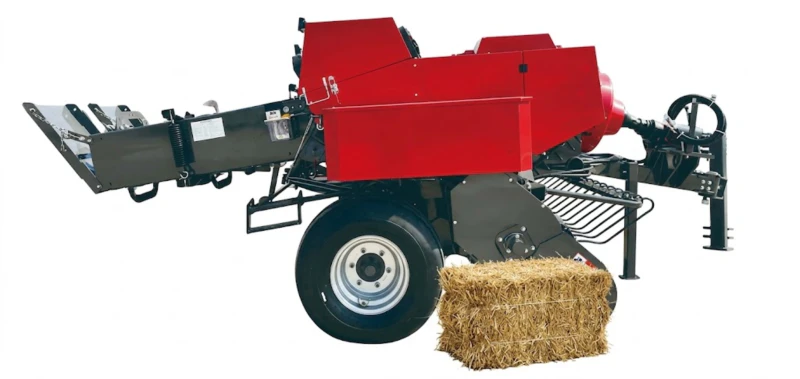
A dual-chamber square baler fundamentally reimagines the traditional single-chamber baling mechanism by incorporating two independent compression chambers operating simultaneously. While one chamber produces and ejects a completed bale, the second chamber is simultaneously building the next bale. This sequential operation delivers the revolutionary productivity benefit that distinguishes dual-chamber equipment from all single-chamber competitors.
The mechanical innovation involves sophisticated timing and sequencing of the two chambers. As the first plunger ejects a finished bale through the bale chute, the second plunger in the adjacent chamber continues compressing material into its bale formation. This continuous production cycle eliminates the downtime inherent in single-chamber balers, which must pause briefly between bales to allow the plunger to retract and reset before accepting the next load.
Each chamber in a dual-chamber system maintains standard dimensions—typically 460 to 480 millimeters in width and 360 to 380 millimeters in height. This standardization ensures that dual-chamber balers produce bales identical in size and density to single-chamber equipment, maintaining compatibility with existing handling equipment and market specifications. The bale quality, uniformity, and density characteristics of dual-chamber systems match or exceed single-chamber baler performance.
Mechanical Design and Operational Mechanics
Key Innovation: Dual-chamber systems produce approximately 1.8 to 2.0 bales per minute compared to 0.9 to 1.1 bales per minute for single-chamber equipment—nearly doubling production without increasing ground speed or operator effort.
The plunger timing mechanism represents the critical engineering component enabling dual-chamber operation. Electronic controllers coordinate the two plunger systems through precise timing, ensuring that one plunger reaches full ejection just as the other plunger begins its compression stroke. This synchronization must occur thousands of times throughout each harvesting day while maintaining bale consistency and preventing mechanical interference between the two operating systems.
The dual knotter system presents another engineering complexity unique to dual-chamber equipment. Each chamber requires independent twine or net wrap application and tying mechanisms. Modern dual-chamber systems employ sophisticated coordination between the two knotter systems, ensuring that both bales receive consistent binding quality and preventing potential conflicts during simultaneous binding operations. Computerized control systems monitor knotter performance on both chambers independently, alerting operators to any binding failures or inconsistencies.
Hydraulic system complexity in dual-chamber balers reflects the increased mechanical sophistication. These systems typically require 80 to 120 horsepower to operate compared to 70 to 90 horsepower for equivalent single-chamber models. The dual hydraulic plungers, synchronized control systems, and independent knotter mechanisms demand substantial power resources. Operators must verify that their tractors provide adequate reserves to operate dual-chamber equipment at optimal performance.
Field Productivity and Harvest Economics
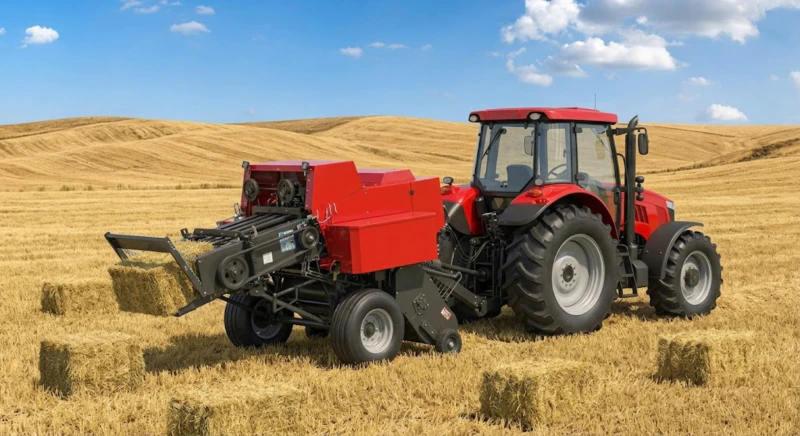
The most compelling advantage of dual-chamber systems manifests in raw field productivity. A standard single-chamber square baler harvests approximately 80 to 120 acres daily under typical conditions, producing 250 to 350 bales. An equivalent dual-chamber system harvests the same acreage while producing 500 to 700 bales—effectively doubling production without operator effort increases or equipment costs proportional to purchasing a second baler.
For professional baling contractors operating on custom basis, this productivity advantage translates directly to revenue increase. A contractor using dual-chamber equipment can complete customer harvests in approximately half the time required by single-chamber competitors, enabling service to more customers annually or accepting fewer harvesting contracts while achieving higher income per season. Many contractors report that dual-chamber equipment investment pays for itself within 1 to 2 seasons through reduced operational time and increased service capacity.
Large-scale hay producers benefit from dual-chamber systems through harvest window optimization. Forage quality typically peaks during a narrow window of approximately 10 to 14 days. Dual-chamber equipment enables harvest of substantially larger acreage during this optimal quality window compared to single-chamber systems, resulting in consistently higher-quality forage and premium market pricing. The ability to harvest more acreage during peak quality periods often justifies dual-chamber investment through quality premiums alone.
Bale Quality and Consistency Advantages
Despite the mechanical complexity, dual-chamber systems produce bales with consistency superior to many single-chamber competitors. Electronic monitoring systems track density, weight, and dimensions for both chambers independently, enabling real-time adjustments to maintain uniform quality. When one chamber produces a bale outside specification parameters, control systems immediately alert operators, who can make adjustments affecting both subsequent bales from that chamber.
The dual knotter systems in modern dual-chamber balers employ synchronized control preventing the quality inconsistencies sometimes observed in hastily-designed dual systems. Each chamber’s knotter operates on identical timing and tension parameters, ensuring that bales receive consistent binding regardless of which chamber produces them. Many operators report that dual-chamber balers produce more uniform bales than single-chamber equipment due to their sophisticated control systems and real-time monitoring capabilities.
Bale density uniformity across the dual-chamber system ensures that finished bales maintain consistent weight and dimensions. Commercial hay buyers and feed mills demand uniform bales enabling precise weighing and nutritional consistency. Dual-chamber systems’ superior uniformity often results in market price premiums compared to hay baled with less consistent equipment, providing additional economic justification for equipment investment.
Maintenance Requirements and Technical Service
Maintenance Reality: Dual-chamber systems require more frequent maintenance than single-chamber equipment due to increased mechanical complexity. Annual maintenance typically demands 20 to 30 hours of technician time compared to 8 to 15 hours for single-chamber balers of comparable size.
The two independent plunger systems, dual knotter mechanisms, and sophisticated electronic controls in dual-chamber balers necessitate more comprehensive maintenance compared to single-chamber equipment. Pre-season inspection should verify plunger alignment and timing on both chambers, inspect dual knotter components for wear, and conduct comprehensive electronic system diagnostics. Many manufacturers recommend that dual-chamber systems receive professional servicing at authorized dealerships rather than field maintenance.
Bearing maintenance on dual-chamber systems requires attention to twice the number of components compared to single-chamber equipment. Operators must establish rigorous lubrication schedules ensuring that bearings on both plunger assemblies, both knotter systems, and both drive mechanisms receive adequate lubrication. Bearing failure on either side of a dual-chamber system can result in production downtime for both chambers simultaneously, making preventive bearing maintenance a high priority.
Electronic system maintenance has become increasingly important on modern dual-chamber balers. These systems employ multiple sensors, control modules, and communication protocols managing the synchronized operation of both chambers. Operators should maintain backup electronic components and ensure that authorized service centers are accessible for technical diagnostics. Insurance of critical electronic components provides additional protection against costly downtime during peak harvesting season.
Horsepower and Tractor Requirements
Dual-chamber square balers typically require 100 to 140 horsepower compared to 70 to 90 horsepower for equivalent single-chamber models. This horsepower premium reflects the increased power demands of operating two plunger systems, dual knotters, and sophisticated electronic controls simultaneously. Operators must verify their tractor’s actual available horsepower matches equipment manufacturer specifications before purchasing dual-chamber equipment.
Tractor selection for dual-chamber baling requires consideration of sustained power delivery rather than peak power rating. Many farm tractors deliver peak horsepower only at maximum engine RPM under ideal conditions. Actual sustained horsepower available during field operations—particularly when ground speed varies or hydraulic loads fluctuate—may be substantially less than rated specifications. Operators should discuss actual available horsepower with tractor dealers and equipment manufacturers to ensure adequate power reserves.
Operating dual-chamber balers with inadequate horsepower results in reduced ground speed, incomplete material pickup, inconsistent bale formation, and excessive engine strain. Attempting to force a dual-chamber system beyond tractor capacity can damage equipment components and reduce bale quality. Conservative horsepower planning—selecting tractors providing 10 to 20 percent more horsepower than minimum specifications—ensures reliable operation throughout variable field conditions.
Investment Analysis and Return on Investment
Dual-chamber square balers command significant equipment investment, typically $120,000 to $180,000 depending on manufacturer, features, and geographic location. This represents premium pricing compared to single-chamber systems at $75,000 to $120,000. However, the economic analysis supporting dual-chamber investment becomes compelling when examining productive capability and income generation potential.
Professional baling contractors represent the primary market for dual-chamber equipment. A contractor charging $12 to $18 per ton for custom baling services can dramatically increase annual income through dual-chamber equipment acquisition. Operating a dual-chamber system enabling harvest of 700 to 800 bales daily compared to 350 to 400 bales with single-chamber equipment effectively doubles income potential without operator effort increases. Many contractors report payback periods of 18 to 36 months, after which dual-chamber equipment generates pure profit.
Large-scale hay producers benefit from dual-chamber investment through production cost reduction. The ability to harvest substantial acreage during optimal quality windows reduces per-ton harvesting costs and enables premium market pricing for consistently high-quality forage. Producers harvesting 200 or more acres annually often find that dual-chamber equipment investment produces positive return within 3 to 5 seasons through combined benefits of cost reduction and quality premiums.
Comparison with Single-Chamber Equipment
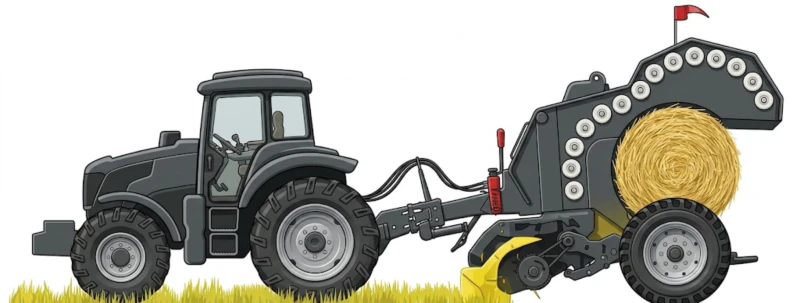
While dual-chamber balers command higher purchase prices and require more maintenance, their productivity advantages prove compelling for professional operations. A single-chamber baler harvests approximately 80 to 120 acres daily. To achieve equivalent production capacity with single-chamber equipment, an operator would need to purchase and operate two machines—requiring purchase of two balers, two tractors, and employment of additional operators or longer working hours.
The economic advantage of dual-chamber systems becomes apparent when calculating total cost of ownership. Purchasing two single-chamber balers totaling $150,000 to $240,000, two additional tractors at $60,000 to $100,000 each, and operating two complete systems vastly exceeds the investment in one dual-chamber baler at $120,000 to $180,000. Additionally, dual-chamber systems require only one operator and one tractor, substantially reducing labor costs compared to operating two single-chamber systems.
Operational simplicity represents an additional advantage of dual-chamber systems. A single operator manages one piece of equipment rather than coordinating multiple machines. This simplicity reduces operator training requirements, minimizes coordination challenges, and centralizes maintenance and parts management. For commercial operations, the reduced operational complexity often justifies dual-chamber equipment choice independent of direct cost comparisons.
Frequently Asked Questions
Making the Dual-Chamber Investment Decision
Operations considering dual-chamber equipment should evaluate their scale, operational model, and harvesting objectives. Professional baling contractors and large-scale commercial producers harvesting 200 or more acres annually find compelling economic justification for dual-chamber investment. The productivity advantage enables increased income or reduced operational time, supporting higher equipment costs within reasonable payback timeframes.
Small and mid-size operations harvesting 50 to 150 acres annually should carefully evaluate whether dual-chamber advantages justify higher purchase prices and maintenance demands. For these operations, single-chamber equipment often provides more cost-effective solutions. Alternatively, hiring professional custom baling contractors may prove more economical than equipment ownership.
For detailed information about dual-chamber baler models, technical specifications, and comprehensive productivity comparisons, explore our extensive commercial baling equipment guide featuring detailed specifications, contractor testimonials, and performance metrics for dual-chamber and single-chamber systems across professional harvesting applications.
Ready to Maximize Your Commercial Harvesting Capacity?
Our equipment specialists understand the demanding requirements of professional baling contractors and large-scale agricultural producers. Whether you are evaluating dual-chamber technology for the first time or upgrading existing equipment, we provide expert consultation to identify the optimal dual-chamber system matching your specific harvesting scale, operational model, and financial objectives.
Contact Our Commercial Equipment Specialists
Explore our complete inventory of professional dual-chamber baling systems and discover how advanced dual-chamber technology can transform your harvest productivity and profitability.
Conclusion: The Future of Commercial Forage Harvesting
Dual-chamber square baler technology represents a genuine breakthrough in commercial forage harvesting efficiency. By enabling two simultaneous bale production cycles, these machines fundamentally redefine what is achievable in a single operational day. Professional baling contractors and large-scale hay producers worldwide have embraced dual-chamber systems as essential competitive tools in increasingly price-competitive markets.
While dual-chamber systems demand higher equipment investment, require more sophisticated maintenance, and necessitate more powerful tractors compared to single-chamber alternatives, the productivity advantages justify these additional demands for operations with sufficient scale and commercial focus. The ability to harvest twice the volume in equal time creates economic advantages supporting investment payback within reasonable timeframes.
Whether you operate a contract baling business seeking competitive advantage through increased productivity, a large-scale hay operation optimizing harvest efficiency during peak forage quality windows, or a progressive farming enterprise embracing advanced technology for operational excellence, dual-chamber baler investment merits serious consideration. The thousands of satisfied dual-chamber operators throughout North America and internationally demonstrate that these sophisticated machines consistently deliver the exceptional productivity and economic value that professional harvesting operations require. Your investment in quality dual-chamber equipment today will provide decades of dependable harvesting capacity supporting sustained business growth and profitability throughout years of successful commercial operations.