
Crop Residue Collection
Standard pickup tines were designed for windrow hay — not for standing, interlocked corn stalks at ground level. Understanding why this distinction costs operations thousands of bales per season is the first step toward fixing it.
Corn stover is one of the most abundant and underutilised crop residues on the planet. The equipment constraint that keeps it underutilised is not power, capacity, or bale quality — it is the pickup mechanism that sits between the windrow and the compression chamber.
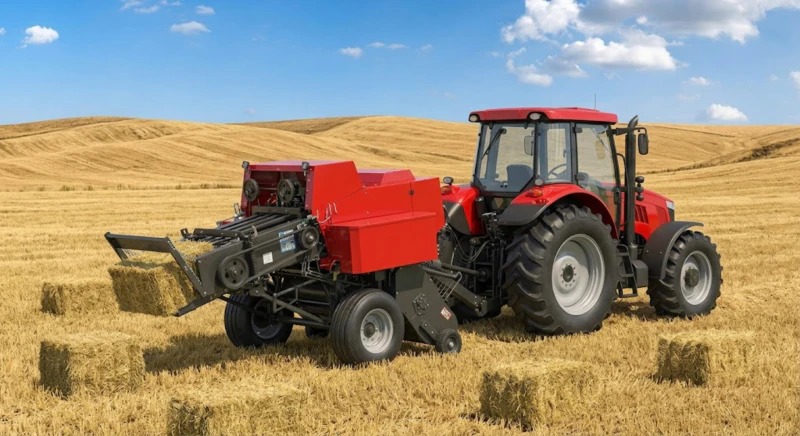
Every tonne of corn harvested leaves behind approximately one tonne of stover — the stalks, leaves, cobs, and husks that remain in the field after the grain combine has passed. On a 100 ha corn field yielding 10 tonnes per hectare of grain, that is 1,000 tonnes of residue lying in the field after harvest. The commercial applications for that residue are substantial: livestock feed (both dry and fermented), mushroom substrate production, biomass energy, paper pulp feedstock, and organic fertiliser incorporation. The question is not whether collecting corn stover is commercially worthwhile — in most agricultural markets where the residue has an established buyer, it clearly is. The question is whether the equipment used to collect it is suited to the specific physical characteristics of corn stover, or whether it is a hay baler operating in conditions it was not designed for.
The answer, for the majority of operations using standard round baler pickups on corn stover, is the latter. Standard pickup mechanisms — the spring-tine reel systems designed to lift windrow hay from the field surface — were engineered around the physical characteristics of cut, dried grass and legume material lying in a loose, aerated windrow at a consistent height above the ground. Corn stover does not present these characteristics. Standing stalks remain upright after harvest in interlocked, random-orientation clusters. Lodged stalks lie flat, overlapping each other in patterns that standard tine pickups cannot lift cleanly. The result is incomplete collection, high field loss, frequent blockages, and pickup tine damage at rates that make standard pickup corn stover collection operationally unsustainable at commercial scale. Explore our full range of round balers and crop residue collection equipment to find the right configuration for your stover operation.
1. Why Corn Stover Is Not Like Hay — and Why Standard Pickups Fail
The Physical Challenge of Corn Stover
Corn stover after grain harvest exists in three distinct physical states that vary by field and by section within a field. Standing stalks — which remain at full height in fields where the combine header cut at 600mm or above — present a vertical obstacle that standard pickup tines cannot engage from below. The tines are designed to scoop material upward from a windrow lying on the ground; they have no mechanism for pulling vertical material into the feed system without first bending it, which causes stalk breakage and scattering rather than clean collection. Lodged stalks — bent or broken at various heights by wind, combine header contact, or the weight of the grain — lie across each other in interlocked mats that standard tines cannot penetrate cleanly, particularly when the mat is dense and the lower layers are in contact with damp soil.
The third state — partially standing, partially lodged mixed-state stover — is the most common and the most problematic for standard pickup systems. When tines lift material from one section of the mat, they disturb the adjacent interlocked material, which either follows into the pickup unevenly (causing surge-and-gap feeding to the compression chamber) or falls back to the ground and is missed entirely. Field loss rates from standard pickup systems on mixed-state corn stover typically run at 20–35% of available dry matter — a figure that renders commercial collection economically marginal or unprofitable at most stover purchase prices.
The Blockage Problem
Beyond field loss, the second commercial consequence of using standard pickup systems on corn stover is blockage frequency. Standard pickup tines operating on dense lodged stover engage more material per rotation than the tine design was rated for. The excess material bunches at the tine tips, fails to feed cleanly into the baler’s intake channel, and accumulates until the blockage is dense enough to stall the pickup rotor entirely. Clearing a pickup blockage takes 5–15 minutes of manual intervention — longer if the material is wet or tightly packed. On a field where blockages occur every 10–15 minutes, the effective baling rate drops from the machine’s rated throughput of 40–80 bales per hour to an actual field rate of 8–15 bales per hour after blockage time is accounted for. This throughput collapse makes the economics of standard-pickup stover collection unworkable at commercial scale.
2. The Hammer-Claw Pickup: How Purpose-Built Design Solves the Stover Problem
The Mechanism Difference
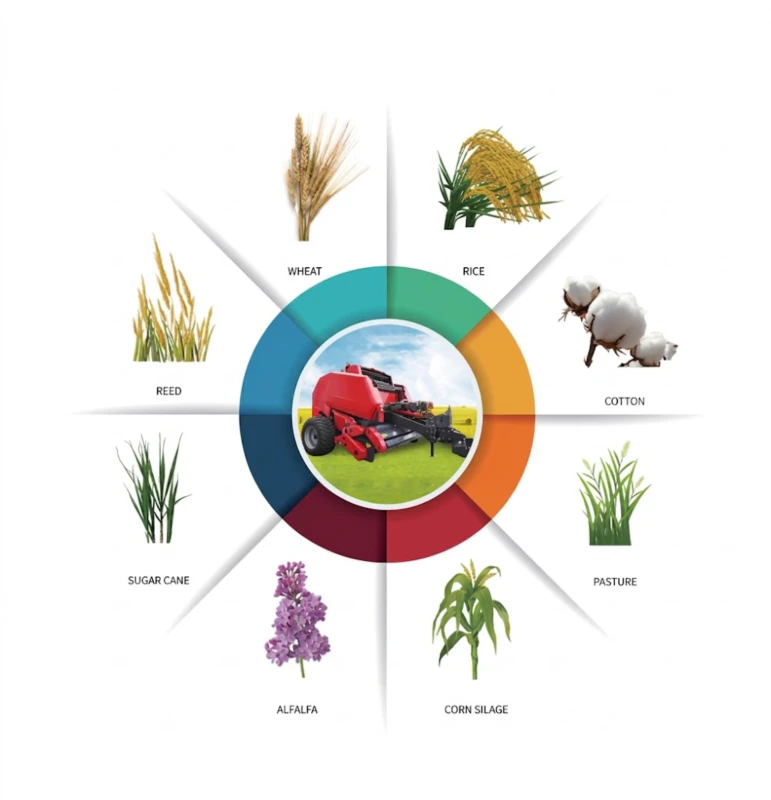
The 9YG-1.0C round baler’s hammer-claw pickup system replaces the spring-tine reel of standard pickup designs with a rotor carrying 20 hammer-claw elements arranged across a 2400mm pickup width. The hammer-claw elements are rigid, heavy, and operate at high rotational speed — generating the impact energy needed to engage standing, lodged, and interlocked corn stalks and pull them into the feed system rather than attempting to scoop them from below. The impact action of the hammer elements bends standing stalks downward and forward into the baler’s intake zone, while simultaneously breaking up the interlocked mat structure of lodged material to present individual stalks or manageable clumps to the feeder system rather than the dense undifferentiated mass that defeats standard tines.
The 2400mm pickup width — wider than the 1900–2240mm standard on most round balers — is specifically sized to span the full width of the residue strip left by standard combine headers on corn at typical row spacings. On 750mm row-spacing corn at two rows per combine pass, the 2400mm pickup covers the full two-row residue footprint plus a margin that collects wind-displaced stover that has migrated laterally from the primary residue zone. This full-width single-pass collection eliminates the need for a preliminary windrowing pass — a separate field operation required before standard-pickup balers can attempt stover collection — saving the cost and time of one complete field pass per harvest cycle.
Why 20 Hammer Elements and Dual 16A Chain Drive
The 20 hammer-claw elements across the 2400mm pickup rotor provide an impact element every 120mm of pickup width — a density that ensures no stover-rich zone between adjacent hammer paths is missed at the working speeds of 4–6 km/h used for stover collection. Fewer hammer elements at wider spacing produce the same width coverage but with higher material load per element, increasing the risk of individual element overload and blockage when the stover mat is particularly dense. The 20-element configuration distributes the engagement load across more contact points, reducing peak load per element and maintaining consistent feed rate to the compression chamber regardless of stover density variation across the field.
The dual 16A chain drive powering the hammer-claw rotor from both sides of the pickup frame is a structural response to the asymmetric loading that single-side chain drives experience when the material being collected is as dense and resistant as corn stover. A single-side drive creates a torque differential across the rotor width — one end is pulled more forcefully than the other — that causes progressive misalignment under sustained stover load. The dual-side drive distributes the torque input evenly across both ends of the rotor, maintaining alignment and reducing bearing wear rates to those expected in conventional hay baling applications rather than the accelerated wear that asymmetric loading of a single-drive rotor causes on dense material.
One-pass collection, no windrowing required: The 9YG-1.0C hammer-claw system collects standing and lodged corn stover directly from the post-harvest field without a preliminary windrowing pass. This eliminates one complete set of field operations — a tractor, a rake or swather, and a full-field pass — from the stover collection workflow, reducing the total cost per tonne collected by 15–25% compared to windrowing-dependent standard pickup collection.
3. Corn Stover Markets and the Commercial Case for Better Collection
Livestock Feed: The Largest Volume Application
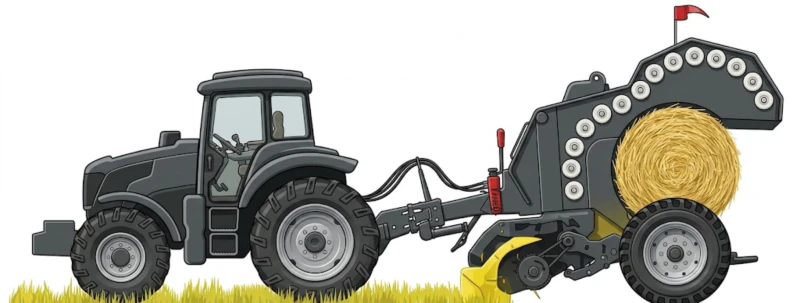
Corn stover as a livestock feed component — either as dry roughage in beef cattle rations or as a silage ingredient when fermented — is the highest-volume commercial application for baled corn stover in most corn-producing regions. Beef cattle can utilise corn stover effectively as a low-cost roughage source: the stalks, leaves, and cobs provide physical fibre that supports rumen function, while the grain-adhered residues on cobs provide digestible energy that upgrades the stover’s nutritional value above that of straw. In intensive beef feeding operations where high-quality hay costs are a significant input, corn stover at USD 40–80 per tonne replaces hay at USD 150–250 per tonne as the primary roughage carrier, reducing ration cost substantially while maintaining adequate rumen fill.
For this application, bale density consistency is the key quality specification — livestock feeding operations purchase stover on a per-bale basis and need bales of consistent weight to manage ration quantities accurately. Bale weight variation above ±15% creates ration inconsistency that nutritionists must compensate for with more expensive feed ingredients, offsetting part of the cost advantage that stover roughage provides. Sensor-controlled density baling — available in the 9YG-1.0C through the 16-drum chamber’s pressure feedback system — produces the consistent 115–200 kg/m³ bale density that makes stover a predictable inventory item for feed management purposes.
Mushroom Substrate Production
The edible mushroom industry — particularly oyster mushrooms and king oyster varieties — uses corn stover as a primary substrate material for mycelium cultivation. Substrate-grade stover requires specific particle size characteristics (achieved by crushing or shredding after baling) and must be free from mould contamination, which means it must be baled at moisture below 20% and stored in conditions that prevent rewetting before processing. For this application, clean collection that avoids soil contamination and rapid baling at the right moisture window are the primary quality requirements. The hammer-claw pickup’s ability to collect stover without the soil disturbance that aggressive standard tines cause — particularly in no-till or conservation tillage systems where soil surface structure is maintained — makes it preferable for substrate-grade collection.
Biomass Energy and Industrial Applications
Corn stover for biomass energy — direct combustion in dedicated biomass boilers, co-firing with coal in converted power plants, or pelletisation for energy-dense solid fuel — is a growing market in regions with active renewable energy programs. The economic driver is the carbon accounting value of biomass energy as a renewable substitute for fossil fuels, which in some jurisdictions generates regulatory credits that underpin the market price for biomass material. For this application, the primary specification is dry matter content per bale — higher density bales with lower moisture provide more energy per delivery and reduce transport cost per unit of energy delivered. The 9YG-1.0C’s 115–200 kg/m³ density range in its 16-drum fixed-chamber produces bales at the upper end of the density range achievable on corn stover, maximising energy content per bale and minimising per-tonne transport cost.
4. Operational Requirements: Tractor, PTO Shaft, and Moisture Timing
Tractor Power Matching for Stover Collection
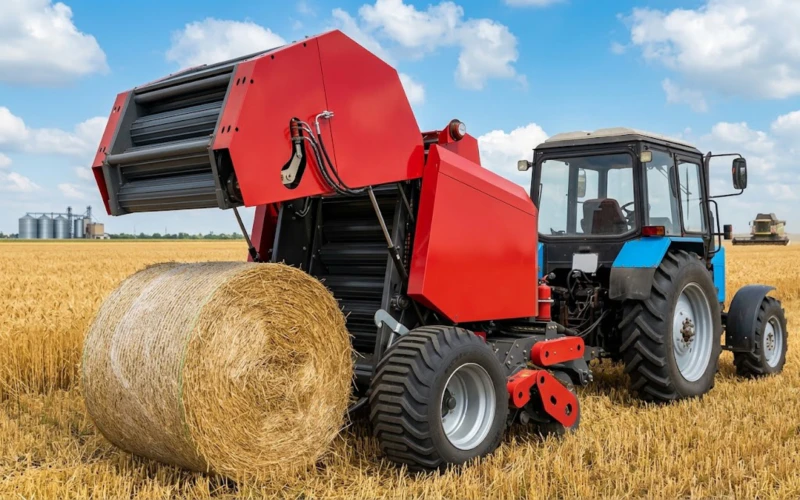
The 9YG-1.0C requires a minimum of 95 HP (approximately 71 kW) tractor — higher than the minimum for the same baler in hay configuration — because the hammer-claw pickup rotor demands significantly more power to operate than a spring-tine pickup reel. The impact action of 20 hammer elements engaging standing or dense lodged material generates torque spikes at the pickup drive that a tractor at the minimum hay baling power level cannot absorb smoothly. Operating with insufficient tractor power causes engine lugging, PTO speed fluctuation, and compression chamber density inconsistency as the baler’s power demand varies with material resistance. A tractor in the 90–120 HP range provides adequate power reserve to maintain stable PTO speed at 720 r/min throughout the stover baling cycle, delivering the density consistency that downstream market applications require.
The PTO Shaft Specification for High-Torque Stover Collection
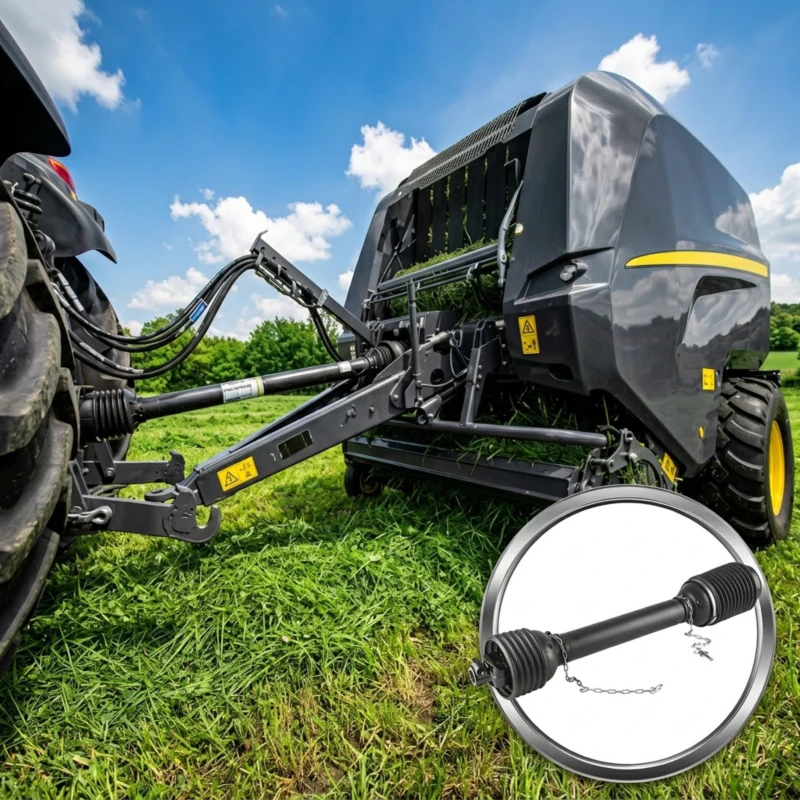
Corn stover collection generates higher peak torque at the baler input than hay baling, because the hammer-claw engagement events produce momentary resistance spikes as individual hammers contact and break through dense stalk clusters. The pto shaft transmitting power from the tractor to the 9YG-1.0C must be rated for these peak loads — not just for the steady-state power of the baling cycle. A shaft specified for hay baling torque applied to corn stover collection operates continuously near its design limit, accelerating universal joint wear and increasing the risk of shaft failure precisely during the dense-stover sections where peak torque is highest. Selecting a shaft with a 20–30% torque rating above the steady-state baling requirement provides the design margin needed for sustained stover collection without premature wear.
The friction-clutch overload device on the PTO shaft is particularly important in corn stover applications because embedded debris — broken combine components, fence wire fragments, and stones displaced by the combine header — occurs with higher frequency in post-harvest corn fields than in managed hay fields. When the hammer-claw rotor contacts a piece of embedded metal, the torque spike is far above the normal stover engagement peak. A correctly calibrated friction clutch disconnects the drive within one rotor revolution of the impact, preventing the engagement force from reaching the gearbox and hammer rotor at a level that would cause structural damage. This protection mechanism is why stover collection specialists universally prefer friction-clutch driveshafts over shear-bolt designs for corn stover — friction clutches reconnect automatically after the obstruction is cleared, while shear bolts require manual replacement every time they activate, adding downtime on a material where obstruction events are frequent.
The Moisture Timing Window for Corn Stover
Corn stover moisture content at harvest varies from 30–60% in freshly harvested fields (when corn grain is at 15–18% moisture for grain storage) to 10–15% after three to four weeks of field drying in good autumn conditions. The optimal baling moisture for corn stover destined for most end uses is 15–25%: dry enough to bale without internal heating during storage, wet enough that the stalks retain some flexibility that reduces field loss from shattering during the hammer-claw collection process. Very dry stover — below 12% — shatters extensively under hammer-claw impact, creating a high proportion of fine particles that pass through the baler chamber without being captured in the bale structure and are lost as field dust. Monitoring stover moisture in the days following grain harvest and timing the baling operation to the 15–25% window significantly improves both collection efficiency and bale quality.
5. Economics: What the One-Pass Collection Advantage Is Worth
The commercial argument for the hammer-claw pickup over standard pickup systems on corn stover reduces to three compounding economic advantages: higher collection efficiency per hectare, fewer field passes required per tonne collected, and lower mechanical downtime per tonne collected. Together, these determine the cost per tonne of stover collected and stored, which is the metric that determines whether a stover collection program is commercially viable at prevailing market prices.
| Metric | Standard Pickup on Stover | Hammer-Claw (9YG-1.0C) |
|---|---|---|
| Field loss rate | 20–35% of available DM | 5–10% of available DM |
| Windrowing pass required | Usually required | Not required |
| Blockage frequency | Every 10–20 min on dense stover | Rare under correct operation |
| Effective baling rate | 8–15 bales/h (after blockage time) | 40–80 bales/h (rated throughput) |
| Tine/pickup wear cost | High — stover damages spring tines rapidly | Low — hammers designed for impact duty |
| Commercial viability | Marginal at best | ✓ Commercially sustainable |
To put the field loss difference in financial terms: on a 100 ha corn field producing 8 tonnes of stover per hectare (800 tonnes total), a standard pickup at 30% field loss collects 560 tonnes. The 9YG-1.0C hammer-claw at 8% field loss collects 736 tonnes. At a stover price of USD 60 per tonne, the collection difference is USD 10,560 per 100 ha field — before accounting for the windrowing pass that standard pickup requires and the time cost of blockage clearing. Over a 1,000 ha annual stover collection program, this difference reaches USD 100,000+ per season, a figure that justifies a purpose-built pickup system investment in the first year of operation for most commercial stover programs.
The windrowing pass elimination is a separate cost saving. A 1,000 ha windrowing pass at a contractor rate of USD 30 per hectare costs USD 30,000. Eliminating it by switching to a pickup mechanism that does not require pre-windrowing adds USD 30,000 per season directly to the stover program’s margin — a saving that is immediate, year-one, and does not depend on any assumptions about stover market price.
Running Corn Stover Collection with a Standard Pickup? There Is a Better Way.
The 9YG-1.0C hammer-claw round baler collects standing and lodged corn stalks directly without windrowing, at 40–80 bales per hour and less than 10% field loss. Speak with our team about whether your current operation is leaving tonnes on the field each season.