Equipment Matching Guide
The wrong tractor-baler combination does not just underperform — it produces inconsistent bale density, accelerates wear on both machines, and limits daily output in ways that are invisible until you understand exactly why they are happening.
Matching a tractor to a baler is not about finding a tractor that can turn the PTO shaft. It is about finding a tractor that can sustain the full operating load of the baling cycle — including peak events — without compromising bale quality or machine life.
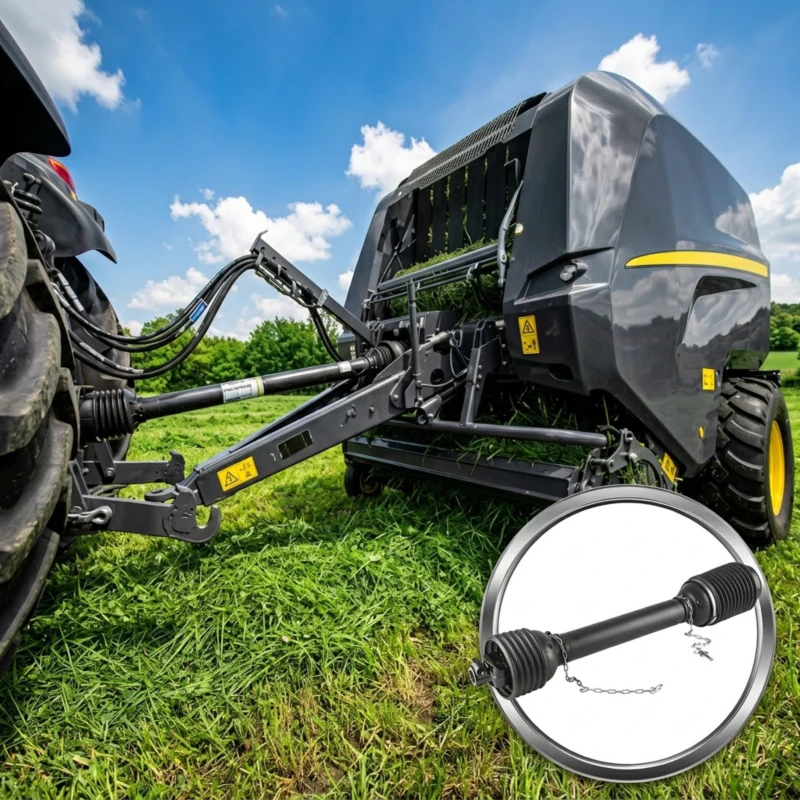
Every round baler specification sheet lists a minimum tractor power requirement — typically expressed in kilowatts or horsepower at the PTO. This number is technically accurate but practically misleading, because it represents the minimum power at which the baler can be operated without stalling the tractor under light conditions. It says nothing about whether that tractor can maintain consistent bale density through windrow density spikes, sustain PTO speed stability through compression peak events, provide adequate hydraulic flow for the density control system, or handle the additional draw-bar load of pulling a loaded bale transporter after baling. Selecting a tractor based on the minimum specification produces a system that meets the specification under ideal conditions and falls below it precisely when field conditions are demanding — which is the only time the specification matters.
This guide covers the four dimensions of tractor-baler matching that determine system performance in commercial operation: engine power and the power reserve margin that commercial baling requires, PTO speed stability under variable load, hydraulic flow and pressure capacity for density control and implement functions, and drawbar capacity for the complete baling-plus-transport system. Each dimension has a specific specification range, a practical consequence of under-matching, and an assessment method that allows you to confirm your existing tractor is correctly matched — or identify where the mismatch is if baling performance is below expectations.
For the round baler models and their tractor matching requirements referenced in this guide, see our complete range of commercial round balers.
1. Engine Power: Why the Minimum Specification Is the Wrong Target
The Difference Between Rated Power and Usable Power
A tractor’s rated engine power — the figure published in its specification sheet — is measured under controlled test conditions at the rated engine speed with full fuel delivery and no accessory loads. The power available at the PTO in field conditions is always lower than this figure, because it is reduced by drivetrain losses (typically 10–15% from engine to PTO output), by the parasitic loads of the tractor’s own hydraulic pump, alternator, cooling fan, and air conditioning compressor (another 5–10% in hot conditions), and by the engine’s derating under high ambient temperatures or altitude that reduce air density and combustion efficiency. A tractor rated at 100 HP may deliver 78–82 HP at the PTO under typical field conditions in summer — and as little as 72 HP in high-temperature, high-altitude environments.
This gap between rated power and usable PTO power means that a tractor selected at the baler’s minimum specification has essentially zero power reserve — it is operating at or near its capacity ceiling during steady-state baling, and has no reserve for the torque spikes that occur when the pickup enters a dense windrow slug, when the compression chamber builds maximum pressure on a heavy alfalfa bale, or when both events occur simultaneously. Under these peak load conditions, the tractor’s engine lugs, PTO speed drops, and the baler’s density control system — whether manual or sensor-based — loses its calibration reference point. The result is density variation at exactly the times when windrow conditions are creating the most variation to compensate for.
The Power Reserve Margin for Commercial Baling
For commercial hay baling, the practical tractor power selection target is 130–150% of the baler’s minimum specification — not 100%. This margin ensures that the tractor maintains stable PTO speed through peak load events, provides the hydraulic flow capacity that density control systems require simultaneously with PTO load, and leaves reserve capacity for the drawbar load of pulling through soft ground or uphill sections that consume additional drivetrain power not accounted for in the PTO specification.
| Baler Model Class | Minimum Spec | Recommended Range | Commercial Optimum |
|---|---|---|---|
| 9YG-1.0 (small farm) | 48 kW (65 HP) | 55–75 kW | 65–75 kW ✓ |
| 9YG-1.25 (commercial) | 55 kW (75 HP) | 65–90 kW | 75–90 kW ✓ |
| S9000 Classic | 75 kW (100 HP) | 90–130 kW | 100–120 kW ✓ |
| 9YG-1.0C (stover) | 71 kW (95 HP) | 85–120 kW | 95–115 kW ✓ |
2. PTO Speed Stability: The Specification That Directly Controls Bale Density
Why PTO Speed Fluctuation Causes Density Variation
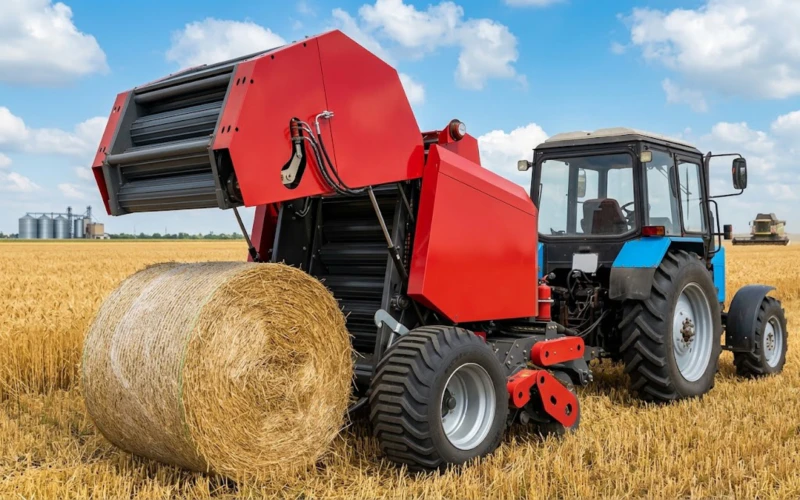
Most commercial round balers are designed for a PTO input speed of 540 r/min or 720–1000 r/min at the tractor’s rated operating RPM. The baler’s internal drive ratios — from PTO input shaft through the gearbox to the compression chamber drum drives and pickup rotor — are designed around this specific input speed. When the PTO input speed deviates from the design speed, every downstream component in the baler’s drive system runs at a speed different from its design point, changing the material feed rate to the compression chamber per unit of bale rotation and altering the timing of the net wrap application cycle.
For sensor-controlled density balers, PTO speed fluctuation is particularly consequential because the sensor system measures compression force and interprets it as a density signal — assuming that the PTO-driven rotation speed of the compression elements is stable. When PTO speed drops during a peak load event, the compression element surface speed decreases, changing the material-to-drum contact dynamics and altering the force reading at the pressure transducer in a way that the sensor cannot distinguish from a material density change. The sensor responds by adjusting compression force — making a density correction that was not needed because the underlying cause was speed variation, not material density variation. The result is a density adjustment that worsens bale consistency rather than improving it.
The PTO Speed Stability Test
To assess your tractor’s PTO speed stability under baling load, use a digital tachometer on the PTO shaft during a representative baling sequence that includes a transition from sparse to dense windrow and the net wrap application cycle. Record PTO speed at: steady-state baling on a medium-density windrow; pickup entry into a dense windrow section; maximum compression pressure on a heavy alfalfa bale; and net wrap application. A well-matched tractor maintains PTO speed within ±3% of the target speed (typically 540 r/min ±16 r/min) across all four conditions. PTO speed variation above ±5% during peak events indicates the tractor is operating above its usable PTO power — the engine governor cannot maintain speed against the peak load, and the baler’s density control system is receiving an unstable input signal.
The PTO shaft’s role in speed stability: Even a correctly powered tractor can deliver unstable PTO speed to the baler if the pto shaft connecting them is worn, imbalanced, or operating through an excessive universal joint angle. A shaft with worn bearing cups introduces rotational speed variation at the implement input that the tractor’s governor cannot compensate for — because the variation occurs downstream of the tractor’s engine. PTO speed instability should be diagnosed with the shaft replaced or verified as correct before concluding the tractor is underpowered.
3. Hydraulic Requirements: The Specification Most Buyers Forget to Check
What Round Balers Need from the Tractor’s Hydraulic System
A commercial round baler draws on the tractor’s hydraulic system for multiple simultaneous functions: the compression cylinder that applies and adjusts chamber pressure for density control, the bale ejection cylinder that opens the rear gate to release the finished bale, and in some models the pickup height cylinder and the bale ramp cylinder. On sensor-controlled density balers, the compression cylinder is actively modulated — making small adjustments at 10–50 times per second — which requires consistent hydraulic flow to the control valve rather than the intermittent demand that periodic manual adjustments generate.
The tractor’s hydraulic system must supply this demand while simultaneously powering its own functions — the three-point hitch lift at headlands, and on some tractors the front linkage or other auxiliary implements. The total hydraulic demand of baler plus tractor functions must stay within the capacity of the tractor’s hydraulic pump, which is itself powered by the engine and therefore competes with the PTO for available engine power. A tractor that is marginally powered for the baler’s PTO demand may find that the hydraulic pump’s additional load pushes the engine further into its derating zone during peak combined demand events.
The Minimum Hydraulic Specification for Round Balers
For commercial round balers in the 9YG-1.25 to S9000 class, the minimum tractor hydraulic specification is: one double-acting remote valve at the tractor’s rated system pressure (typically 180–200 bar), with a flow rate of at least 25–35 litres per minute available at that valve when the PTO is simultaneously engaged at rated speed. The flow rate specification is frequently overlooked because tractor hydraulic pump ratings are often stated at zero-load (maximum displacement) conditions rather than at system pressure — the flow available to the remote valve at operating pressure is lower than the pump’s rated flow, and the differential depends on the tractor’s pump type and pressure-compensating system design.
To verify your tractor meets this specification, consult the tractor’s operator manual for the remote valve flow rate at operating pressure, or test directly using a flow meter on the remote valve circuit with the PTO engaged and the engine at its rated operating RPM. Flow rates below 20 litres per minute at the remote valve under these conditions indicate a hydraulic capacity limitation that may cause slow bale ejection (the gate opening cycle takes longer than the baler’s design time), delayed density control response on sensor balers (the compression cylinder cannot keep up with the adjustment demand), and erratic net wrap application if the dispenser solenoid shares the same hydraulic circuit.
How Many Remote Valves Does the Baler Need?
Most commercial round balers require one double-acting remote valve for the compression cylinder and bale ejection gate (the same circuit controlled by a solenoid valve on the baler’s own control system), plus in some configurations a second single-acting valve for the pickup lift cylinder. Confirm the valve count and type required for your specific baler model against your tractor’s remote valve configuration before purchase. A tractor with only one remote valve position and a baler that requires two creates a connection problem that requires either an auxiliary valve block (which adds hydraulic restriction and reduces available flow) or a tractor trade for one with the required valve count.
4. Drawbar Capacity: Matching the Complete System, Not Just the Baler
Why Drawbar Load Matters for Tractor Selection
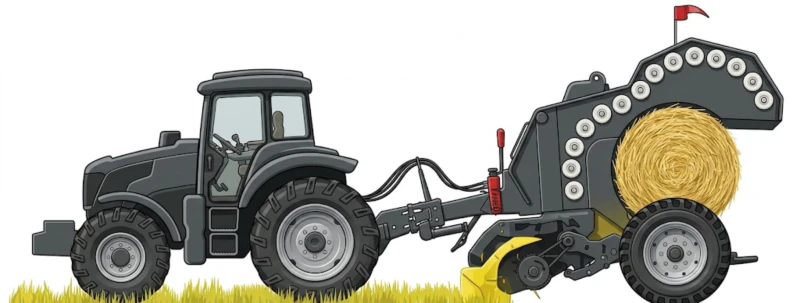
A round baler connected to a tractor is not a free-rolling implement — it has rolling resistance from its own tyres, the compression force that the pickup mechanism exerts backward against the forward motion of the tractor as material is engaged, and in loose or wet soil conditions, the additional draught of the baler’s wheels sinking into the surface. This combined drawbar pull demand adds to the tractor’s total load and reduces the engine power available for PTO drive. A tractor matched exactly to the baler’s PTO requirement with no power reserve for drawbar load will lug the engine under field conditions that require both PTO and drawbar power simultaneously — precisely the conditions of dense windrow sections in soft ground, which is the most common real-world baling scenario in irrigated hayfields after irrigation.
The drawbar load of a trailed round baler in typical field conditions is 2–5 kN depending on baler weight, tyre specification, and soil conditions. This represents an additional 1–3 kW of tractor power consumption at normal baling speeds of 5–8 km/h — a small fraction of total power demand but one that compounds with the hydraulic pump load and PTO peak demand during the highest-load events of the baling cycle.
Including the Bale Transporter in the Power Budget
On operations where the baler tractor also tows the bale transporter during field clearance phases — alternating between baling and bale collection on the same tractor — the transporter’s laden weight must be included in the drawbar capacity assessment. A hydraulic bale transporter fully loaded with 10–15 bales weighs 3,000–5,000 kg. Towing this load across a soft irrigated field at 10–15 km/h requires substantial drawbar pull — typically 5–10 kN depending on soil conditions — that must be available from the tractor’s total power budget without compromising the remaining capability needed for the next baling sequence.
The practical recommendation for operations using a single tractor for both baling and transport is to add 15–20 kW to the baler’s recommended tractor power range to cover the transport load. For the 9YG-1.25 baler with a 9JYY-4.5 transporter on a single-tractor system, the recommended tractor power rises from 65–75 kW (baling only) to 80–95 kW (baling plus transport on the same machine). Alternatively, operating the baler and transporter with two tractors — one dedicated to each implement simultaneously — allows each tractor to be matched to its specific task without the power budget compromise that dual-use imposes.
5. Diagnosing a Mismatch: What Poor Tractor-Baler Matching Looks Like in the Field
The symptoms of tractor-baler mismatch are often attributed to baler faults, crop conditions, or operator error — when the actual cause is the tractor operating outside its matched range for the implement. The following symptom-to-cause mapping helps identify whether a performance problem is a tractor matching issue before spending time and money on baler inspection or adjustment.
Bale density inconsistency that is worse at higher windrow density sections
Likely cause: Tractor underpowered for peak PTO load — engine lugs and PTO speed drops on dense windrow entry, causing sensor density system to receive a false low-pressure signal and under-correct. Test: monitor PTO speed with a tachometer during dense windrow passage. If speed drops more than 3%, the tractor is underpowered or the PTO shaft is introducing additional drag.
Slow bale ejection gate opening — gate takes more than 5 seconds to fully open
Likely cause: Insufficient hydraulic flow at the remote valve. The ejection cylinder is starved of flow, particularly when PTO is engaged simultaneously. Test: time the gate opening cycle with PTO disengaged versus engaged. If the cycle is significantly faster with PTO off, hydraulic flow competition between PTO-driven pump demand and gate cylinder demand is the cause — the tractor’s pump cannot supply both simultaneously at rated flow.
Net wrap application failures or short wraps concentrated in afternoon baling
Likely cause: Tractor engine temperature drift reducing hydraulic pump efficiency in the afternoon as the tractor runs hot from sustained combined PTO and hydraulic load. The solenoid trigger response slows as hydraulic pressure drops below the trigger threshold. Test: check tractor coolant temperature during afternoon failures. If temperature is above normal operating range, add a rest period and check whether failures stop after cooldown. Confirm engine cooling system maintenance is current.
Tractor engine stalls when bale ejection is initiated while baling is still active
Likely cause: Total power demand of simultaneous PTO load plus ejection cylinder load exceeds the tractor’s available power. This occurs most severely in hot conditions when engine derating is most significant. Solution: disengage PTO before initiating bale ejection — standard operating practice for correctly matched systems — and select a tractor with adequate power reserve that the stall does not occur even with simultaneous demands.
Accelerated tractor transmission or hydraulic wear over successive seasons
Likely cause: Tractor consistently operating at or above its rated load — the mismatch that is invisible in any single field session accumulates as wear over multiple seasons of sustained over-load operation. If the tractor requires transmission service or hydraulic pump replacement more frequently than the manufacturer’s expected interval, and the primary use is hay baling, recheck the tractor’s power and hydraulic specification against the baler’s commercial-operation requirements.
Not Sure Whether Your Tractor Is Correctly Matched to Our Balers?
Our technical team can review your tractor’s power, hydraulic, and PTO specification against the commercial baler you are considering and advise on whether the match is correct — or what the next tractor upgrade should provide to eliminate the performance gaps you are experiencing.