
Square Baler with Straw Shredder: How a Built-In Crusher Changes Baling Efficiency
For farmers managing corn stalks, sorghum residue, and other tough crop materials, traditional square balers often struggle to achieve adequate bale density and consistent formation. The introduction of integrated shredding mechanisms has fundamentally transformed square baler performance when processing fibrous, woody agricultural residues. This comprehensive guide explores how shredder-equipped square balers overcome material handling challenges, maximize bale density, and create economic advantages for operations harvesting challenging crop materials.
Understanding Shredder-Equipped Square Balers
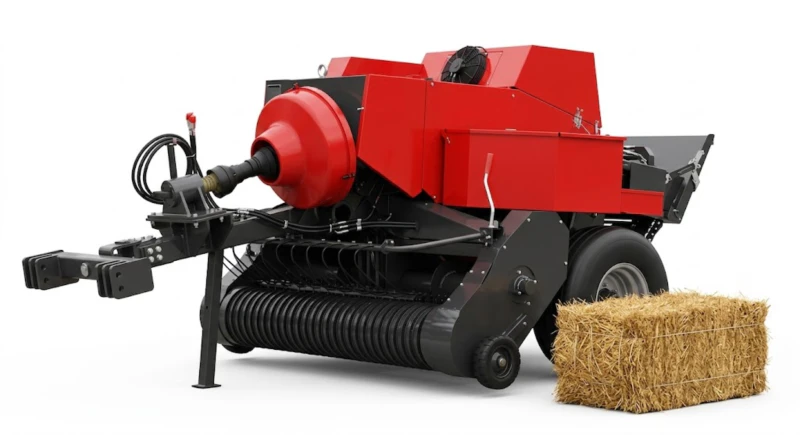
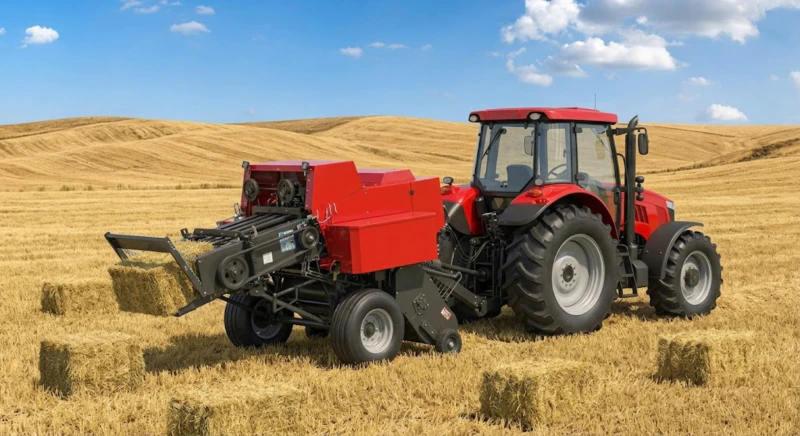
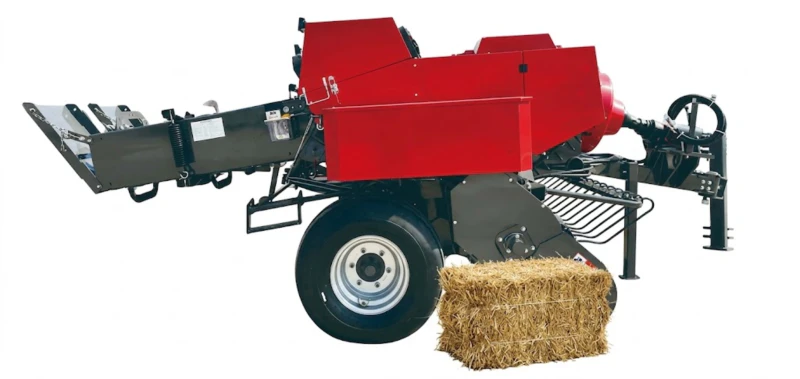
A square baler equipped with an integrated crop shredding system combines two distinct harvest operations into a single pass through the field. The primary baler mechanism remains unchanged—the pickup system gathers crop material, the feeder mechanism delivers forage into the bale chamber, and the plunger system compresses material into rectangular packages. However, the addition of a shredding component fundamentally alters how the equipment processes challenging materials.
Shredder-equipped balers incorporate either single or dual shredding mechanisms positioned ahead of the bale chamber. These systems employ one of two primary technologies: hammer mill systems using rotating hammers to strike and break crop material, or knife blade systems employing fixed cutting edges to slice fibrous material into shorter segments. Each approach produces similar results—the reduction of long, fibrous stalks into 2 to 4 inch segments that compact more efficiently in the bale chamber.
The mechanical power required to operate crop shredding systems necessitates more substantial tractor horsepower compared to standard square balers. Shredder-equipped models typically require 70 to 150 horsepower depending on bale chamber size, shredding mechanism complexity, and field conditions. Operators with older or smaller tractors may find shredder equipment requires equipment upgrades or may need to accept reduced operational speeds to accommodate available horsepower.
Shredding Mechanism Technology and Operating Principles
Key Advantage: Shredding mechanisms reduce stalk length from 8 to 12 inches to 2 to 4 inches, enabling compression of rigid materials to densities exceeding 45 pounds per cubic foot—increases of 30 to 50 percent compared to unshredded bales.
Hammer mill shredders operate at rotational speeds of 1,400 to 2,200 revolutions per minute, depending on equipment design and crop material characteristics. As crop material passes through the shredding chamber, rotating hammers mounted on a central shaft strike the material repeatedly, breaking down stalks, stems, and other fibrous components through impact force. This technology has proven particularly effective for corn stalks and sorghum stover due to its aggressive material breakdown and high throughput capacity.
Knife blade shredders employ fixed cutting edges positioned around the material flow path. As crop material enters the shredding chamber, rotating rotor assemblies carry material into the fixed blades, which slice the material into short segments. Knife systems typically operate at 400 to 800 revolutions per minute and produce more uniform segment length compared to hammer systems. Some operators prefer knife shredders for materials requiring more precise cutting, such as straw crops where material quality affects market value.
Certain advanced shredder systems incorporate dual shredding mechanisms operating in series, with the first shredder performing initial material breakdown and a second shredder creating finer material segmentation. Dual-stage systems produce more uniform particle size distribution, which translates to superior bale density and improved material compression throughout the bale formation process. However, dual-stage systems require substantially higher horsepower and are most economical for large commercial operations processing 500 or more tons of material annually.
Crop Material Suitability and Performance Optimization
Corn stalk material represents the primary target crop for shredder-equipped balers. Corn stalks, characterized by rigid cellulose structure and high fibrous content, prove challenging for conventional balers to compress into dense packages. The shredding mechanism’s ability to break corn stalks into short segments enables plunger systems to compress material more effectively, increasing bale density from 25 to 35 pounds per cubic foot (standard corn stalk bales) to 40 to 50 pounds per cubic foot (shredded bales).
Sorghum stover—the residual plant material remaining after grain sorghum harvest—responds exceptionally well to shredding technology. The tough, woody characteristics of sorghum stalks make efficient baling difficult without shredding assistance. Shredded sorghum stover bales achieve density and consistency enabling commercial marketing and long-distance transportation, opening economic opportunities for operations producing sorghum residue as a standalone crop.
Wheat straw, though less fibrous than corn stalks, benefits from shredding through improved bale consistency and enhanced density. Shredded wheat straw bales exhibit superior structural integrity during transport and storage, with reduced likelihood of bale deformation during mechanical handling. This improvement in bale quality often justifies the increased operational complexity and horsepower requirements associated with shredder equipment.
Small grain residues including barley straw, oat straw, and rye straw all respond positively to shredding technology. The uniform segmentation of these materials enables more efficient compression, reduced storage space requirements, and improved handling characteristics. For operations producing multiple straw crops, shredder equipment investment provides benefits across all material types processed.
Bale Density Enhancement and Economic Benefits
The primary economic benefit of shredder-equipped balers derives from substantially increased bale density. Standard square balers produce corn stalk bales at densities of 25 to 35 pounds per cubic foot. Shredder-equipped systems routinely achieve 40 to 50 pounds per cubic foot, representing density increases of 30 to 50 percent. For commercial operations marketing corn stalks as bedding material or livestock forage, this density improvement directly translates to increased weight per bale and higher revenue per field.
The transportation economics of high-density bales prove substantial. A trailer hauling standard corn stalk bales at 25 pounds per cubic foot can transport approximately 10 to 12 tons. The same trailer hauling shredder-equipped bales at 45 pounds per cubic foot can transport 18 to 20 tons—an increase of 50 to 100 percent in per-load capacity. For operations engaged in commercial corn stalk marketing, the reduction in transportation requirements alone frequently justifies shredder equipment investment within two to three harvesting seasons.
Storage efficiency represents an additional economic advantage. Denser bales occupy less storage space, requiring smaller storage structures and reducing facility costs. A 10,000 square foot storage facility accommodates approximately 800 standard density corn stalk bales, but can store 1,200 to 1,400 shredder-produced high-density bales. For operations with limited storage infrastructure or those considering facility construction, the space-saving benefits of high-density bales can justify significant operational complexity increases.
Moisture Content Management and Timing Optimization
Crop moisture content significantly influences shredder performance and bale formation quality. Optimal shredding occurs at moisture levels between 10 and 20 percent depending on material type. At these moisture levels, crop material exhibits sufficient rigidity for efficient shredding while possessing adequate moisture to promote compression in the bale chamber. Excessively dry material (below 10 percent moisture) becomes brittle and shreds into finer fragments that escape through clearances in the shredder chamber, reducing efficiency.
Overly moist material (above 25 percent moisture) impedes efficient shredding and frequently causes material to wrap around shredder components, resulting in blockages and reduced throughput. Operators of shredder-equipped balers must time harvesting operations carefully to achieve optimal moisture conditions. Corn stalks are typically ready for harvest in late autumn after grain harvest but before excessive rainfall or early winter conditions increase material moisture.
Weather monitoring becomes critical for shredder operations. Light rain or dew can elevate surface moisture above optimal levels, requiring field operations to be deferred until natural drying occurs. Conversely, extended dry periods may cause material to become excessively dry and brittle. Many experienced shredder operators conduct field trials—harvesting a few bales and assessing bale density and material quality—before committing to full-day harvesting operations.
Maintenance Requirements and Wear Component Management
Maintenance Reality: Shredder mechanisms experience significantly higher wear compared to standard baler components. Hammer mill systems typically require blade replacement every 40 to 80 operating hours, while knife blade systems require blade changes every 60 to 120 hours depending on material density and moisture content.
The aggressive material breakdown occurring in shredder chambers means wear components experience substantially greater stress compared to standard square baler operations. Hammer blades wear rapidly through repeated impact with hard crop materials, requiring frequent inspection and replacement. Many operators establish schedules for blade replacement every week or every 2 to 3 days of field operation, depending on material toughness and volume processed.
Replacement blade kits for hammer mill systems typically cost $200 to $500 per set depending on equipment model and source. Operators must maintain inventory of replacement blade kits to avoid field downtime during peak harvesting season. Many experienced shredder operators position blade replacement as routine consumable maintenance similar to twine and net wrap, budgeting replacement costs into annual operating expense projections.
Bearing and drive component maintenance on shredder systems requires special attention. The rotational forces generated by high-speed shredding mechanisms place significant loads on bearing assemblies and drive connections. Operators must maintain meticulous bearing lubrication schedules and inspect drive shafts and belt systems frequently for wear indicators. Premature bearing failure can result in rapid equipment degradation and costly repairs.
Regular monitoring of shredder component condition provides early warning of developing problems. Operators should listen for unusual noise patterns, monitor bale quality for consistency changes, and inspect shredder chambers regularly for blockages or wear. Many manufacturers recommend bearing inspection every 100 operating hours and complete shredder system assessment at the beginning and conclusion of each harvesting season.
Horsepower Requirements and Tractor Compatibility
Shredder-equipped square balers require substantially higher horsepower compared to standard square baler models of comparable bale chamber size. While a standard square baler might require 70 to 90 horsepower, an equivalent shredder-equipped model typically demands 100 to 150 horsepower. This horsepower premium exists because shredding mechanisms consume 20 to 40 percent of total equipment power, with the remainder supporting standard baling functions.
Operators with smaller or older tractors may find that shredder equipment exceeds their tractor’s capability. Attempting to operate shredder balers with inadequate horsepower results in PTO shaft overloading, reduced ground speed, inconsistent shredding, and poor bale formation. Equipment manufacturers provide specific horsepower recommendations based on field testing under typical operating conditions. Operators should verify their tractor’s actual available horsepower matches equipment requirements before purchasing shredder-equipped systems.
Some operators choose to supplement tractor power through equipment upgrades such as increased-capacity hydraulic systems or auxiliary power sources. However, these modifications prove expensive and rarely prove economically justified compared to accepting operational limitations or investing in more powerful tractors when shredder equipment represents a core harvesting strategy.
Market Applications and Commercial Opportunities
High-density corn stalk bales produced by shredder equipment have become valuable commodities in livestock feed markets. Cattle operations, particularly those with limited forage production, purchase corn stalk bales for winter feed supplementation and bedding material. The nutrient content of corn stalks—approximately 5 to 7 percent crude protein and 50 to 60 percent fiber—makes quality corn stalk bales particularly valuable for mature cattle and sheep requiring modest nutritional supplementation.
Bedding material markets represent another significant commercial opportunity for shredded straw products. High-density, finely shredded straw bales perform excellently as livestock bedding, with superior absorbency and reduced dust content compared to coarse straw. Many livestock operations prefer densely shredded straw bedding for dairy cattle and swine operations where cleanliness and animal health considerations justify premium bedding costs.
Biomass energy facilities increasingly purchase high-density straw and stalk bales for biofuel production. The superior density and reduced transportation costs of shredded bales make these materials economically viable for facilities requiring consistent feedstock supply. Long-term contracts between biomass facilities and agricultural producers have created stable markets for straw products, supporting equipment investment decisions.
Export markets for premium straw bales represent additional commercial opportunities. Asian livestock markets particularly value consistent, high-quality straw products, with export markets commanding significant price premiums compared to domestic markets. Shredder-equipped balers enable production of the uniform, dense bales required for export marketing, opening revenue opportunities for operators positioned near export facilities.
Operational Efficiency and Field Productivity
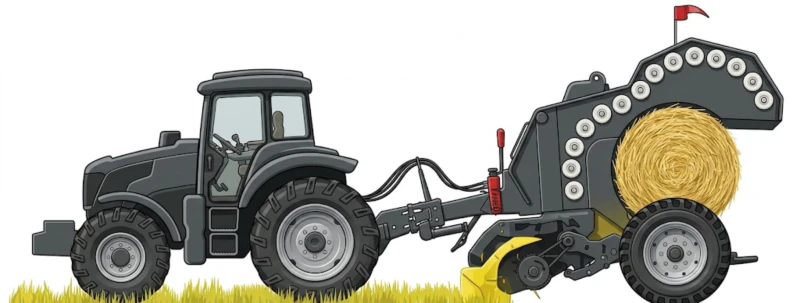
Field productivity with shredder-equipped balers typically ranges from 20 to 40 tons per day depending on tractor horsepower, ground speed, and material density. For operations harvesting corn stalks or sorghum residue over 100 or more acres, this productivity level enables completion of harvesting operations within the optimal harvesting window—typically 3 to 6 weeks after grain harvest but before winter weather deteriorates field conditions.
Bale consistency represents a critical operational advantage of shredder systems. The uniform material segmentation produced by shredding mechanisms results in bales of consistent density and dimension, facilitating efficient stacking, storage, and transport. Operators report that shredder-produced bales exhibit superior dimensional consistency compared to bales from non-shredder equipment, reducing handling losses and improving overall harvest efficiency.
Fuel consumption during shredder baling operations typically increases 20 to 30 percent compared to standard square baling due to increased power demands. A tractor operating a shredder baler might consume 8 to 12 gallons of fuel per hour, compared to 6 to 10 gallons for standard square baling. While fuel costs represent meaningful operational expense, the revenue increases from higher-density bales and improved transport efficiency typically justify the increased energy consumption.
Frequently Asked Questions
Investment Decision and ROI Analysis
Farmers evaluating shredder baler investment should conduct detailed economic analysis comparing equipment costs against anticipated revenue benefits. The primary revenue source comes from increased bale weight per unit—a 50 percent density increase produces 50 percent more tonnage per field harvested. For operations selling corn stalks at $30 to $50 per ton, this density benefit translates directly to additional gross revenue.
Secondary cost savings derive from reduced transportation requirements. Operations harvesting 200 acres of corn stalks producing 1,000 standard-density bales can transport this material in approximately 100 trailer loads. Using shredder equipment to produce 1,500 high-density bales would require only 70 to 80 loads—a 20 to 30 percent reduction in transportation trips. With transportation costs of $3 to $5 per load, this savings totals $600 to $1,500 annually.
For comprehensive information about shredder baler models, technical specifications, and performance comparisons, explore our detailed square baler equipment comparison resources featuring detailed specifications, user reviews, and performance metrics for shredder-equipped and standard square baler options.
Ready to Maximize Your Straw and Residue Harvesting Potential?
Our equipment specialists understand the unique demands of straw and residue harvesting operations. Whether you are evaluating shredder equipment for the first time or upgrading from standard baling systems, we provide comprehensive consultation to help identify the optimal equipment matching your specific material types, acreage, and market opportunities.
Contact Our Residue Harvesting Specialists
Explore our comprehensive line of shredder-equipped baling equipment and discover how advanced crop processing technology can transform your harvesting operations and profitability.
Conclusion: Shredder Technology Revolutionizing Residue Harvesting
Square balers equipped with integrated shredding mechanisms represent one of the most significant technology advances in forage harvesting equipment during the past two decades. The ability to process tough, fibrous crop materials into uniform, high-density bales opens market opportunities previously inaccessible to traditional baling equipment. For farmers harvesting corn stalks, sorghum residue, and straw crops, shredder equipment investment frequently proves economically justified within several years through density premiums, transportation cost reductions, and access to premium market channels.
While shredder-equipped balers demand higher horsepower investments and require more frequent maintenance compared to standard square balers, the economic benefits for residue-focused operations substantially exceed these additional costs. Modern shredder systems have proven highly reliable and cost-effective for large-scale residue harvesting operations throughout North America and internationally.
Whether you operate a small farm supplementing livestock feeding with harvested residue or a large commercial operation specializing in straw and stalk marketing, shredder-equipped square balers deserve serious evaluation. The thousands of satisfied shredder baler operators worldwide demonstrate that these advanced machines consistently deliver the performance, reliability, and economic value required for professional residue harvesting operations. Your investment in quality shredder equipment today will generate productivity improvements and profitability enhancements throughout years of successful harvesting seasons to come.