
Biomass & Straw Recycling
From wheat straw in northern China to rice residue in Southeast Asia and corn stover across the American Midwest — the equipment decisions that determine whether high-volume straw collection is commercially viable or operationally unsustainable.
The straw is already there. The question is whether your collection equipment can capture it at a cost per tonne that makes the entire chain profitable — and that question is answered almost entirely by baler selection and system design.
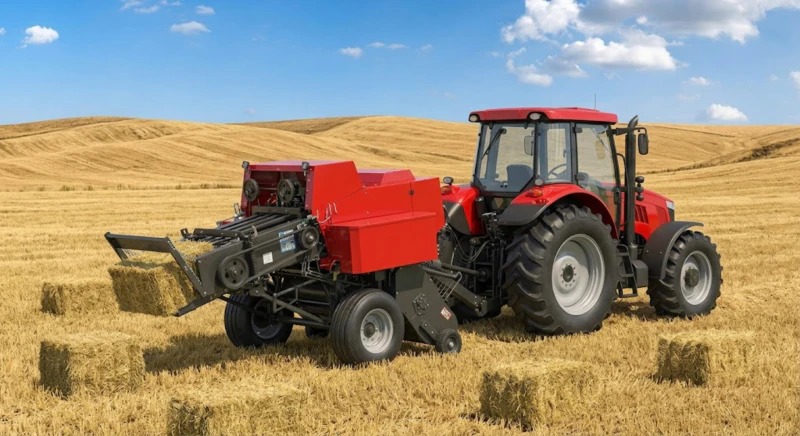
Approximately 600 million tonnes of cereal straw is produced annually as a by-product of grain harvest in Asia alone. Globally, total agricultural residue production — wheat straw, rice straw, corn stover, oat and barley straw — exceeds 2 billion tonnes per year, the majority of which is either left in the field to decompose, burned in place, or fed into low-efficiency local uses. The transition from field burning to organised biomass collection and processing — driven by air quality regulations, carbon emission reduction commitments, and the economic value of biomass as a renewable energy feedstock — is creating large-scale commercial demand for straw collection at a speed and volume that the agricultural equipment industry is only beginning to match with appropriately designed systems.
The commercial opportunity is real and growing. Biomass power plants in China, dedicated biomass energy programs across Europe and Southeast Asia, and pellet export markets supplying European heating fuel markets all create demand for baled straw at prices that make organised collection commercially viable — provided the collection cost per tonne is managed within the margin that the market price allows. At straw prices of USD 30–60 per tonne at the farm gate or USD 50–90 per tonne delivered to a processing facility, the collection operation typically needs to achieve a cost below USD 20–35 per tonne to be profitable. Whether that cost is achievable depends almost entirely on baler selection, operating speed, and the elimination of the field loss and mechanical downtime that inflate cost per tonne above the commercial threshold.
This guide covers the specific equipment requirements for high-volume commercial straw collection programs, the baler specifications that most directly affect cost per tonne, how to build a collection system that operates at commercial scale without the downtime and field loss that undermine the economics, and the role of post-baling handling in the complete straw-to-energy chain. For the baling equipment referenced throughout, see our round baler range for crop residue collection.
1. The Biomass Straw Market: What Is Driving Commercial Collection
Regulatory Drivers: The End of Field Burning
Open field burning of agricultural residues — the dominant disposal method for straw in China, Southeast Asia, and parts of South Asia for decades — is being progressively banned across the regions that account for the largest share of global straw production. China’s national ban on open burning in key agricultural provinces, enforced from 2016 onward with satellite monitoring and financial penalties, removed the lowest-cost disposal option for hundreds of millions of tonnes of straw annually and created immediate demand for organised collection alternatives. Similar regulatory trajectories are underway in India, Vietnam, Indonesia, and Thailand, where air quality crises linked to straw burning have created political pressure for rapid enforcement of burning prohibitions that were previously unenforced on paper.
The regulatory driver creates something unusual in agricultural commodity markets: a mandated supply of material that must be removed from the field, combined with a growing infrastructure of processing capacity (biomass power plants, pellet mills, and briquetting facilities) that needs the material as feedstock. The market price for straw is therefore not purely supply-demand driven — it also reflects the cost of alternative disposal options and the regulatory premium associated with documented compliance. Straw collection contractors who can provide a documented chain of custody from field to processing facility — proving that the material was collected rather than burned — command a price premium in some markets over contractors who cannot provide this documentation.
Market Structures: Who Buys Straw and at What Price
The straw biomass market is not a single commodity market — it is several overlapping markets with different quality requirements, price levels, and logistical structures. Biomass power plants — typically the largest single buyers in a given region — purchase straw on long-term contracts at prices that reflect delivered energy content, moisture specification, and transport distance from the collection area to the plant. Their purchase specifications typically include maximum moisture (below 20% for direct combustion, below 15% for pelletisation), minimum bale density (typically 120 kg/m³ or above for efficient transport), and freedom from soil contamination that would increase ash content and reduce combustion efficiency.
Pellet mills — which process straw into densified biomass pellets for export — have tighter quality requirements: particle size after grinding must be consistent, which requires bales with relatively uniform straw length rather than the long-and-tangled material that poor collection equipment produces. Mushroom substrate producers require straw free from soil contamination and fungal spore loading from prolonged field exposure. Each end market has slightly different collection requirements, but all share the common denominators of low moisture at baling, consistent bale density, and minimal soil contamination — requirements that are primarily determined by the baler type and collection timing rather than by any post-collection processing step.
2. Why Straw Collection Is Different from Hay Baling — and Why Standard Configurations Fail
The Physical Characteristics That Change Everything
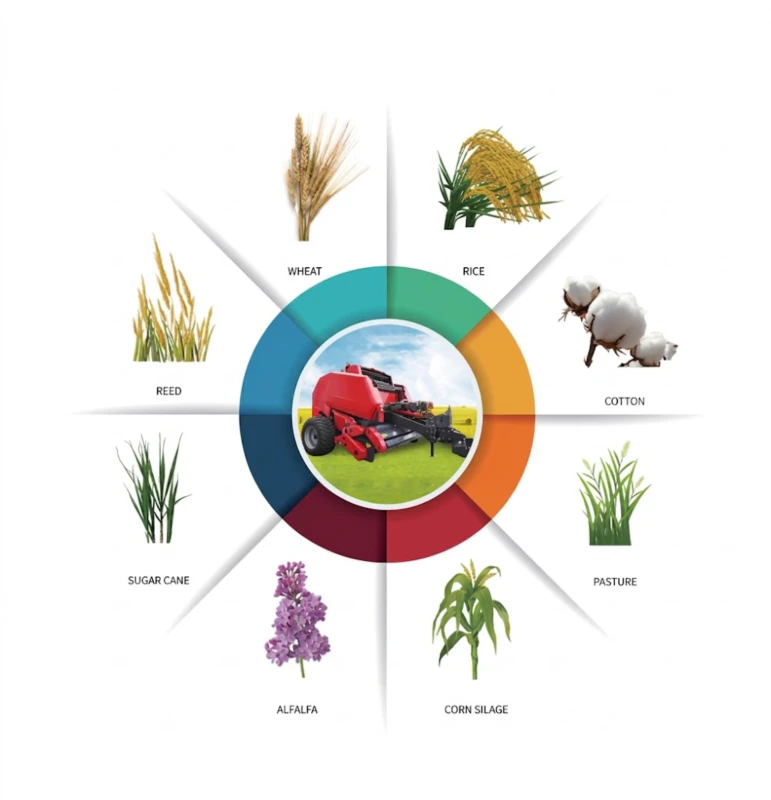
Cereal straw — wheat, rice, barley, oat — differs from hay in three fundamental ways that affect baler selection and operation. First, straw is typically very dry at collection time — below 15% moisture — which makes it highly resistant to compression and requires higher chamber pressure to achieve equivalent bale density compared to hay at 18–25% moisture. A baler whose density control system is calibrated for hay at normal baling moisture will produce significantly lower density bales on dry straw unless the pressure setpoint is adjusted upward. Second, straw has a high silica content in the plant tissue — particularly rice straw — which causes abrasive wear on pickup tines, cutterbar knives, and compression chamber surfaces at rates much higher than hay baling. Equipment that achieves acceptable wear life on hay may reach replacement intervals two to three times faster on continuous straw collection. Third, straw is more prone to bridging — the formation of an arch of material across the pickup intake that blocks smooth feed to the compression chamber — because dry straw stalks interlock more readily than the finer-stemmed material in most hay crops.
The Windrow Density Challenge
Straw left by a combine in its full swath — without any preliminary raking or windrowing — is typically too thin and too scattered for a standard round baler to pick up efficiently. The combine’s straw chopper and spreader distributes straw across the full header width at a depth of 50–150mm — a layer too thin to form a consistent windrow that a baler can follow at rated speed. Standard pickup tines operating on this thin layer either miss material between tine paths (creating high field loss) or collect soil from the field surface along with the straw (creating contamination that fails biomass buyer specifications). Most commercial straw collection operations therefore require a preliminary windrowing or raking pass to consolidate the combine-spread straw before baling — an additional field operation that adds cost but significantly improves collection efficiency and bale quality.
The exception is corn stover, which is discussed separately in the context of the 9YG-1.0C hammer-claw configuration. For wheat, rice, and small grain straw, a horizontal hay rake or finger-wheel rake consolidating the full combine spread width into a 1.0–1.5m windrow before baling is the standard preparation step that makes commercial baling practical. The 9LH-12 horizontal hay rake at 12m working width can consolidate the spread straw from two to three combine passes in a single rake pass, maintaining the raking throughput needed to keep ahead of a commercial baler fleet without creating a raking bottleneck.
3. Baler Specifications That Most Directly Affect Straw Collection Cost per Tonne
Pickup Width and Working Speed
Straw collection economics are dominated by the cost of tractor time — the number of hours required to bale a given area at a given straw yield. A baler with a 2240mm pickup operating at 6–8 km/h on consolidated windrows produces 2–3 ha/h of baled area, generating 40–70 bales per hour on standard wheat straw windrows. A narrower pickup at the same speed requires more passes per hectare to collect the same windrow density, or operates at reduced speed on heavier windrows that overflow the pickup width. For large-scale straw collection programs where tens of thousands of hectares must be processed within the 2–4 week window between grain harvest and soil preparation, pickup width and working speed are the primary drivers of whether the program is completed on schedule or runs into the planting season deadline.
Chamber Pressure and Density Control
Bale density is one of the most commercially significant specifications in straw biomass collection, because transport cost per unit of energy is determined by mass per bale rather than volume per bale. A bale at 150 kg/m³ carries 50% more dry matter per trip than an equivalent-volume bale at 100 kg/m³ — at the same transport cost per trip, the higher-density bale delivers a proportionally lower freight cost per tonne delivered to the processing facility. Most biomass buyers specify minimum bale density requirements (typically 120–150 kg/m³) that standard balers with manual pressure control may fail to achieve consistently on dry straw without careful operator management of chamber pressure settings.
Sensor-controlled density systems — which maintain the operator-set target density regardless of windrow density variation — are particularly valuable in straw collection because straw windrow density varies more than hay windrow density. Combine swaths across varying field conditions, different straw yield zones within a single field, and windrow overlap from adjacent combine passes all create density variation that a manual pressure system cannot compensate for at working speed. Sensor control automatically adjusts chamber pressure to maintain target density through these variations, producing the consistent bale weight that biomass buyers require and the transport efficiency that collection economics depend on.
Net Wrap vs Twine for Straw Biomass Bales
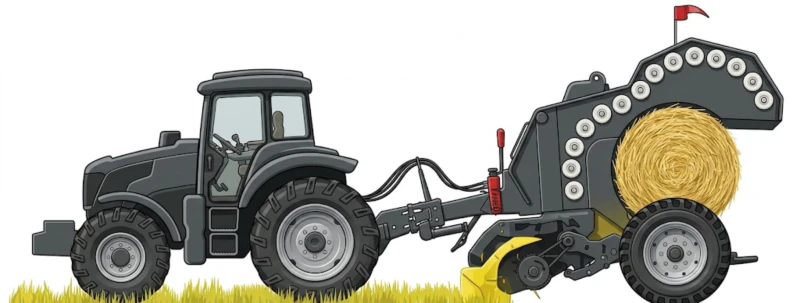
For most biomass straw applications — particularly direct combustion in biomass power plants — net wrap is the preferred binding method despite its higher per-bale cost relative to twine. The reasons are practical: net-wrapped bales maintain their shape better under mechanical handling by grab loaders and conveyor systems at the processing facility; the net wrap can often be removed as a single piece at the facility rather than requiring manual twine cutting and removal; and outdoor storage of straw bales for the weeks or months between collection and use is significantly better with net wrap than twine, as straw is more weather-sensitive than most hay crops during outdoor storage due to the absence of the leaf fraction that sheds rain from net-wrapped hay bales. For pellet mill applications where the bale will be fed directly into a shredder or grinder, the processing facility may specify twine-only bales if their infeed system cannot handle net wrap — confirm the binding specification with the buyer before commissioning the baling operation.
Wear Rate and Maintenance Cost on Abrasive Straw
The abrasive silica content of cereal straw — and particularly rice straw — accelerates wear on every component that contacts the material: pickup tines, feed rotor teeth, compression chamber roller surfaces, and knife cutterbar blades. Commercial straw collection programs that run balers for 12–16 hours per day during the post-harvest window experience wear rates that can be two to three times higher than the same machine used only for hay baling. Budgeting for higher-frequency replacement of pickup tines (inspect every 100 hours in straw versus every 200 hours in hay), lubricating the compression chamber roller bearings at shorter intervals, and maintaining a stock of replacement tines on-site to avoid downtime during the collection window are the practical adaptations that successful straw programs make compared to standard hay baling maintenance protocols.
4. The Complete Straw Collection Chain: From Combine Pass to Processing Facility
A commercial straw collection operation for biomass energy is not just a baling operation — it is a logistics chain that must move large volumes of bulky, low-value-per-tonne material efficiently from hundreds or thousands of field locations to a processing facility, within the narrow window between grain harvest and soil preparation. The economics of this chain depend on minimising the cost per tonne at every stage, and the stage costs are not independent — decisions made at the baling stage directly affect the cost of the transport and handling stages that follow.
Field Collection and Interim Storage
After baling, straw bales are typically collected from the field using hydraulic bale transporters (the 9JYY-4.5 at 4500 kg capacity provides an efficient field-to-interim storage shuttle at cycle times of 10–15 minutes for nearby storage sites) and aggregated at a centralised field-edge interim storage location before primary transport to the processing facility. This interim storage step decouples the baling rate from the processing facility’s intake rate, allowing baling to proceed at the maximum rate the weather and crop conditions allow without waiting for the facility’s intake schedule to absorb each delivery.
Interim storage design matters for straw: straw bales stored directly on soil absorb moisture from the ground contact layer at rates that can take a 15% moisture bale to 25%+ moisture within 60 days, particularly in autumn weather with alternating rain and dry periods. Ground cover (woven polypropylene sheeting or existing concrete hardstand) under bale rows, combined with net-wrapped bale protection from above, maintains bale moisture within buyer specifications for 60–90 days of interim storage — sufficient for most collection-to-delivery cycles in commercial straw programs.
Transport to Processing Facility
Straw bale transport cost per tonne is highly sensitive to bale density: at 100 kg/m³ average bale density and 300 kg per bale, a standard flatbed truck carries approximately 15–18 bales (4.5–5.4 tonnes of straw) before reaching its dimensional limit. At 150 kg/m³ and 450 kg per bale, the same truck carries the same number of bales but at 6.75–8.1 tonnes — a 50% improvement in tonnes per trip at the same transport cost. The bale density difference between a standard manual-pressure baler and a sensor-controlled high-density baler translates directly into 30–50% more straw per transport trip — one of the most commercially significant returns on the investment in sensor-controlled density technology in a straw biomass program.
Power Transmission Reliability Across the Collection Season
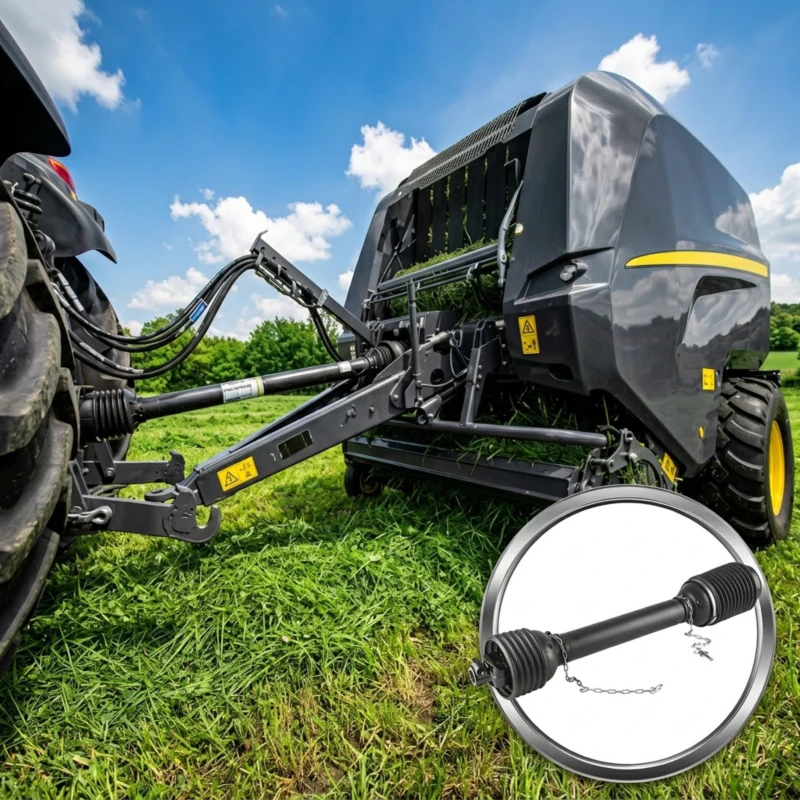
Commercial straw collection programs run balers continuously for 10–16 hours per day across a 2–4 week post-harvest window. The PTO driveshaft connecting tractor to baler operates under sustained load across this entire period, transmitting the higher-than-hay chamber pressures required for straw density targets and absorbing the additional torque peaks that abrasive material and dense windrow sections generate. A correctly specified pto shaft rated for the sustained duty cycle of straw collection — with appropriate torque reserve above the straw-specific operating load — reduces in-season failure risk to near zero with correct maintenance. An undersized or poorly maintained shaft on a straw collection baler is the highest-probability source of unexpected downtime during the collection window, with downtime costs that can exceed the cost of a replacement shaft within a single collection season.
5. Building the Economics: What Makes a Straw Collection Program Profitable
The profitability of a straw biomass collection program is determined by the gap between the revenue per tonne delivered to the processing facility and the total cost per tonne across all stages of the collection chain. The following framework illustrates the key cost drivers and how equipment decisions affect each:
| Cost Stage | Key Cost Driver | Equipment Decision That Controls It |
|---|---|---|
| Windrowing | Hectares per tractor-hour | Rake working width (wider = fewer passes per hectare) |
| Baling | Tonnes baled per tractor-hour | Pickup width + working speed + blockage frequency |
| Field clearance | Trips per day, cycle time | Transporter payload (4500 kg vs single-bale trailer) |
| Primary transport | Tonnes per truck trip | Bale density (sensor control vs manual pressure) |
| Quality penalty risk | Moisture and contamination rejection rate | Baling timing + pickup height setting + storage surface |
| Total cost/tonne | Optimising each stage reduces total below the USD 20–35/t commercial threshold | |
The table makes clear that no single equipment decision determines profitability — it is the compound effect of the right rake width, the right baler pickup and density control, the right field clearance system, and correct baling timing that brings total cost below the commercial threshold. Operations that invest in one stage while leaving another underspecified typically find that the underspecified stage generates costs that offset the savings achieved elsewhere. A wide, fast baler running on thin windrows because the raking stage is undersized achieves high hectarage but at high field loss — increasing tonnes-per-hectare cost through collection inefficiency. A tight, consistent baling operation whose bales sit on bare soil in a wet autumn losing 15% dry matter to storage damage delivers lower quality per tonne of transport cost than a more modest baling operation with better storage management.
For established straw collection contractors, the priority investment for reducing cost per tonne is almost always sensor-controlled density baling, because it simultaneously improves bale quality (meeting buyer density specifications consistently), reduces transport cost (more tonnes per truck trip), and reduces quality penalty risk (consistent bale weight simplifies buyer acceptance testing). The capital premium for sensor-controlled density over manual pressure control is typically recovered within a single collection season through freight cost savings on the transport stage alone for programs processing above 5,000 tonnes annually.
Planning a Straw Biomass Collection Program?
Whether you are establishing a new straw collection operation or upgrading existing equipment to meet biomass buyer density specifications, our team can help you select the right baler configuration, rake width, and transport system for your program volume and delivery targets.