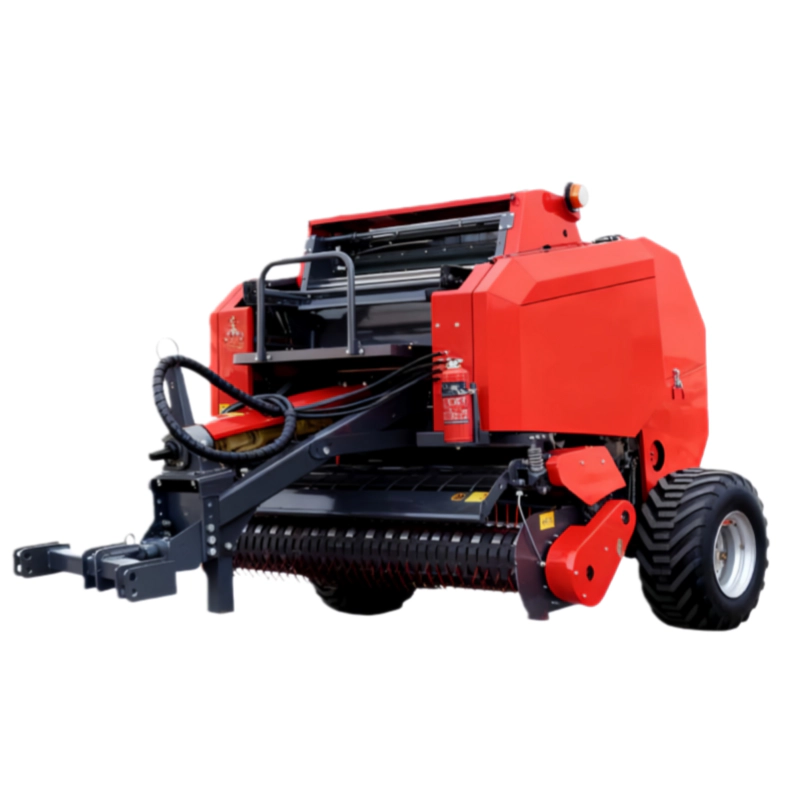
9YG-1.0 Round Baler
9YG-1.0 Round Baler — 1900mm camless pickup, 16-drum chamber, sensor density 115–200 kg/m³, auto net wrap, 40–100 bales/h. For 48–80kW tractors. Corn, rice & hay.
9YG-1.0 Round Baler: High-Efficiency Intelligent Baling Purpose-Built for 48–80 kW Tractors on Small and Medium Farms
A camless semi-forced feeding system, 16-drum sensor-controlled compression chamber, and automatic net wrap — delivering 40–100 bales per hour at 115–200 kg/m³ from tractors as small as 48 kW, without sacrificing the bale density and consistency that commercial operations require.
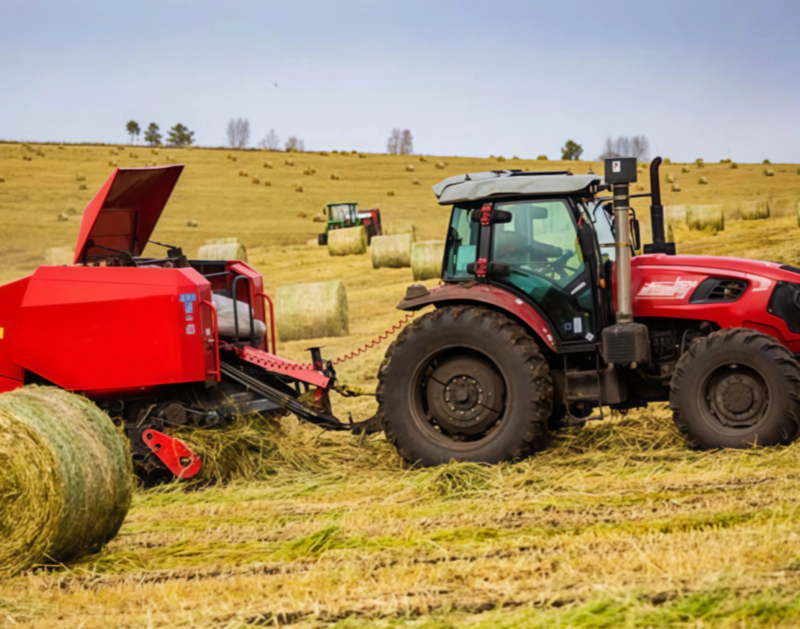
1. Introduction: Professional Baling Technology Accessible to Small and Medium Farm Operations
The most persistent equipment gap in mid-scale agricultural operations has never been the baling technology itself — it has been access to that technology. Professional-grade sensor-controlled bale density, camless precision pickup, and forced-feed intake systems have historically been available only in large, high-horsepower baler configurations that require tractors well above the capacity of the majority of working farms worldwide. Operations running 48–80 kW tractors have been forced to choose between underpowered basic balers producing loose, inconsistent bales, or investment in new high-horsepower tractors to qualify for better equipment.
The 9YG-1.0 Round Baler resolves this gap directly. It packages a proprietary axial-flow semi-forced feeding mechanism, camless pickup design, and sensor-controlled compression system into a 2640 kg platform matched to 48–80 kW tractors — the power class that represents the majority of tractors deployed on small and medium-scale farms, rice and wheat holdings, and multi-crop operations where straw recovery supplements primary crop income. The result is 115–200 kg/m³ bale density and 40–100 bales per hour throughput from equipment that users can operate with the tractors they already own. Browse our complete round baler product range to compare the 9YG-1.0 alongside larger models by required power and bale specification.
Whether the application is corn stover collection for biomass energy, rice straw baling for livestock bedding, natural forage recovery for on-farm feed use, or commercial hay production for market sale, the 9YG-1.0 produces standardized round bales of 200–400 kg that facilitate efficient transport, stackable storage, and consistent commercial value — making it a practical centerpiece of any straw resource utilization or feed commercialization program.
2. Working Principle: Three-Stage Baling Cycle with Camless Precision
Stage 1 — Camless Pickup and Semi-Forced Feeding
As the tractor pulls the 9YG-1.0 forward, the 1900mm spring-tooth pickup reel lifts windrowed material from the field surface in a smooth, consistent sweep. The camless, ring-free pickup design is a defining feature that separates the 9YG-1.0 from conventional balers in this power class. Traditional cam-track pickup systems use complex cam profiles and guide rings to control tine trajectory; these components wear, develop play, and require regular adjustment that adds maintenance time and creates failure points. The camless design eliminates the cam track and guide ring entirely, creating a simpler mechanical path with fewer components that can bind, wear, or misalign. Tine movement is smoother and more consistent, reducing crop loss at the pickup margin and enabling clean operation even at the full 1900mm working width.
Material from the pickup enters the proprietary axial-flow semi-forced feeding system — a tine roller and drum arrangement that provides active material control through the transition into the compression chamber. The tine roller grips and advances incoming material positively, while the drum stage provides secondary conveyance redundancy. This semi-forced architecture achieves preliminary orderly arrangement and pre-compression before material enters the chamber, optimising the power transmission path and reducing energy consumption by up to 20% compared to traditional impact-and-friction feeding methods. The practical result is smooth, blockage-free operation across the full 5–20 km/h working speed range, including in the dense, tangled windrows that cause clogging in machines with simpler passive feeding.
Stage 2 — 16-Drum Compression with Sensor Density Control
Material enters the drum-type compression chamber formed by 16 rolling drums, each 222mm in diameter, within a 1000mm wide, φ1000mm diameter chamber. Driven by the tractor PTO at 720 r/min, the drums rotate continuously to build a tight cylindrical core from the inside outward. The sensor-controlled density system monitors compression chamber pressure in real time, with a built-in controller adjusting the main hydraulic pressure valve to maintain the operator-set density target regardless of feed rate fluctuations or crop type variation. This automation maintains uniform density from the core to the outer layer of every bale — the consistency that prevents soft-core collapse during stacking and shape loss during transport. Three density levels are preset accessible from the cab, covering the 115–200 kg/m³ range to accommodate different storage and transportation requirements without requiring the operator to leave the seat.
Stage 3 — Automatic Net Wrap and Ejection
When the bale reaches its preset diameter of φ1100mm, the automatic net wrap system activates, applying 2000m net — 1.0m wide — around the completed bale surface in a controlled spiral pattern. The low failure rate of the net wrap mechanism requires only two daily checks: confirm the 1.0m-wide original-specification netting roll is correctly loaded, and inspect the netting rollers for straw clipping accumulation that could impede free rotation. After wrapping completes, the hydraulic rear gate opens and the finished Φ1100 × 1000mm bale rolls onto the field at 200–400 kg depending on density setting. The gate closes automatically and the machine immediately enters the next cycle, sustaining continuous production without field stops.
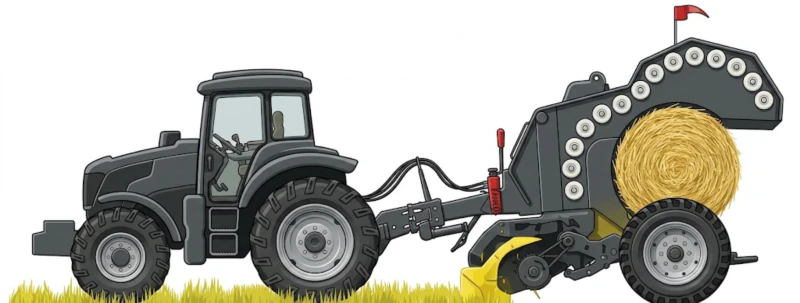
Sensor-controlled density is typically a premium feature reserved for large high-horsepower machines. The 9YG-1.0 includes it as standard because the economic impact of bale density consistency is just as significant on a small farm as on a large operation. A bale at 180 kg/m³ contains approximately 50% more dry matter per cubic metre than one at 120 kg/m³ — meaning 50% fewer bales to handle, stack, and transport per tonne of forage. For small operations where labor efficiency and transport cost per tonne are critical margins, this density advantage matters more per bale, not less. Find the full product comparison at our forage baler catalogue.
3. Complete Technical Specifications
The following table contains the verified engineering specification sheet for the 9YG-1.0 Round Baler, derived from factory test documentation under standard operating conditions at rated power input.
| No. | Parameter | Unit | Specification |
|---|---|---|---|
| 1 | Model Name | / | 9YG-1.0 Round Baler |
| 2 | Hitch Type | / | Trailed |
| 3 | Pickup Width | mm | 1900 |
| 4 | Pickup Type | / | Spring Tooth Type (Camless) |
| 5 | Feeder Type | / | Tine Roller + Drum Type (Semi-Forced) |
| 6 | Baling Chamber Type | / | Drum Type |
| 7 | Baling Chamber Width | mm | 1000 |
| 8 | Baling Chamber Diameter | mm | φ1000 |
| 9 | Number of Rolling Components | pcs | 16 (Drums) |
| 10 | Rolling Drum Diameter | mm | φ222 |
| 11 | Tying Method | / | Net Wrap (Automatic) |
| 12 | Required Power | kW | 48–80 |
| 13 | Structural Weight | kg | 2640 |
| 14 | PTO Speed | r/min | 720 |
| 15 | Overall Dimensions (L×W×H) — Working State | mm | 3750 × 2300 × 2020 |
| 16 | Bale Density Control | / | Sensor Control (3 Preset Levels) |
| 17 | Bale Size (Diameter × Width) | mm | Φ1100 × 1000 |
| 18 | Bale Density | kg/m³ | 115–200 |
| 19 | Productivity | bales/h | 40–100 |
| 20 | Wheel Track | mm | 2045 |
| 21 | Working Speed | km/h | 5–20 |
| 22 | Net Specification (Length × Width) | m | 2000 × 1.0 m / bale |
4. Two Core Technology Highlights
Highlight 1: Axial-Flow Semi-Forced Feeding with Camless Pickup
The proprietary axial-flow semi-forced feeding mechanism is the engineering differentiator that separates the 9YG-1.0 from conventional balers in the 48–80 kW power class. Through the coordinated action of the tine rollers and drum spirals, material achieves preliminary orderly arrangement and pre-compression before it reaches the main compression chamber. This pre-processing stage optimises how material enters the 16-drum chamber array, reducing sudden load spikes that would otherwise strain the drivetrain and creates a more consistent density distribution from the first revolution of the baling cycle. The system reduces energy consumption by up to 20% compared to traditional impact-and-friction feeding methods — a meaningful efficiency gain when operating within the relatively tight power envelope of a 48–80 kW tractor.
The camless, ring-free pickup design complements the feeder system by eliminating the most common failure points in the crop intake path. Conventional cam-track pickups develop wear at the cam profile contact points and guide ring bearing surfaces over hundreds of operating hours, eventually causing tine trajectory variation that produces uneven intake and increased crop loss at the pickup margins. The camless design removes these components, providing a mechanically simpler, more robust pickup path with fewer maintenance points and a smoother, more consistent tine movement pattern that delivers clean pickup across the full 1900mm working width without adjustment over the machine’s service life. The practical field result — smooth operation across the full 5–20 km/h working speed range without blockages, even at high feed rates — is what makes the throughput of 100 bales per hour achievable from equipment in this power class.
Highlight 2: Sensor-Controlled Bale Density as Standard Equipment
The sensor-controlled bale density system in the 9YG-1.0 monitors compression chamber pressure in real time and automatically adjusts the main hydraulic system to maintain a constant compression force regardless of feed rate fluctuations or crop characteristic variation. Three density levels are preset accessible from the cab controller, covering the 115–200 kg/m³ range: a lower setting for lightweight materials intended for manual handling; a medium setting for standard hay and straw transport applications; and a higher setting for maximum-density commercial hay production where transport cost per tonne justifies tighter compression. The system maintains the selected level continuously without operator monitoring, producing bales with uniform density from core to outer layer across an entire working day.
This type of intelligent density control is typically a premium feature available only in large high-horsepower machines costing substantially more than the 9YG-1.0. Including it as standard in a 48–80 kW baler allows users who previously accepted variable-density bales as an inherent limitation of lower-power equipment to produce consistently high-quality output without relying on accumulated operator experience to judge density through indirect indicators. High and stable density directly translates to better storage stability — bales at consistent density stack without collapsing or deforming under load — and higher transport economics, with more dry matter per vehicle and fewer trips per tonne.
5. Three Core Product Advantages
Advantage 1: Wide Adaptability to Existing Low-Horsepower Tractors
The 9YG-1.0 is specifically optimised for 48–80 kW tractors — the most widely deployed power class on small and medium-scale farms across Asia, Eastern Europe, and developing agricultural markets. This optimisation is not simply a matter of reduced power demand; it reflects comprehensive drivetrain calibration, weight distribution, and hydraulic system sizing that allows the baler to perform at its rated specification without pushing the tractor’s power, hydraulic, or thermal limits. Users achieve efficient baling without replacing existing tractors, without the large capital investment that higher-horsepower balers require, and without the operating cost penalty of running an oversized tractor for baling duties. For operations already equipped with 48–80 kW tractors, the 9YG-1.0 represents a direct productivity improvement accessible at a significantly lower investment threshold than competing high-horsepower alternatives.
Advantage 2: Superior Operating Efficiency Driven by Anti-Blockage Architecture
The camless pickup and axial-flow semi-forced feeder combination eliminates intake blockages from the machine’s operating profile across diverse crop types and conditions. For corn stalks — the most demanding standard crop in this class — the recommended operating speed of 8–15 km/h provides smooth, continuous intake without the periodic stops for manual blockage clearing that reduce daily output on machines with simpler feeding systems. For lightweight rice straw, the machine can operate across the full 5–20 km/h speed range without constraint. Peak productivity of 100 bales per hour is achievable under good conditions — approximately twice the output of conventional models in this power class — enabling completion of larger acreages within the compressed harvest windows that weather risk management demands.
Advantage 3: Standardized High-Quality Bales Suitable for Both Handling and Market
The Φ1100 × 1000mm bale size at 200–400 kg (depending on density setting and crop type) is sized to be manageable by small farm operators while delivering sufficient volume for economical transport and storage. At the higher end of the density range, bales resist deformation during stacking without requiring additional banding or support. The consistent geometry produced by the sensor-controlled compression system means bales stack predictably and uniformly, maximising storage density in barn or outdoor stack configurations. For operations marketing straw or hay commercially, the uniform weight and size of 9YG-1.0 output meets the standardization requirements that buyers and processors increasingly specify — making the machine’s output commercially viable in markets where variable-density, irregular bales from lower-quality equipment are discounted or rejected.
6. Field Application Scenarios
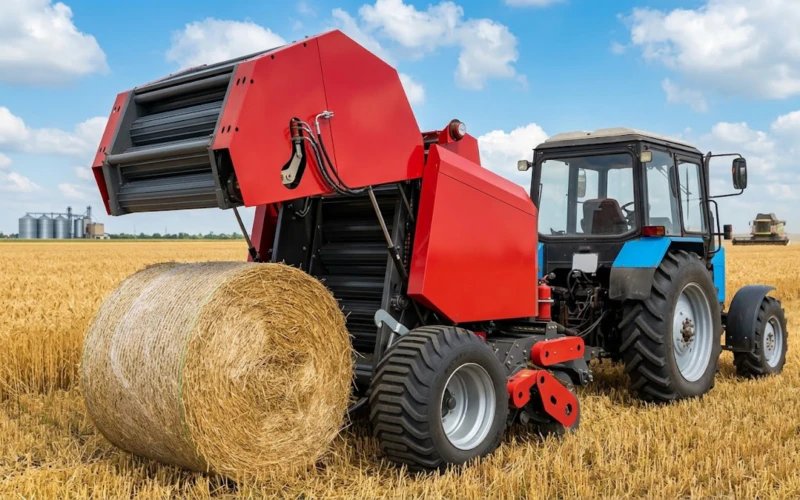
Crop Straw Resource Utilization
Government straw resource utilization programs create direct demand for standardized baled straw that meets processor specifications for biomass energy, paper pulp, mushroom substrate, and organic fertilizer production. The 9YG-1.0’s consistent bale geometry and adjustable density settings enable operators to produce output matched to specific processor requirements — high density for biomass energy applications where weight per vehicle maximises revenue; lower density for fragile substrate applications where over-compression reduces product suitability. The machine’s compatibility with low-horsepower tractors allows participation in these programs without the capital investment in heavy equipment that would undermine the economics of small-scale straw collection.
Livestock Feed Commercialization
Natural pasture and hay crop baling for livestock feed sale is one of the most direct paths to return on investment for the 9YG-1.0. Standardized bales at consistent density enable accurate feed weight accounting, professional presentation for buyer inspection, and reliable stacking without deformation during the weeks or months between production and delivery. Operations that previously sold loose material or through middlemen who operated their own baling equipment can capture additional margin by producing finished baled product themselves, using tractors they already own and capital investment matched to their operating scale.
Multi-Crop Mixed Farm Operations
Farms that grow multiple crops — corn, rice, wheat, and mixed pasture across different field blocks and seasons — benefit specifically from the 9YG-1.0’s crop adaptability. The adjustable working speed and three-level density control allow the same machine configuration to bale corn stover at 8–15 km/h, rice straw at 5–20 km/h, and natural forage at intermediate settings without equipment changes or configuration adjustments. The camless pickup and semi-forced feeder maintain consistent intake quality across these different material types, eliminating the operational variability that single-crop-optimised machines produce when processing diverse residues.
7. Manufacturing Quality and Certification
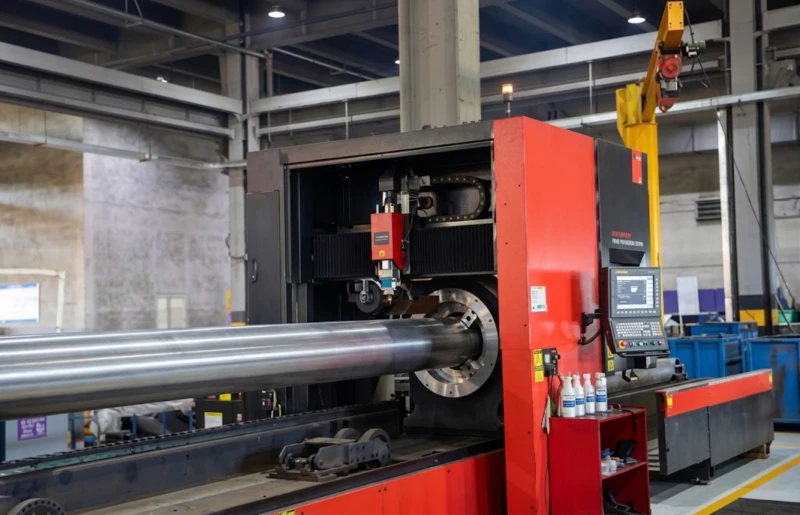
The 9YG-1.0 is manufactured under ISO 9001 quality management system certification across the complete production process — from raw material incoming inspection through frame fabrication, component assembly, and final commissioning. This certification ensures that quality control is embedded in the production sequence rather than limited to end-of-line inspection, providing traceability across every stage from steel plate cutting to completed machine delivery.
8. Related Product: PTO Drive Shaft for 9YG-1.0 Operation
The 9YG-1.0 draws all mechanical energy for its pickup, feeder, compression drums, hydraulic density control, and net wrap system through a single connection — the PTO driveshaft running at 720 r/min. Selecting a correctly specified, dynamically balanced pto shaft matched to both the tractor PTO output and the baler input specification is a prerequisite for the sensor density control system to operate accurately and for the compression drums to deliver consistent output — particularly important in the 48–80 kW power range where operating close to the tractor’s capacity makes transmission losses and vibration more impactful than in higher-horsepower setups.
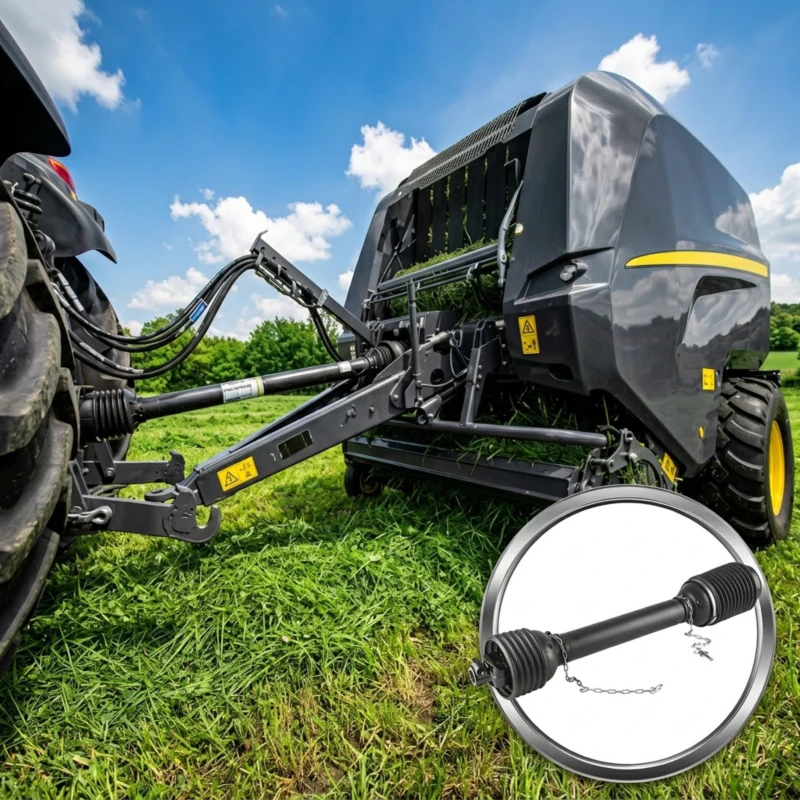
Why Shaft Quality Matters in the 48–80 kW Power Range
Torque capacity matched to peak loads: Dense corn stalk windrows generate peak torque demands that last only fractions of a second but can exceed steady-state operating torque by a factor of three. Universal joints and spline sleeves made from high-strength alloy steel resist these peak loads without deformation, protecting the baler input gearbox and the tractor PTO from the damage that repeated torque spikes cause over a season.
Dynamic balance at 720 r/min: A driveshaft that is not dynamically balanced to 720 r/min operating speed generates vibration that is transmitted directly to both the tractor drivetrain and the baler input shaft. This vibration accelerates bearing wear on both sides and can cause false pressure readings in the sensor density control system, degrading the density consistency that is the 9YG-1.0’s primary quality advantage. Factory dynamic balance certification at rated operating speed ensures smooth transmission across the full working day.
Overload protection for field obstructions: When the compression chamber encounters a hard obstruction — a stone, metal fragment, or tightly knotted wire bundle — torque spikes instantly to levels that can fracture gearbox gear teeth or shear bearing races. The friction clutch or shear-pin safety device must disconnect the drive in milliseconds to prevent this damage. Confirm the overload protection device is rated and calibrated for the torque range at 720 r/min before operating in fields with potential debris contamination.
9. Frequently Asked Questions (FAQ)
Yes, and the 9YG-1.0 adapts well to both. For corn stalks, which are more rigid and dense, maintain an operating speed of 8–15 km/h to ensure smooth, consistent feeding through the tine roller mechanism. For rice straw, which is lighter and more flexible, the machine operates effectively across the full 5–20 km/h speed range. The camless pickup handles both crop types cleanly, and the sensor density control automatically maintains the selected compression force regardless of the different material characteristics.
The net wrap failure rate is very low with only two daily check points. First, use the original-specification 1.0m-wide netting — non-standard widths cause guide misalignment and uneven wrapping. Second, inspect the netting rollers before each session and remove any straw clipping accumulation that could impede free rotation. These two checks, requiring approximately two minutes before each working session, prevent the majority of net system issues that occur in this machine class.
Yes — three preset density levels are accessible from the cab controller, covering the 115–200 kg/m³ range. Select a lower level for bales intended for manual handling or delicate substrate applications; a medium level for standard transport and storage hay; and the highest level for maximum-density commercial hay production where transport cost per tonne justifies tighter compression. The sensor system automatically maintains the selected level throughout the baling cycle without operator adjustment.
Four steps ensure trouble-free startup next season: (1) Thoroughly clear all remaining hay or straw from inside and outside the machine, including the pickup tines, feeder channel, and net dispenser area. (2) Apply anti-rust oil to exposed metal components including the pickup tines, drive chain, and any unpainted structural surfaces. (3) Park on a dry, level surface — slope storage causes hydraulic circuit air infiltration that degrades system response. (4) Cover with a tarpaulin to protect from UV degradation and moisture accumulation.
Under normal commercial operating conditions: pickup tines typically last 2–3 full working seasons before replacement; drive belts require replacement approximately every 1000 operating hours; hydraulic system filters should be replaced every 500 operating hours to maintain hydraulic cleanliness and sensor system accuracy. Exact intervals depend on operating intensity and material abrasiveness — dusty or sandy field conditions accelerate wear on all components and may warrant shorter inspection and replacement cycles.
Yes, with appropriate adjustment. Reduce operating speed to the lower end of the range for the specific crop type, and lower the density preset by one level compared to dry material. The reduced speed allows the semi-forced feeder more time to process the slightly stickier material without slug accumulation, and the lower density setting prevents over-compression that squeezes moisture from the material and causes surface adhesion to the drum and net system. Standard dry-condition settings resume once morning dew has dried off the material.
Four conditions indicate that professional service is required: (1) Abnormal vibration or unusual noise that persists after stopping and restarting — indicates a mechanical or balance problem requiring diagnosis before operation continues. (2) Hydraulic system oil temperature rising abnormally during standard operation — may indicate a blocked circuit, failing pump, or contaminated fluid. (3) Bale shape consistently irregular despite adjustment — suggests sensor calibration drift or hydraulic circuit issue. (4) Any safety device alert or alarm that cannot be cleared by the operator procedures in the user manual. For technical support, contact our service team immediately.
Professional Baling Technology for Your Existing 48–80 kW Tractor
Get camless precision pickup, semi-forced anti-blockage feeding, sensor-controlled density, and automatic net wrap — in a 2640 kg machine matched to the tractors small and medium farms already own. Up to 100 bales per hour at 115–200 kg/m³, without replacing your tractor. Request your quote today.