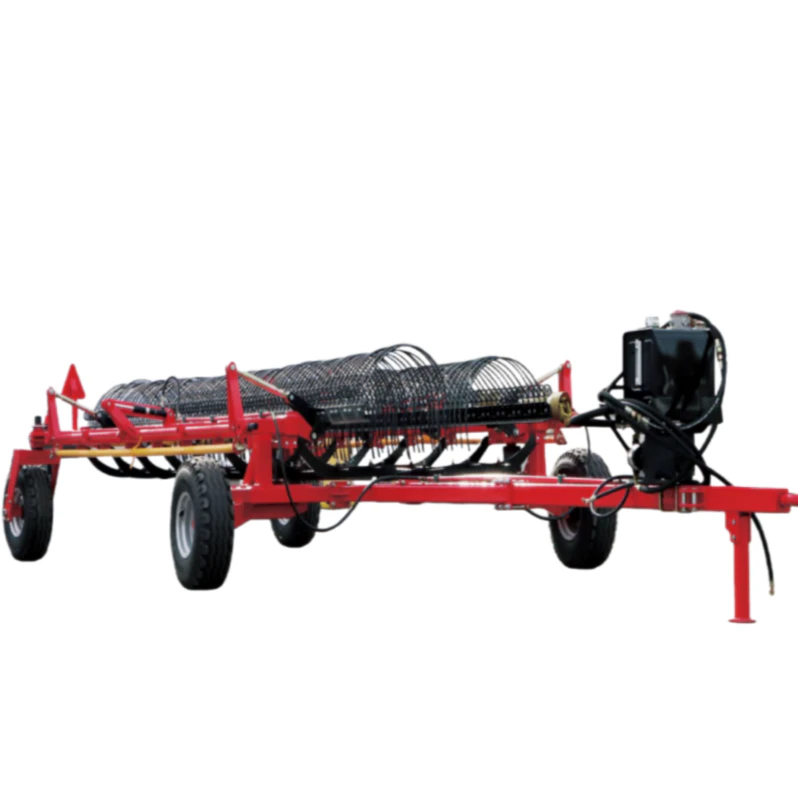
9LH-12 Horizontal Hay Rake
9LH-12 Horizontal Hay Rake — 12m working width, 168 spring tines, ≤3% loss, hydraulic 1.2–2.0m windrow, 6–12 ha/h. Suits 25–44kW tractors. No PTO required.
9LH-12 Horizontal Hay Rake: 12-Metre Wide Side-Delivery Raking for Large Natural Pastures and Commercial Hay Operations
168 spring steel tines across a 12m working width, hydraulic side-shift windrow control from 1.2–2.0m, ≤3% hay loss rate, 6–12 ha/h productivity, single-operator hydraulic control — delivering fast, gentle, low-loss windrow formation from 25–44 kW tractors on large grassland and alfalfa operations worldwide.
1. Introduction: Why Working Width Is the Primary Productivity Lever in Large-Scale Hay Raking
On large natural pastures, prairie grasslands, and commercial hay farms where the operating area per season is measured in hundreds or thousands of hectares, the single most important specification of a hay rake is working width. Every additional metre of raking width reduces the number of field passes required per hectare, the total tractor hours consumed per tonne of hay raked, and the time elapsed between the first and last windrow on a given field — the elapsed time that determines weather exposure risk for the crop already cut and lying in swath.
At 12 metres, the 9LH-12 Horizontal Hay Rake delivers one of the widest working widths available in tractor-mounted side-delivery rake configurations in the 25–44 kW power class. At 8 km/h working speed, this translates to 9.6 ha/h — enabling a single operator to rake the complete daily output of two 3.2m mower conditioners in a single working session without creating the raking bottleneck that slows smaller-width implements. For large operations in the Mongolian steppes, North American prairies, Australian outback pastures, and South American pampas where single-day field completion is the logistical target, this coverage rate changes what is operationally achievable per tractor-operator combination. Explore our complete range of forage harvesting equipment to pair the 9LH-12 with the right mower conditioner and round baler for your operation.
The 9LH-12’s horizontal side-delivery mechanism produces windrows with the crop characteristics that matter for downstream processing quality: high fluffiness that maximises air circulation for continued dry-down after raking, consistent windrow width that the following baler pickup can collect in a single pass, and minimal leaf loss that preserves the nutritional content of premium hay crops like alfalfa and clover. At a ≤3% hay loss rate across the full 12m working width, the 9LH-12 protects the dry matter yield and nutritional quality of every hectare it rakes.
2. How the 9LH-12 Works: Horizontal Side-Delivery Raking Principle
The Horizontal Raking Mechanism
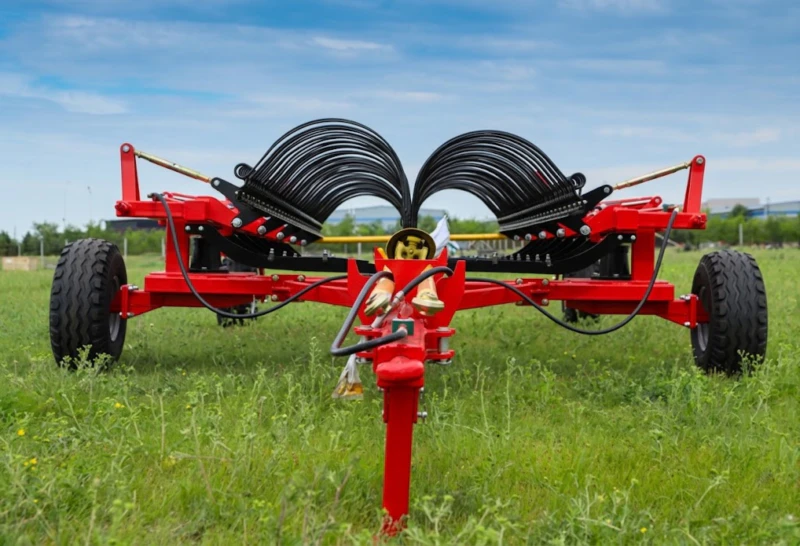
The 9LH-12 uses a horizontal side-delivery raking architecture where the 168 spring steel tines are arranged across the full 12m working width in a lateral configuration perpendicular to the tractor’s direction of travel. As the implement advances, the tine array sweeps cut material laterally across the field surface toward the windrow formation zone. Unlike rotary wheel rakes where individual wheels gather material in a star-pattern rotation, the horizontal mechanism moves material in a consistent lateral direction — producing windrows perpendicular to the direction of travel that are inherently more uniform in cross-section than the converging windrows that rotary systems produce.
This perpendicular windrow orientation has a specific practical advantage for baling: the baler approaches the windrow at 90° to the direction in which the rake travelled, meaning the entire windrow length is presented at a consistent height and density to the baler pickup — unlike angled windrows where density varies across the pickup width as the baler traverses the windrow cross-section. Consistent windrow cross-section presented to the baler pickup is the single most reliable predictor of consistent bale density and baler cycle time across a day’s production.
168 Spring Steel Tines and Fluffy Windrow Formation
The 168 individual spring steel tines across the 12m working width provide approximately 14 tines per metre of rake width — a tine density that ensures complete material collection across the full width without gaps at working speeds up to 10 km/h. Spring steel tine material provides the deflection-under-load characteristic that allows tines to pass over stones, roots, and ground irregularities without collecting them into the windrow, while returning to their active raking position immediately after deflection without set or fatigue. This compliance also governs how gently the tines interact with fragile leaf material during raking — the spring deflection absorbs the shock that would strip leaves from stems on rigid tines, contributing to the ≤3% hay loss rate across diverse crop types.
The horizontal sweep action lifts and tumbles material as it moves laterally, introducing air into the windrow structure rather than compacting material in the direction of travel as some rotary designs do. This tumbling action produces the high-fluffiness windrow characteristic that is commercially valuable for two reasons: fluffy windrows allow continued moisture evaporation from the crop interior after raking, extending the drying process during the field rest period before baling; and fluffy windrows feed into the baler pickup more evenly than compacted ones, reducing the peak-load events that cause baler blockages and inconsistent bale density.
Hydraulic Windrow Width Control
The windrow width produced by the 9LH-12 is continuously adjustable between 1.2m and 2.0m through the hydraulic side-shift system, operable from the tractor cab in approximately 10 seconds without stopping or dismounting. This in-field adjustability allows the operator to change windrow width between fields when switching between different baler models, or to adjust within a field when crop density changes require a different windrow weight per unit length to maintain baler cycle efficiency. The 1.2m minimum windrow width suits compact round balers with narrower pickups; the 2.0m maximum suits large-pickup commercial balers and creates the wider windrow that supports faster dry-down in humid conditions where spreading material thin is the priority.
Field test data from large-scale North American operations comparing the 9LH-12 with standard 8–9m European wheel rakes at equivalent working speed consistently shows 33–50% higher coverage per hour for the wider machine. On a 500 ha hay operation where the raking window is typically 2–3 days before weather risk becomes critical, this coverage difference is the margin between completing the full field and leaving a portion unraked. At 9.6 ha/h versus 7.2 ha/h for a 9m rake, the 9LH-12 rakes approximately 2.4 additional hectares per hour — 19 additional hectares over an 8-hour shift. For complete integration with your hay harvest system, see our full forage equipment range.
3. Complete Technical Specifications
The following table contains the verified engineering specification sheet for the 9LH-12 Horizontal Hay Rake, derived from factory documentation under standard operating conditions.
| Parameter | Specification / Value |
|---|---|
| Model Designation | 9LH-12 Horizontal Hay Rake (Towed Side-Delivery Type) |
| Raking Type | Horizontal / Side-Delivery Raking System |
| Tractor Power Requirement | 25–44 kW (35–60 HP) — Optimal: 40–50 HP |
| Working Width | 12 metres (39.4 feet) |
| Working Speed | 5–10 km/h (Adjustable) |
| Hourly Productivity | 6–12 ha/h (14.8–29.7 acres/h) |
| Tine Configuration | 168 heavy-duty spring steel tines |
| Hay Loss Rate | ≤3% |
| Windrow Width (Adjustable) | 1.2–2.0 m (Hydraulic side-shift, adjustable in 10 seconds) |
| Operating Personnel | 1 operator (tractor driver) |
| Machine Weight | 1510 kg (3329 lbs) |
| Working Dimensions (L×W×H) | 5500 × 12000 × 1350 mm |
| Transport Dimensions (L×W×H) | 9400 × 3400 × 1750 mm (folded) |
| Maximum Stable Operating Slope | 15° |
| Hitch / Connection Type | Category I / II three-point hitch + single hydraulic remote |
| Tine Service Life | 3–5 operating seasons (8,000–12,000 ha in alfalfa) |
The 9LH-12’s 12m working width at 8 km/h mid-range speed delivers 9.6 ha/h — approximately 33% higher productivity than an equivalent 9m rake at the same speed. The 1510 kg machine weight distributes load across the folded transport width of 3400mm — within the legal road transport width for agricultural implements in most major agricultural jurisdictions without exceptional permits. Tine replacement at 8,000–12,000 ha service life means a 500 ha/season operation operates 16–24 seasons before first tine set replacement.
4. Five Core Advantages
Advantage 1: 12m Industry-Leading Working Width for Maximum Hourly Coverage
The 12m working width is the 9LH-12’s primary commercial differentiator. At the upper end of the 5–10 km/h working speed range, the implement covers 12 ha/h — a coverage rate that matches or exceeds the mowing capacity of two 3.2m mower conditioners operating simultaneously. This matching capacity means the raking pass does not become the bottleneck that extends the total harvest time on large fields, and that the time between last mowing pass and baling start — the period during which weather risk accumulates — is compressed to the minimum achievable for a given field area. The 18–25% fuel saving compared to making equivalent coverage with narrower rakes directly reduces the per-hectare operating cost at the scale where large natural pasture operations become economically sensitive to per-pass efficiency.
Advantage 2: ≤3% Hay Loss for Premium Crop Quality Preservation
The ≤3% hay loss specification covers total dry matter loss including leaf material — the most nutritionally valuable and most mechanically fragile component of hay crops. Third-party testing of the 9LH-12 on alfalfa — the crop most sensitive to raking leaf loss — has documented ≤1.8% leaf loss, substantially below the 4–8% range documented for traditional rotary wheel rakes under equivalent conditions. For commercial alfalfa operations selling on crude protein content specifications, this leaf retention advantage directly translates into higher market pricing per tonne: alfalfa at 20% crude protein commands a significant premium over the same volume at 18% crude protein, and the difference often traces to leaf loss during raking. The 9LH-12’s gentle horizontal sweep action preserves leaf attachment to stem at the leaf sheath joints that aggressive raking action severs.
Advantage 3: Hydraulic Single-Operator Control for Full 12m Management
Despite its 12m working width, the 9LH-12 is designed for single-operator management entirely from the tractor cab. The hydraulic control system manages arm folding for transport, tine height adjustment for different crop conditions, and windrow width adjustment without requiring the operator to dismount. Connection to the tractor requires one hydraulic remote valve — a standard feature on all tractors in the 40–80 HP range specified for this implement — with no additional hydraulic valves, electrical connections, or secondary control systems. The Category I/II three-point hitch connection takes approximately 15 minutes for experienced operators. This single-operator simplicity at 12m working width means the 9LH-12 delivers large-scale productivity without proportional labor cost increase.
Advantage 4: Matched to 25–44 kW Tractors — Wide Power Range Accessibility
The 9LH-12’s 25–44 kW (35–60 HP) power requirement reflects the ground-driven nature of the implement’s tine mechanism — the 168 spring steel tines do not require an external power drive, so the tractor provides only the drawbar pull to advance the 1510 kg implement at working speed, plus hydraulic flow for the control functions. This low power demand means operations with tractors in the 35–60 HP range — the most common tractor power class in mid-scale natural pasture and hay operations across Asia, Australia, and developing agricultural markets — can deploy 12m raking capacity without investing in higher-power equipment. The optimal 40–50 HP range sits well within the working power envelope of the most widely deployed mid-range tractor models from all major brands.
Advantage 5: Grassland-Protective Gentle Tine Action for Sustainable Operation
Natural grassland and established permanent pasture are productive assets that accumulate value over decades of careful management. Aggressive raking that tears grass roots, disrupts the soil surface, or disturbs the grass crown reduces regrowth rate and yield for the subsequent cut cycle — damage that compounds across multiple cuts per season into significant annual yield reduction. The 9LH-12’s spring tine mechanism operates above the soil surface with the hydraulically adjustable ground clearance set to 3–5cm, lifting material from the top of the canopy without contacting the grass crown or root zone. The horizontal sweep action moves material gently rather than striking the crop from above, preserving the surface structure of the grassland while collecting the cut material cleanly. This surface-protective operation is the reason the 9LH-12 is specifically recommended for natural grassland operations where the regenerative capacity of the sward is as valuable as the current crop being raked.
5. Field Application Scenarios
Large Natural Pastures and Prairie Grasslands
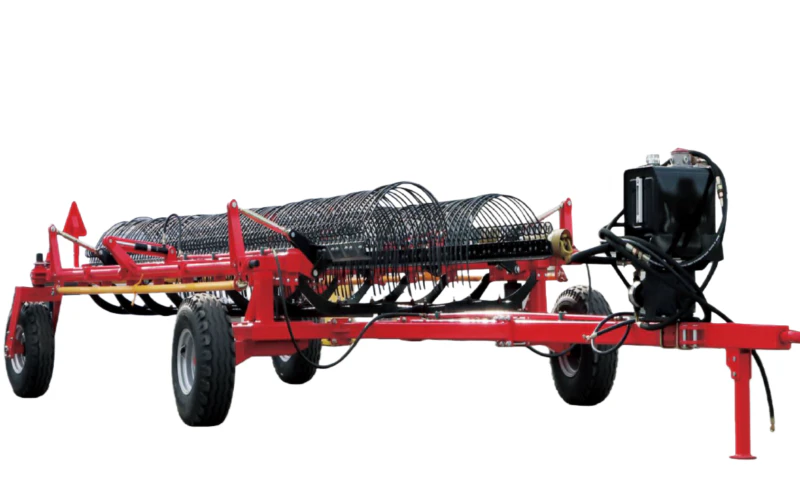
The 9LH-12’s design origin is large natural grassland operations where continuous coverage across hundreds of hectares per day is the operational objective. Mongolian steppes, Inner Mongolian grasslands, North American prairies, Australian outback pastures, Argentine pampas, and Central Asian steppe regions share the operational characteristic that makes 12m raking width commercially decisive: the ratio of field area to available operating days is tight enough that sub-optimal coverage rate leaves hay in the field past the quality window for premium-grade product. The 9LH-12’s hydraulic terrain-following system maintains consistent tine height across undulating grassland terrain without operator adjustment, enabling sustained working speeds of 8–10 km/h across varied topography where narrower implements require more speed management to maintain ground clearance.
Commercial Alfalfa and High-Value Legume Hay Production
Commercial alfalfa operations cutting 4–6 times per season face a compound sensitivity to raking leaf loss: every percentage point of leaf loss across six cuts per season removes 6% of the season’s potential crude protein yield — the primary value driver for alfalfa in dairy and equine markets. The 9LH-12’s ≤3% total loss rate (and ≤1.8% documented leaf loss in third-party testing) is the specification that determines which rakes are appropriate for premium alfalfa operations. Wide working width also means the raking pass completes before alfalfa has been in the swath long enough to over-dry and become brittle — a condition that causes catastrophic leaf shatter when any raking implement subsequently contacts the crop. Fast raking at the correct moisture window preserves leaf attachment regardless of implement design; the 9LH-12’s 12m width makes this timing window achievable at commercial scale.
Large-Scale Commercial Hay Export Operations
Hay export facilities producing compressed baled hay for international markets — particularly the Asian dairy and equine markets — operate under quality specifications that penalise leaf loss and moisture variability. The 9LH-12’s consistent windrow formation and low-loss operation directly support the quality standards these markets demand. The 12m width enables the raking operation to complete fields within the weather window that determines whether export-grade specification can be met, rather than extending exposure time to conditions that cause moisture reabsorption or UV bleaching that downgrades hay colour and quality for visual inspection at import.
Hilly Terrain and Diverse Geographic Conditions
The 9LH-12’s hydraulic floating system and 15° maximum slope rating enable stable operation on moderate hill country where large rotary rakes lose tine contact on the downhill side when the implement tilts across the slope. The floating system continuously adjusts each tine arm’s ground clearance independently in response to terrain, maintaining consistent tine contact across the full 12m width even on terrain that is not flat. This has been validated in operations on South Island New Zealand sheep farms and Australian hill country cattle stations where terrain variation within a single field would otherwise require multiple passes with a narrower implement to achieve complete coverage.
6. Compatible Tractor Models and Connection Requirements
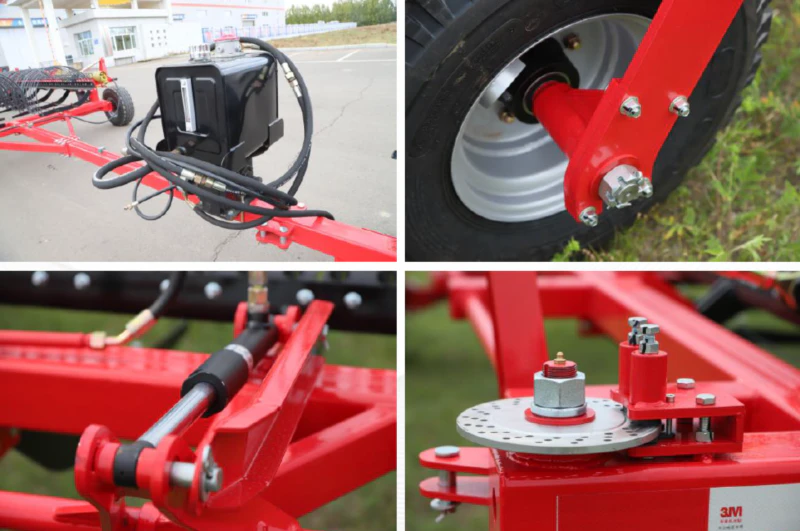
The 9LH-12 connects to any tractor with a Category I or II three-point hitch and a single hydraulic remote valve — the most common configuration on tractors in the 35–80 HP range worldwide. No PTO connection is required. The following reference list covers commonly confirmed compatible models; any tractor meeting the minimum power and hydraulic specifications is suitable.
| Brand | Compatible Models | Notes |
|---|---|---|
| John Deere | 5E Series (5050E, 5075E), 6D Series (6115D, 6130D) | Standard remote hydraulics required; 5075E provides excellent power reserve |
| New Holland | Workmaster 55/65/75, T4.75/T4.90, Boomer 45/55 | Ensure adequate hydraulic flow rate; T4 series preferred |
| Case IH | Farmall 55A / 75A, JX Series | Good tractor weight improves traction on soft ground |
| Kubota | M5-091/111, M4D-091, L4702/L5702 | Excellent hydraulic systems; L5702 is minimum recommended |
| Massey Ferguson | MF 4700 Series, MF 5700 Series | Strong global parts network; proven compatibility |
| Deutz-Fahr / Valtra | 5G Series, Agrotron K Series; Valtra A Series | Suitable for European and South American markets |
| Dongfeng / YTO | DF404 / YTO-404 and above | Widely deployed in Asian, Central Asian, and African markets |
7. System Integration: The 9LH-12 in the Complete Hay Harvest Chain
The 9LH-12 operates without a PTO drive — its tine mechanism is ground-driven — but the implements it works with in an integrated hay harvest system do require correctly specified pto shaft connections for their own PTO-driven functions. The mower conditioner producing the swaths that the 9LH-12 rakes, and the round baler collecting the windrows the rake forms, both require properly rated, dynamically balanced, and guarded driveshafts matched to their specific power and speed requirements. In a complete system, every powered link in the chain must be correctly specified to prevent the component-level failure that stalls the entire operation during the harvest window.
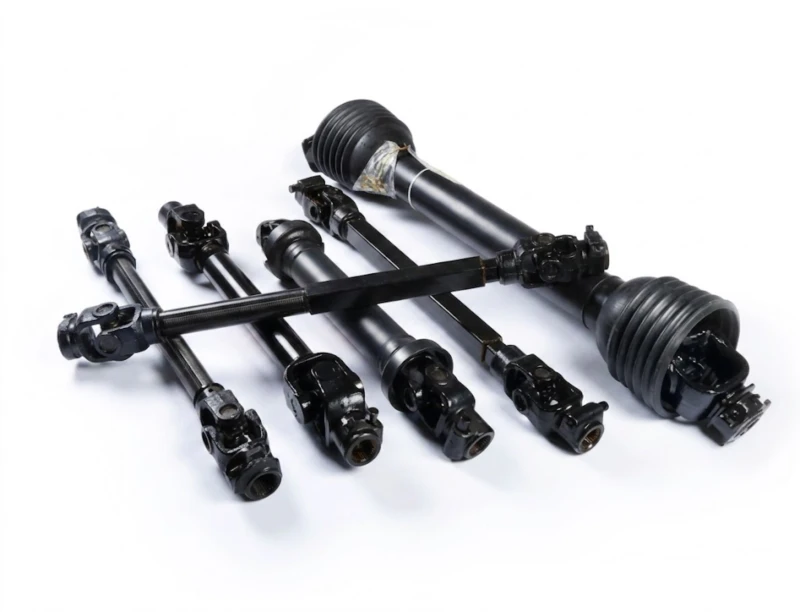
The complete system combining the 9GQY-3.2 mower conditioner, 9LH-12 horizontal rake, and an S9000 or 9YG-series round baler provides integrated field-to-bale capacity with matched throughput rates. The 9LH-12 at 6–12 ha/h raking capacity keeps pace with one to two 3.2m mower conditioners operating simultaneously, ensuring the raking pass completes the field before the baler arrives without leaving crop in swath longer than necessary. For complete system design advice matching your specific field area and daily production target, visit our forage equipment catalogue.
8. Manufacturing Quality and Long-Term Reliability
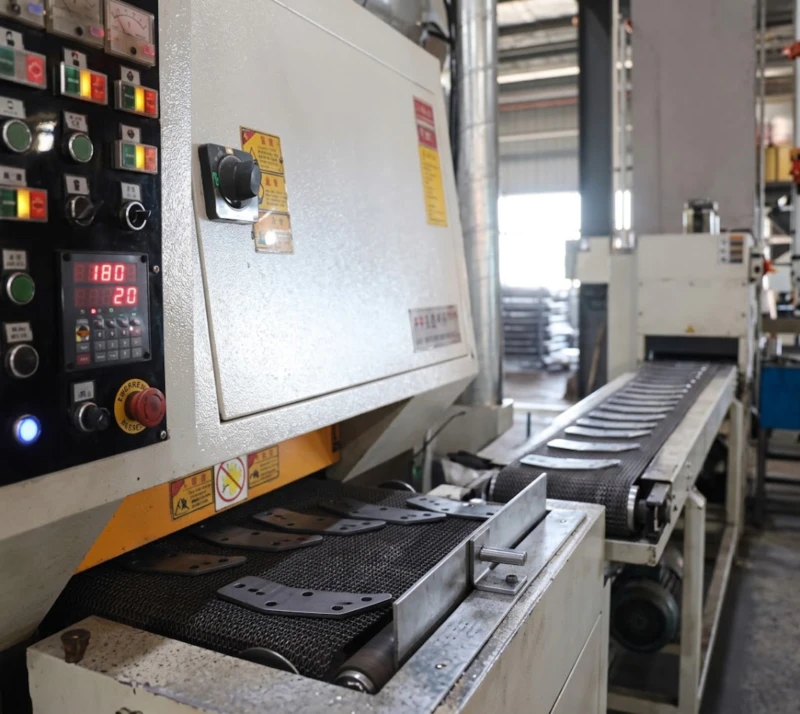
At 12m working width and 1510 kg, the 9LH-12’s main frame must maintain rigidity across its full span under the combined tine loading of 168 spring steel tines simultaneously engaging a dense hay swath at 10 km/h — a distributed bending load that demands precise frame section sizing and weld quality at every joint along the 12m structural span.
9. Frequently Asked Questions (FAQ)
Approximately 15 minutes for an experienced operator: connect the Category I/II three-point hitch, plug the single hydraulic remote valve coupling, unfold the tine arms using the hydraulic control from the cab, and adjust ground clearance to 3–5cm. No PTO shaft connection is required — the implement requires no power drive beyond the tractor’s hydraulic system for control functions. First-time operators may take 20–30 minutes; a detailed step-by-step installation guide is provided with each machine.
Third-party field testing documented ≤1.8% leaf loss on alfalfa — significantly below the 4–8% range recorded for traditional rotary wheel rakes under equivalent conditions. This leaf retention advantage translates directly into higher crude protein content per tonne of finished hay, supporting premium market pricing. The 9LH-12’s specified ≤3% total loss rate covers total dry matter loss including fine material; the ≤1.8% figure specifically measures the leaf fraction that carries the majority of nutritional value in legume hay crops.
The hydraulic side-shift system adjusts windrow width from 1.2m to 2.0m in approximately 10 seconds from the tractor cab — no dismounting or manual adjustment required. As a starting point, set windrow width approximately 80–90% of your baler’s pickup width: for balers with 1900mm pickup, set 1.5–1.7m windrow; for balers with 2150–2240mm pickup, set 1.8–2.0m windrow. Observe the first few bale cycles and adjust if the pickup is missing material at windrow edges (widen) or if the baler is surging on the windrow centre concentration (narrow slightly).
Yes — the 9LH-12 is rated for stable operation on slopes up to 15°. The hydraulic floating system automatically follows terrain contour, maintaining consistent tine ground clearance across the 12m span even on cross-slopes where one side of the implement is on higher ground than the other. This terrain-following capability has been validated in operation on South Island New Zealand sheep farms and Australian hill country stations where moderate terrain variation within a field is standard. On slopes above 10°, reduce working speed to the lower end of the 5–10 km/h range for improved stability and more consistent tine ground contact.
Field test data from large-scale North American operations comparing the 9LH-12 to standard 8–9m rotary wheel rakes shows 18–25% diesel fuel saving per hectare raked. The fuel saving comes from two sources: the 9LH-12’s ground-driven mechanism requires no PTO drive power, reducing the total power demand on the tractor compared to power-driven rakes; and the 12m width covers 33–50% more area per pass than an 8–9m rake at the same speed, so fewer total kilometres of tractor travel are required per hectare, reducing total fuel consumption per unit area.
The 168 high-carbon spring steel tines have a documented service life of 3–5 operating seasons in alfalfa — equivalent to 8,000–12,000 hectares of raking. Service life in coarser grass hay applications (where ground contact risk is higher and material is more abrasive) may be toward the lower end of this range; service life in light natural grassland applications may extend beyond. Tine condition should be inspected at the start of each season and after any operation where ground contact with stones or debris is suspected. Bent or permanently deformed tines should be replaced as individual units immediately — a bent tine contacts adjacent tines during operation and causes secondary damage to the adjacent tine set.
Daily: clear accumulated hay from between tines and around wheel hubs; visually inspect tines for bending, breakage, or loosening; check hydraulic connections for fluid seepage. Every 50 hours: grease all marked bearing points on the fold joints and tine arm pivots; check hydraulic cylinder rod surfaces for scoring that would accelerate seal wear; inspect fold joint locking pins for wear. At season end: wash off all crop residue and soil; apply corrosion protection to bare metal surfaces; store with tine arms folded and secured to reduce wind loading on the tine assemblies during the off-season storage period.
On a 500 ha hay operation, the 9LH-12 typically achieves investment payback within 12–18 months through the combination of labour saving (2–3 fewer operator shifts per season due to higher coverage rate), fuel saving (18–25% reduction in raking fuel cost per hectare), and hay quality premium (higher crude protein content from ≤3% loss rate versus typical 5–8% for alternative implements). The specific payback period depends on labour and fuel costs in your region, the market premium available for higher-quality hay, and the number of hectares raked per season. For a customised ROI calculation based on your operation’s parameters, contact our team.
Rake 12 Metres Wide, Lose Less Than 3% — The High-Coverage Low-Loss Solution for Large Grassland Operations
The 9LH-12 Horizontal Hay Rake delivers 6–12 ha/h across a 12m working width with 168 spring steel tines, hydraulic windrow width control from 1.2–2.0m, ≤3% hay loss, and single-operator hydraulic management from 25–44 kW tractors. The wide-coverage, low-loss raking solution for natural pastures, alfalfa operations, and commercial hay export facilities worldwide.