
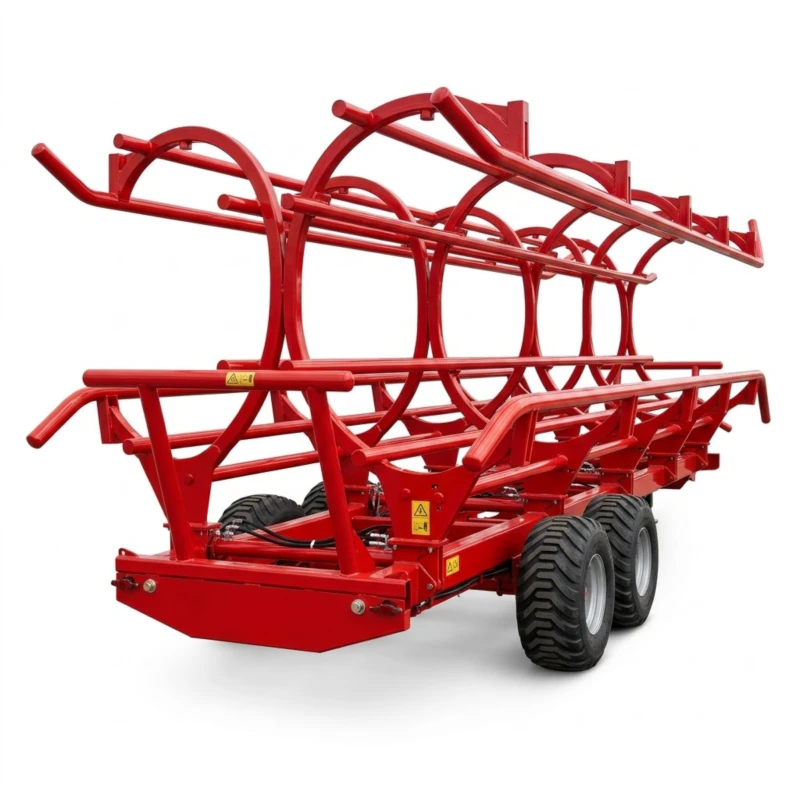
9JYY-4.5 Round Bale Picker and Transporter
9JYY-4.5 Round Bale Picker Transporter — 4500kg hydraulic load, tandem axle 4-wheel, ≤40km/h road speed. Bale dia. 1000–1400mm. ≥50kW tractor. Zero manual handling.
9JYY-4.5 Round Bale Picker and Transporter: Hydraulic Multi-Bale Field Collection and Bulk Road Transport in a Single Trailed Implement
4500 kg maximum load capacity, hydraulic loading and unloading, tandem-axle four-wheel stability, ≤40 km/h transport speed, and compatibility with bales from 1000–1400mm diameter — eliminating the manual handling and multiple trailer trips that make post-baling field clearance the most labor-intensive phase of commercial hay operations.
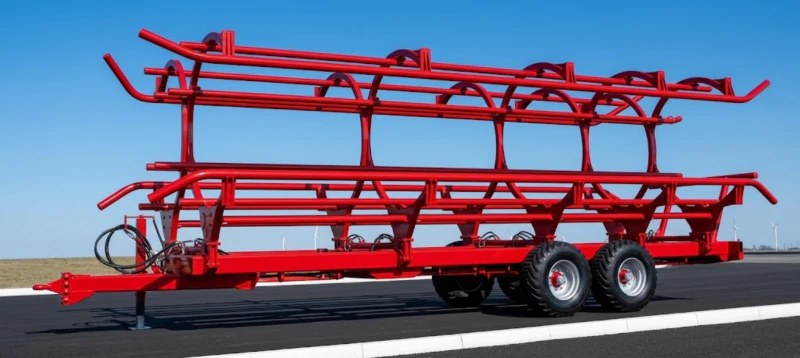
1. Introduction: Why Post-Baling Field Clearance Is the Commercial Bottleneck Most Operations Overlook
The baling operation ends when the last bale is ejected onto the field — but the hay harvest is not complete until every bale has been moved from the field to storage, and the field has been cleared for the next crop cycle or grazing rotation. This post-baling phase is frequently the operational bottleneck that determines whether hay operations achieve their full commercial potential. Manual bale handling — wrestling 200–400 kg round bales onto trailers with front-end loaders, making multiple tractor trips per field, and managing the logistics of limited trailer capacity — consumes significant time and labor resources that directly undermine the per-hectare economics of hay production.
At scale, the arithmetic becomes clear. A single 9YG-2.24D round baler running at 60 bales per hour for an eight-hour day produces 480 bales per day. At 300 kg per bale, that is 144 tonnes of hay on the field, distributed across potentially hundreds of hectares. Moving that volume from field to storage using conventional front-end loader and single-axle trailer combinations requires dozens of trips and proportional labor hours. The 9JYY-4.5 Round Bale Picker and Transporter resolves this bottleneck by combining field pickup, multi-bale loading, and bulk road transport into a single trailed implement that one operator manages from the tractor cab — collecting bales directly from the field with the hydraulic arm, stacking them on the 4500 kg capacity deck, and transporting the load to storage at speeds up to 40 km/h. Explore our full range of forage harvesting and handling equipment to complete your hay operation system.
The implement’s compatibility with bale diameters from 1000–1400mm and lengths from 1000–1500mm makes it suitable for collecting the output of the full range of round balers from compact 9YG-1.0 models up to the large S9000 series machines — a single investment that serves diverse baling equipment across the operation or across client farms in a custom service context.
2. How the 9JYY-4.5 Works: Three-Phase Pick-Load-Transport Cycle
Phase 1 — Hydraulic Bale Pick-Up
The tractor positions the 9JYY-4.5 alongside a bale lying in the field. The operator activates the hydraulic loading arm from the tractor cab — no dismounting required. The arm extends, engages the bale with its cradle or spike mechanism, and lifts it clear of the ground in a smooth, controlled arc. The hydraulic system providing this lift force requires a minimum working pressure of 16 MPa from two sets of hydraulic drive units on the tractor — a specification that modern mid-size and large tractors equipped for implement operation typically meet without modification. The arm’s reach and articulation are designed to pick up bales that are not perfectly aligned with the implement, reducing the precise positioning requirement that would otherwise slow field collection pace. Once lifted, the arm rotates and deposits the bale onto the transport deck in a controlled placement that maximises the number of bales that can be carried per load without manual stacking assistance.
Phase 2 — Multi-Bale Loading and Deck Management
The hydraulic arm repeats the pick-up cycle for each subsequent bale in the field, building a full load on the transport deck up to the 4500 kg maximum capacity. The deck geometry and loading sequence are designed to distribute bale weight evenly across the tandem axle, maintaining stable vehicle dynamics during the transition from field collection to road transport. For large-diameter bales at the 1400mm end of the compatibility range, fewer bales fit per load but individual bale weight is correspondingly higher — so load capacity in tonnes remains consistent. For bales at the 1000mm diameter end, more bales can be loaded before the 4500 kg weight limit is reached. The operator monitors load progress from the cab and confirms when the deck is loaded before beginning the transport leg.
Phase 3 — Road Transport and Hydraulic Unloading
With the deck loaded, the 9JYY-4.5 transitions to transport mode. The tandem axle four-wheel configuration — fitted with 400/60-15.5 tyres — distributes the combined implement and bale weight across four contact points, providing the stability needed for ≤40 km/h transport speed on farm tracks and public roads without the lateral instability that single-axle transport of this load would risk. In transport configuration, the overall dimensions compact to 9400 × 2900 × 3300mm — road-legal width that allows movement between field sections and farm storage facilities without exceptional transport permits in most jurisdictions. At the storage destination, the hydraulic arm reverses the pick-up sequence to place bales individually at their storage positions, or the deck can be tilted to roll bales off in a controlled batch unload — depending on the specific storage configuration and stack arrangement required.
Consider a hay operation producing 300 bales per day at 300 kg each — 90 tonnes of hay requiring field clearance. With a front-end loader and 3-bale trailer, clearing that production requires 100 field loading events and 33+ trailer transport trips, with each trip requiring repositioning the tractor-loader to engage each bale, lift, and place it manually. The 9JYY-4.5 eliminates the loading component — the hydraulic arm does what the front-end loader was doing, but without requiring the tractor to manoeuvre close to each bale individually. The net result is substantially fewer tractor hours per 90 tonnes cleared, lower fuel consumption per tonne moved, and zero manual labor requirements for the field clearance phase. For all supporting forage equipment, visit our forage equipment catalogue.
3. Complete Technical Specifications
The following table contains the verified engineering specification sheet for the 9JYY-4.5 Round Bale Picker and Transporter, derived from factory test documentation under standard operating conditions.
| No. | Item / Parameter | Unit | Specification / Value |
|---|---|---|---|
| 1 | Product Name | / | Round Bale Picker and Transporter |
| 2 | Product Model | / | 9JYY-4.5 |
| 3 | Hitch Type | / | Trailed |
| 4 | Loading / Unloading Method | / | Hydraulic |
| 5 | Max. Load Capacity | kg | 4500 |
| 6 | Required Power Range | kW | ≥50 |
| 7 | Working Pressure (2 sets of hydraulic drive units) | MPa | ≥16 |
| 8 | Transport Speed | km/h | ≤40 |
| 9 | Tyre Specification | / | 400/60-15.5 (Tandem Axle, 4 Wheels) |
| 10 | Applicable Bale Size — Diameter | mm | 1000–1400 |
| 10 | Applicable Bale Size — Length | mm | 1000–1500 |
| 11 | Overall Dimensions — Working State (L×W×H) | mm | 9400 × 6750 × 1750 |
| 11 | Overall Dimensions — Transport State (L×W×H) | mm | 9400 × 2900 × 3300 |
| 12 | Overall Machine Weight | kg | 3240 |
At 4500 kg maximum load capacity, the 9JYY-4.5 carries the equivalent of 15 bales at 300 kg each, or approximately 11 bales at 400 kg each, in a single trip from field to storage. The machine’s own weight of 3240 kg brings the fully loaded total to 7740 kg — within the drawbar capacity of tractors in the 50+ kW class specified, provided the tractor is equipped with appropriate ballasting for loaded transport on slopes. The tandem-axle four-wheel tyre configuration distributes this total weight across four 400/60-15.5 contact patches, achieving the low ground pressure needed to avoid field damage during the field collection phase when soil conditions may still be soft from irrigation or rainfall prior to cutting.
4. Five Core Advantages
Advantage 1: Fully Hydraulic Loading and Unloading — Zero Manual Handling
The hydraulic loading and unloading system eliminates every manual bale-handling event in the field clearance process. The operator manages the complete pick-up, load, transport, and place-down sequence from the tractor cab without dismounting. This matters operationally because round bale handling injuries from manual intervention — foot contact with rolling bales, back injuries from attempting to reposition bales on trailers, equipment contact injuries during loader bucket positioning — represent a significant share of hay operation workplace incidents. Removing the human from the physical bale contact zone eliminates this injury category entirely for the field clearance phase. It also means field clearance can proceed at mechanical pace rather than the slower pace imposed by manual handling fatigue, which is particularly relevant during the multi-day high-pressure periods that characterise commercial hay harvest windows.
Advantage 2: 4500 kg Load Capacity — Fewer Trips, Lower Cost per Tonne
The 4500 kg maximum payload is the implement’s primary economic justification. In a hay operation producing 300 bales at 300 kg each (90 tonnes per day), a 4500 kg carrier completes the full day’s production in 20 trips at 225 kg average load per trip, or fewer trips with fully loaded 4500 kg loads. Compare this to a standard single-bale trailer requiring one trip per 2–3 bales, and the reduction in tractor hours, fuel consumption, and driver time per 90 tonnes of bales cleared is substantial. For operations where the transport distance between field and storage is significant — common on large commercial farms where storage facilities are centralised — the per-trip capacity advantage becomes even more commercially significant, reducing vehicle operating cost per tonne-kilometre proportionally to the load increase.
Advantage 3: Tandem-Axle Four-Wheel Stability for Safe Loaded Transport
The tandem-axle configuration with four 400/60-15.5 tyres addresses the fundamental stability challenge of transporting a 4500 kg bale load at up to 40 km/h on farm tracks that are not designed to road engineering standards. A single-axle trailer carrying equivalent load would experience unacceptable lateral instability at transport speed, particularly when traversing cambered farm tracks, entering field gateways, or braking on graded surfaces. The four-wheel distribution maintains acceptable lateral stability under these conditions and provides the braking surface area needed to decelerate the fully loaded implement without the brake heat buildup that causes single-axle trailer brake fade under repeated loaded stops. The 400/60-15.5 tyre specification is sized for the load rating required by the 4500 kg payload plus the 3240 kg implement weight, providing the carcass strength and ground contact area that this application demands.
Advantage 4: Wide Bale Size Compatibility — Serves the Entire Round Baler Fleet
The 1000–1400mm diameter and 1000–1500mm length compatibility range spans the complete output specification of round balers from compact 9YG-1.0 class machines producing φ1100 × 1000mm bales through the large S9000 series producing φ1300 × 1400mm bales. This compatibility means that one 9JYY-4.5 investment serves the transport requirements of every round baler in an operation, regardless of which specific model produced a given day’s bale output. For custom harvesting contractors operating multiple baler models across different client farms, this versatility is particularly valuable — the same transport implement moves bales produced by both compact and large-scale balers without reconfiguration or compatibility limitations.
Advantage 5: Road-Legal Transport Configuration at ≤40 km/h
The transport-state dimensions of 9400 × 2900 × 3300mm and ≤40 km/h speed rating enable road movement between field sections and storage facilities within the parameters that most jurisdictions accept for agricultural implement road transport. The 2900mm transport width — achieved by folding the working-state 6750mm deck to the narrower transport position — is within the typical 3000–3200mm maximum width permitted for agricultural implements on public roads without exceptional load permits in most agricultural regions. At 40 km/h, the implement can be transported on public farm-access roads at speeds that do not create unacceptable road hazards while still allowing efficient field-to-storage trip cycles. Always verify local transport regulations for your specific jurisdiction before operating on public roads.
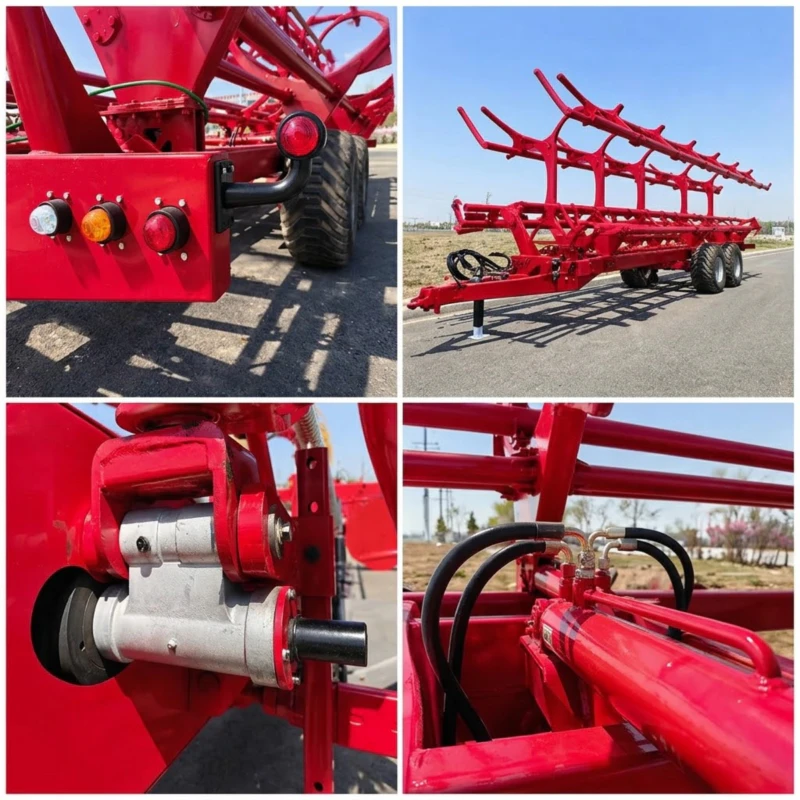
6. Field Application Scenarios
Large-Scale Commercial Hay Farm Field Clearance
For commercial hay farms producing 300–500 bales per day, the post-baling field clearance operation is the constraint that determines how quickly the cut field returns to productive use. Fields left with bales in situ after the baling operation cannot be grazed, fertilised, or prepared for the next cut — so clearing speed directly determines the utilisation rate of the land. The 9JYY-4.5’s 4500 kg capacity and hydraulic one-operator operation mean field clearance can proceed simultaneously with the next day’s mowing and baling without pulling tractor resources away from productive operations to manage manual bale handling. On irrigated alfalfa operations where cut cycles are as frequent as every 25–28 days, the time lost to slow field clearance compounds across multiple cuts per season into a significant annual yield reduction.
Dairy and Livestock Farm On-Farm Hay Transport
Dairy and livestock farms producing hay on-farm for winter feeding face a seasonal transport challenge: moving the entire hay crop from multiple fields to a central storage facility within the harvest window, then retrieving bales from storage to feeding areas throughout the winter. The 9JYY-4.5 serves both directions of this transport requirement. During harvest, it clears bales from field to barn efficiently. During winter feeding, it can be used to collect bales from storage and transport them to feeding areas, reducing the daily tractor time required to position feed bales from central storage to distributed feeding locations across large grazing blocks.
Custom Harvesting and Bale Transport Contractor Services
Custom harvesting contractors offering full-service hay operations — cutting, raking, baling, and field clearance — can use the 9JYY-4.5 to provide the field clearance component as a separately billable service or included in a per-hectare complete-harvest price. The wide bale size compatibility means the same machine handles the bale output of different client farms using different baler models, without requiring a separate implement for each bale specification. For contractors already owning a round baler and mower conditioner from the forage equipment range, adding the 9JYY-4.5 completes the full harvest service chain with a single additional implement investment.
Commercial Straw and Biomass Collection Operations
Straw collection for biomass energy, paper pulp, mushroom substrate, and organic fertiliser applications requires moving large volumes of heavy bales from grain crop fields to central collection points or directly to processing facilities. The 9JYY-4.5’s 4500 kg capacity and broad bale compatibility make it suitable for collecting the output of straw balers across a range of crop types. For straw recycling contractors collecting across multiple farms during a compressed post-harvest window, the transport efficiency improvement over single-bale trailers directly determines how much acreage can be cleared per day — and how many collection contracts the contractor can service within the annual collection season.
7. Integration with the Complete Round Baler System
The 9JYY-4.5 completes the four-implement hay harvest chain by addressing the post-baling transport phase that the mower conditioner, rake, and baler cannot cover. Matching the capacity of each stage in this chain determines overall system efficiency — a high-output baler that produces bales faster than they can be cleared from the field creates a growing backlog that eventually stalls baling operations when the field becomes too congested for the baler to work safely and efficiently.
8. Tractor Hydraulic Requirements and PTO Considerations
Unlike balers and mower conditioners, the 9JYY-4.5 does not use a PTO drive for its primary functions — the loading and unloading operations are powered entirely by the tractor’s hydraulic system. This means the critical tractor interface specification is hydraulic output capacity rather than PTO speed, and the relevant selection consideration is ensuring your tractor’s hydraulic system meets the ≥16 MPa working pressure requirement across two remote valve circuits simultaneously.
Hydraulic System Requirements
The 9JYY-4.5 requires two sets of hydraulic drive units from the tractor, each delivering a minimum working pressure of 16 MPa. Most modern tractors in the ≥50 kW class provide at least two hydraulic remote valve circuits with pressures in the 17–20 MPa range — check your tractor’s hydraulic specification sheet to confirm the remote valve working pressure and flow rate before coupling. Insufficient hydraulic pressure results in slow or incomplete arm extension, which reduces loading speed and may prevent full lift of heavy 400+ kg bales at arm extension. Insufficient hydraulic flow causes slow cycle times that reduce transport efficiency. If your tractor provides adequate pressure but insufficient flow, a hydraulic flow divider may be fitted to balance circuit allocation — consult our technical team before implementation.
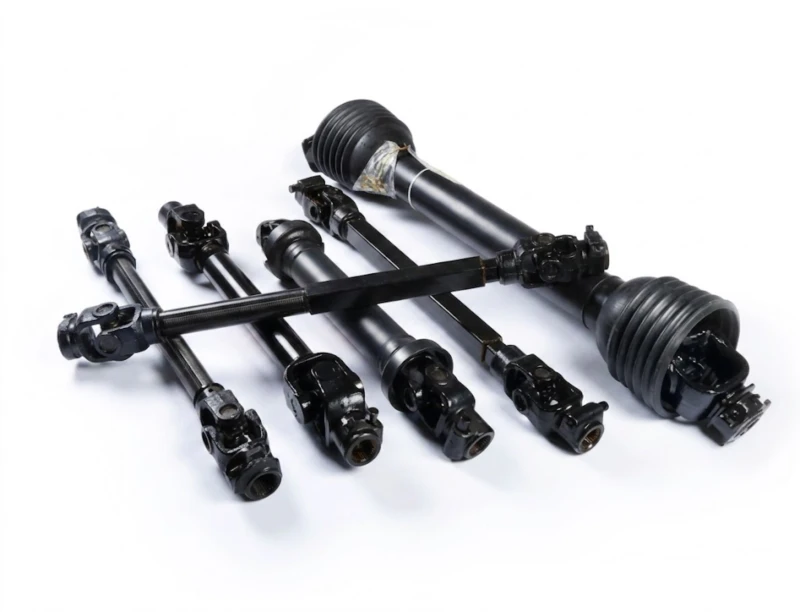
PTO Shaft for Associated Implements in the System
When the 9JYY-4.5 operates as part of a complete hay harvest system alongside PTO-driven implements — the 9GQY-3.2 mower conditioner and the round baler — each of those implements requires a correctly specified pto shaft matched to its power input and speed specification. Ensuring every PTO connection in the system uses correctly rated, dynamically balanced, and properly guarded driveshafts is as important as ensuring the hydraulic connections for the 9JYY-4.5 are adequate — a failure in any one power transmission component in the chain stalls the complete system.
9. Manufacturing Quality and Structural Durability
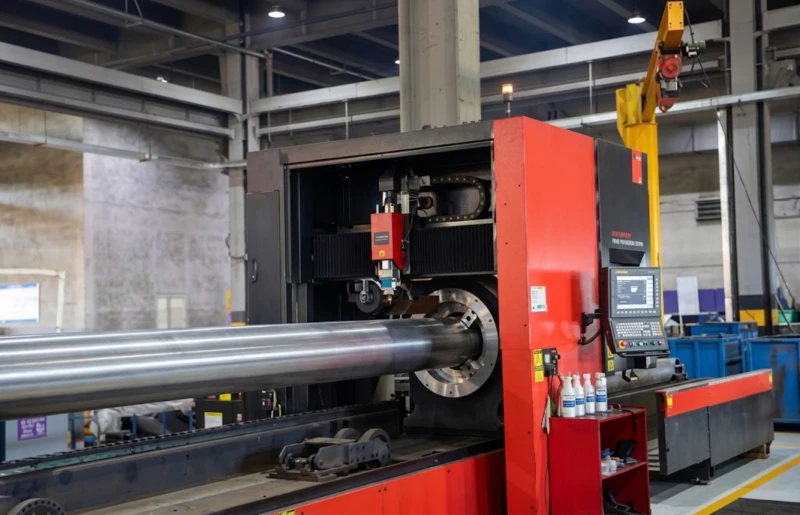
The 9JYY-4.5 operates under sustained high stress cycles — repeated hydraulic arm extension and retraction under full bale load, transport vibration with a 4500 kg payload over farm track surfaces, and the fatigue loading that accumulates at frame joints and arm pivot points across hundreds of loading cycles per day in commercial-intensity use. The structural design and material specifications reflect these demands throughout.
10. Frequently Asked Questions (FAQ)
The minimum tractor power requirement is ≥50 kW (approximately 68 HP). However, the critical tractor specification is hydraulic system capacity: two remote valve circuits providing ≥16 MPa working pressure simultaneously. Many tractors in the 50–75 kW range meet this hydraulic specification. For transport on gradients, the tractor must also have sufficient drawbar capacity for the fully loaded 7740 kg total weight. If your route includes slopes above 10°, a tractor in the 65–80 kW range is recommended for adequate pulling and retarding power on descent.
Load count depends on bale weight. At 300 kg per bale, the 4500 kg capacity allows 15 bales per load. At 400 kg per bale (high-density alfalfa), approximately 11 bales per load. At 200 kg per bale (light straw), up to 22 bales per load before the weight limit is reached. The deck dimensions and loading geometry also determine the physical bale count — bale diameter and length must fit within the deck space. For bales at the large end of the compatible range (1400mm diameter × 1500mm length), the physical deck capacity may limit load count before the weight limit is reached.
The hydraulic arm’s reach and articulation range allows engagement of bales within a pickup arc around the implement’s path without requiring precise positioning of the tractor alongside each bale. The operator manoeuvres the tractor to bring the arm within reach of the bale, then uses the arm’s articulation to align the pickup cradle or spike with the bale axis. For bales that have rolled off-axis from their ejection position — common on sloped or uneven ground — the arm can typically engage bales at angular offsets of 15–30° from the ideal position. Bales that have rolled significantly out of position may require the tractor to reposition slightly before engagement.
Yes, with appropriate care for wrapped silage bales. Silage bales in the compatible diameter and length range can be loaded and transported using the 9JYY-4.5. When handling wrapped silage bales, ensure the pickup mechanism does not pierce or tear the stretch film wrapping — punctured silage bales admit oxygen that causes aerobic spoilage from the damage point outward. If your operation handles primarily silage bales, discuss the pickup mechanism specification with our technical team to confirm appropriate cradle or arm pad configuration for film protection.
Daily: inspect all hydraulic cylinder seals for fluid leakage; check hydraulic hose connections for tightness; visually inspect the arm pivot bearings and frame joints for cracks or deformation; check tyre pressures on all four wheels. Every 50 hours: grease all marked bearing and pivot points; check hydraulic oil level in the tractor’s hydraulic reservoir (the 9JYY-4.5’s hydraulic system draws from and returns to the tractor circuit); inspect tandem axle wheel hub bearing play. At season end: clean all frame surfaces; inspect for corrosion at welded joints; apply corrosion protection to bare steel surfaces; store with hydraulic cylinders in the retracted position to protect rod surfaces from corrosion during off-season storage.
In transport state, the 9JYY-4.5 measures 9400 × 2900 × 3300mm. The 2900mm transport width is within the ≤3000mm agricultural implement width that most jurisdictions permit on public roads without exceptional transport authorisation. Always verify the applicable local regulation for your specific route and jurisdiction before travelling on public roads — width limits may vary between road types, and some rural roads may have lower limits than the general agricultural implement standard.
Unloading is performed hydraulically, reversing the loading sequence. The hydraulic arm lifts bales individually from the deck and places them at the storage position specified by the operator. For barn storage requiring precise placement within tight stack rows, individual hydraulic placement is the appropriate method — the arm’s reach and articulation allow accurate positioning without damaging adjacent bales or barn structures. For outdoor ground-level storage where precise placement is less critical, a tipping or sliding unload mode (if the deck configuration supports it) allows faster batch unloading. Confirm the specific unloading mode available on your unit before planning storage layout.
At 60 bales/hour from a large S9000 series baler and 300 kg per bale, the baler produces 18 tonnes/h. The 9JYY-4.5 at 4500 kg capacity clears 4.5 tonnes per trip. If the field-to-storage cycle is 15 minutes (including loading, driving, unloading, and return), the transport rate is approximately 18 tonnes/h — matching the baler output precisely at this trip cycle time. Shorter trip cycles (closer storage) or a second 9JYY-4.5 unit allow the transport capacity to keep ahead of the baler at peak output. For specific cycle time calculations based on your field size and storage distance, contact our team for a tailored system capacity analysis.
Complete Your Hay Harvest System — Field Clearance Without Manual Handling
The 9JYY-4.5 Round Bale Picker and Transporter eliminates the manual handling bottleneck that slows post-baling field clearance — 4500 kg hydraulic-load capacity, tandem-axle road stability at ≤40 km/h, and compatibility with all round bales from 1000–1400mm diameter. One operator, one tractor, complete field clearance. Request your quote today.