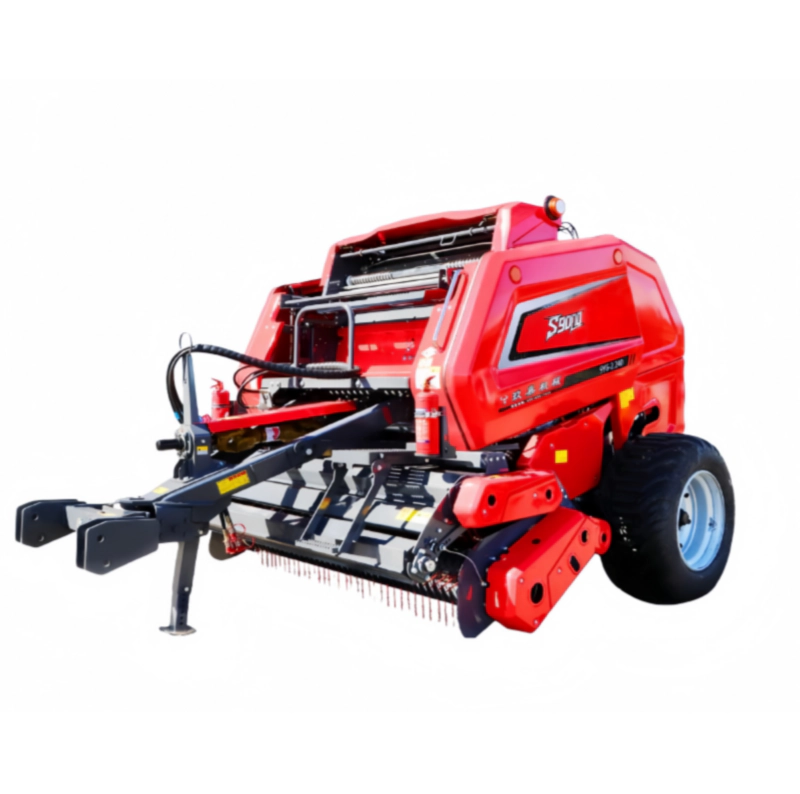
9YG-2.24D Round baler(S9000)
9YG-2.24D Round Baler (S9000) — 2240mm pickup, 18-roller chamber, sensor density control, 40–100 bales/h. Matches 55–100kW tractors. Handles hay, straw & silage.
9YG-2.24D Round Baler (S9000): The Professional Choice for High-Efficiency Hay and Straw Baling on Large-Scale Farms
A proven flagship round baler combining a 2240mm wide pickup, 18-roller compression chamber, sensor-controlled bale density, and fully automatic net wrap — engineered to maximize harvest profits and minimize operating costs across diverse forage crops and commercial production conditions.
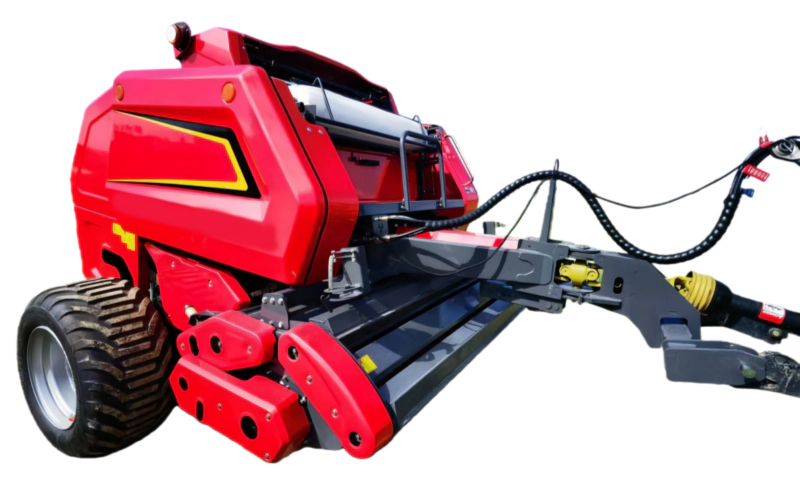
1. Introduction: Why the S9000 Stands Apart in Large-Scale Forage Production
Modern large-scale forage operations face a consistent challenge: how to convert vast quantities of cut material into compact, stable, commercially standardized bales as quickly as possible, without sacrificing the bale quality that determines livestock nutrition outcomes and market pricing. Equipment that achieves speed at the cost of density consistency, or density at the cost of reliability, fails to address this challenge adequately.
The 9YG-2.24D Round Baler (S9000) has been designed from the ground up to resolve this tension. It combines one of the widest pickups in its class — a 2240mm spring-tooth reel capable of clearing twin windrows in a single pass — with an 18-roller fixed compression chamber that delivers consistent bale geometry and density regardless of windrow weight variation or operator experience. The integrated sensor-controlled density system and fully automatic net wrap mechanism remove the two most common sources of bale quality inconsistency from the equation, leaving operators free to focus on field coverage rather than machine management. Browse our full round baler product range to compare S9000 series models by specification and power requirement.
The result is a machine suited to farms, hay harvesting contractors, silage producers, and straw collection operations that require reliable high-volume output: a maximum productivity of 40–100 bales per hour at working speeds from 5 to 35 km/h, matching 55–100 kW tractors that represent the most widely deployed power class in commercial agricultural operations worldwide.
2. How the S9000 Works: The Complete Four-Stage Baling Cycle
Understanding the mechanical sequence of the S9000 helps operators optimize their field practices and identify the source of any output variation they observe. The baling cycle follows four sequential stages that repeat continuously throughout the working day.
Stage 1 — Wide-Span Crop Pickup
The 2240mm spring-tooth pickup reel sweeps material from the field surface as the baler advances. Spring tines mounted on a rotating cam-driven reel lift windrowed hay, straw, or silage crop from the field floor and deliver it in a continuous stream toward the intake throat. The wide pickup span allows the baler to process twin windrows simultaneously on most crop types, reducing the number of field passes required per hectare by up to 40% compared to narrower machines. Spring tines deflect safely when contacting soil ridges or embedded debris, maintaining clean intake without surface damage.
Stage 2 — Finger Wheel Feed and Roller Compression
The Finger Wheel + Roller Type feeder system channels material into the roller-type compression chamber, where 18 steel rollers — each 222mm in diameter — rotate synchronously around the chamber perimeter to build a tight cylindrical core from the inside outward. The finger wheel mechanism provides positive material control through the intake transition, preventing the crop bridging and slug-feeding that cause density inconsistencies in machines relying on passive feeding. As material accumulates, the sensor-controlled density system monitors chamber pressure and adjusts hydraulic compression force automatically to maintain the operator-set density target within the 100–200 kg/m³ range.
Stage 3 — Automatic Net Wrap Application
When the compression sensor confirms the target density has been reached, the fully automatic net wrap system activates without operator input. A 2000 × 1.4m net sheet applies two to three continuous spiral wraps around the completed bale, covering the full bale face edge-to-edge and sealing the surface against rain infiltration and UV degradation. Compared to twine binding, automatic net wrap completes the wrapping cycle approximately 32% faster and reduces outdoor storage dry matter loss by up to 65% — a critical advantage for operations that cannot move bales under cover immediately after ejection. A single button initiates and completes the entire wrapping sequence, enabling efficient single-operator field work.
Stage 4 — Hydraulic Ejection and Chamber Reset
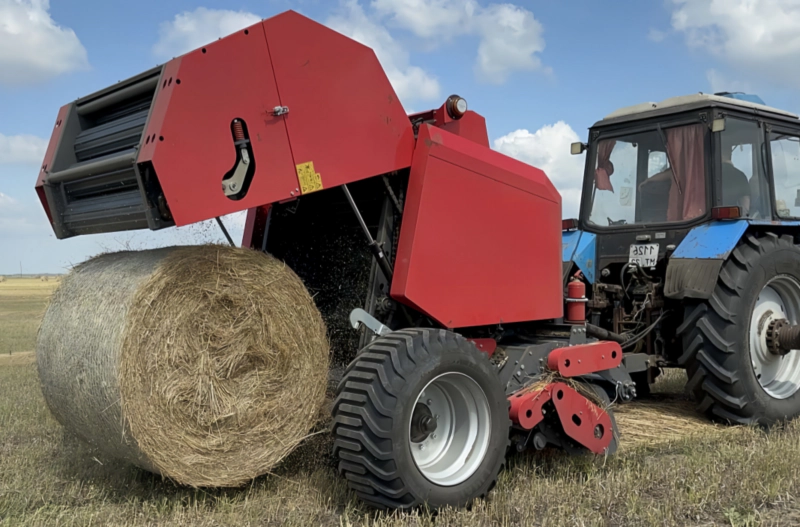
The hydraulic rear gate opens and the completed φ1300 × 1400mm bale rolls cleanly onto the field surface. The gate closes and the chamber resets within seconds, and the next baling cycle begins without field stops. This continuous-cycle design supports the machine’s rated productivity of 40–100 bales per hour — a range that reflects the difference between low-density light crop at high speed and maximum-density heavy silage at moderate speed.
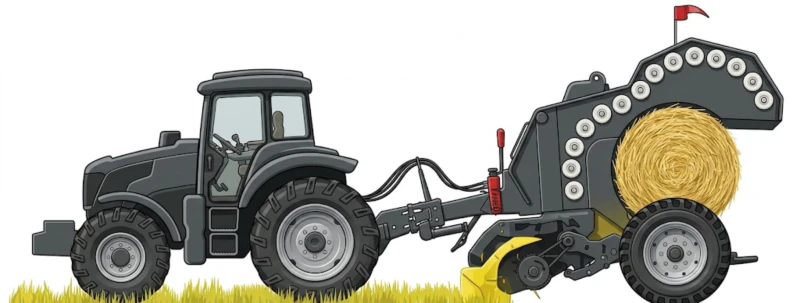
High-density bales produced by the S9000’s sensor-controlled system reduce air pockets within the bale structure, slowing the oxidation and mold growth that degrade forage nutritional value during storage. For dairy and livestock operations where forage quality directly determines milk yield and animal performance, the density consistency advantage of the S9000 translates into measurable feed quality improvements that conventional lower-density bales cannot match. Compare all available models at our hay baler product catalogue to identify the right specification for your operation.
3. Complete Technical Specifications
The table below contains the verified engineering specification sheet for the 9YG-2.24D Round Baler (S9000). All values are taken from factory test documentation under standard operating conditions at rated power input.
| No. | Item | Unit | Specification |
|---|---|---|---|
| 1 | Model Name | / | 9YG-2.24D Round Baler (S9000) |
| 2 | Hitching Type | / | Towed |
| 3 | Pickup Width | mm | 2240 |
| 4 | Pickup Structure | / | Spring Tooth Type |
| 5 | Feeder Structure | / | Finger Wheel + Roller Type |
| 6 | Compression Chamber Structure | / | Roller Type |
| 7 | Compression Chamber Width | mm | 1400 |
| 8 | Compression Chamber Diameter | mm | φ1200 |
| 9 | Number of Rolling Working Parts | pcs | 18 (Rollers) |
| 10 | Rolling Roller Diameter | mm | φ222 |
| 11 | Tying Method | / | Net Wrap (Netting) |
| 12 | Matched Power | kW | 55–100 |
| 13 | Structural Weight | kg | 4262 |
| 14 | PTO Speed | r/min | 720 |
| 15 | Overall Dimensions (L×W×H) — Working State | mm | 4240 × 3010 × 2450 |
| 16 | Bale Density Control | / | Sensor Control |
| 17 | Bale Size (Diameter × Width) | mm | φ1300 × 1400 |
| 18 | Bale Density | kg/m³ | 100–200 |
| 19 | Productivity | bales/h | 40–100 |
| 20 | Wheelbase | mm | 2600 |
| 21 | Working Speed | km/h | 5–35 |
| 22 | Netting Specification (Length × Width) | m | 2000 × 1.4 / bale |
4. Five Core Advantages
Advantage 1: Powerful and Efficient Baling Capacity
The advanced winding and pressing system — 18 rollers at φ222mm diameter driving a φ1200mm compression chamber — forms high-density round bales quickly and consistently. Working speed range of 5–35 km/h gives operators flexibility to match ground speed to windrow density, sustaining maximum throughput at each field condition. The machine matches 75–120 horsepower tractors and maintains continuous high-speed operation even under heavy workloads, ensuring field harvesting efficiency that single-pass wide-pickup operation makes possible without secondary windrow merging.
Advantage 2: Reliable Automatic Net Wrap System
The fully automatic net wrap system is one of the S9000’s most significant operational advantages. When sensor feedback confirms the target density is reached, the wrapping cycle begins and completes without operator input. The 2000 × 1.4m net specification delivers full edge-to-edge coverage, creating a secure, weather-resistant bale surface that maintains shape during transportation and storage. Compared to manual twine binding, the automatic system eliminates wrapping inconsistency across long working days when operator fatigue would otherwise cause variation. Net wrap also outperforms twine in outdoor storage conditions, reducing surface dry matter loss by up to 65% over extended storage periods.
Advantage 3: Precise Sensor-Controlled Bale Density Adjustment
Bale density in the 100–200 kg/m³ range is managed automatically by a pressure sensor network that monitors chamber load in real time. Operators set the target density once and the hydraulic system maintains it throughout the field session regardless of windrow weight variation, crop moisture changes, or working speed adjustments. This removes the manual density monitoring that burdens operators on machines without sensor control and eliminates the density variation that makes bale-to-bale consistency difficult to maintain across an entire harvesting day. Users can adjust the target density between sessions to optimize for different crop types — tighter for commercial hay marketing, lighter for specialty bedding applications.
Advantage 4: Robust High-Strength Mechanical Structure
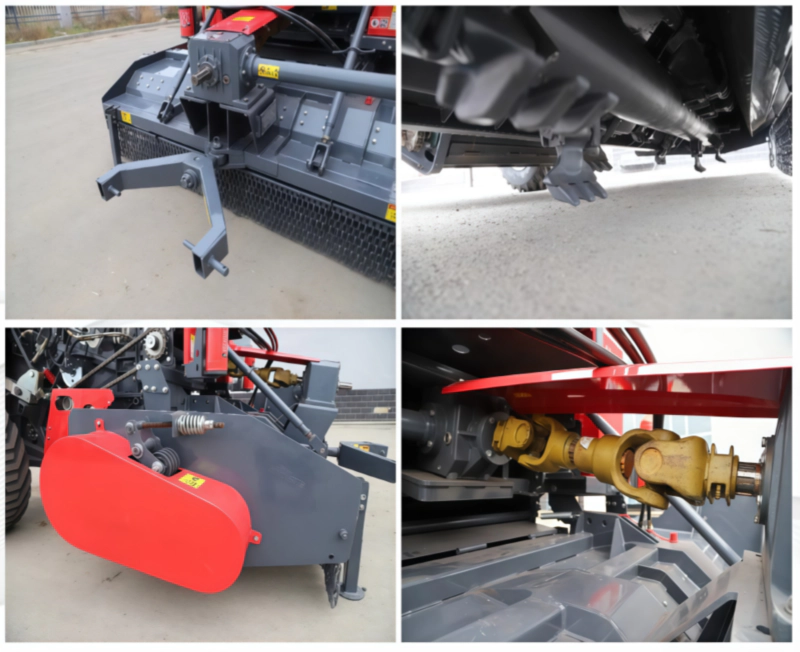
Key structural components are fabricated from high-strength steel throughout the primary load path — the frame sections that absorb the largest forces during compression and ejection cycles. Compression roller surfaces undergo specialist wear treatment to extend service life under abrasive dry straw processing conditions. The transmission system uses heavy-duty bearings and hardened gears designed to sustain commercial-intensity operation across multiple seasons. The 4262 kg structural weight reflects a robust design philosophy prioritizing long-term durability rather than minimum weight, appropriate for commercial operations where replacement cost and downtime matter more than transport economy.
Advantage 5: Convenient Operation and Low-Burden Maintenance
The S9000’s operator interface is designed around single-person field operation: the automatic net wrap cycle eliminates the need for the operator to leave the cab during normal baling operation, and the density control system removes the continuous monitoring attention that manual systems require. Routine maintenance points are consolidated and accessible from both sides of the machine, enabling the daily inspection and lubrication routine to be completed quickly without component removal. Even operators without extensive baler experience can reach full productivity rapidly, making the machine practical for operations that use seasonal or contract labor during peak harvest periods.
5. Field Application Scenarios and Multi-Crop Adaptability
The S9000’s unparalleled adaptability across crop types is one of its most commercially valuable characteristics. The combination of the finger wheel + roller type feeder and adjustable density settings allows it to switch between diverse materials without configuration changes — handling legumes, grasses, wheat straw, rice straw, and corn stalks within a single working day as field conditions and crop types change.
Legumes and High-Protein Forages
Alfalfa and clover require gentle handling through the intake to minimize leaf loss — the primary carrier of protein and energy in legume forages. The spring-tooth pickup lifts material cleanly from the windrow without aggressive mechanical contact that shreds leaves before they reach the chamber. The sensor density system maintains consistent compression without the over-compression that causes stem heating in high-protein forages stored at elevated density. Tight, well-formed alfalfa bales from the S9000 retain more leaves and nutrients than loosely formed equivalents, providing superior feed value for dairy and high-performance livestock operations.
Cereal Straw — Wheat, Rice, Soybean
Wheat straw, rice straw, and soybean straw present different processing challenges from forage: lower bulk density requires efficient chamber filling, and the stiff, slick surface can cause bridging at the intake in machines without positive feed mechanisms. The finger wheel component in the S9000’s feeder system maintains positive material control through the intake transition, pulling straw flakes steadily into the compression chamber and preventing the slug-feeding patterns that cause density variation. The adjustable density target allows operators to set tighter bales for biomass applications requiring high transport density, or lighter bales for bedding where handling weight matters more than volume efficiency.
Corn Stalks and Tough Crop Residue
Corn stalks present the most demanding material challenge in the S9000’s crop range — rigid, fibrous segments that resist compression and can cause intake bridging in machines not designed for this application. Field operations using the S9000 for corn stover collection consistently report low blockage rates when working at appropriate ground speeds of 5–8 km/h and maintaining windrow dimensions matched to the machine’s processing capacity. The high-strength steel structure and heavy-duty transmission handle the increased mechanical load of corn stalk compression without the accelerated wear that undermines lighter-built machines in this application.
6. Tractor Compatibility Reference
The S9000 is compatible with any tractor providing 55–100 kW (75–136 HP) at the PTO shaft with a standard 720 r/min output. The following reference table lists commonly deployed models confirmed compatible through field operation:
| Brand | Model | HP Range | PTO (r/min) | Application Note |
|---|---|---|---|---|
| Dongfanghong | LX904 | 90 | 720 (Standard) | Medium tractor, suitable for light to medium workloads |
| Dongfanghong | LX1004 | 100 | 720 (Standard) | Large tractor, suitable for high-intensity continuous operation |
| John Deere | 5E-954 | 95 | 720 (Optional) | Imported mid-size model, high operational stability |
| John Deere | 6E-1204 | 120 | 720 (Standard) | Imported large model, suits heavy-load high-density baling |
| Lovol Leopard | M904 | 90 | 720 (Standard) | Mainstream mid-size model, strong cost-performance ratio |
| Lovol Leopard | M1204 | 120 | 720 (Standard) | Large domestic model, handles complex field conditions |
| General (multi-brand) | Standard wheel tractor | 75–100 | 720 (Standard) | Any standard 720 r/min PTO tractor in this power range |
7. Manufacturing Quality and Production Facilities
The structural consistency that makes the S9000’s sensor density control effective begins on the production floor. The baler’s frame is cut using automated CNC laser equipment and assembled on computerized jigs that ensure flawless axial alignment of the 18-roller compression chamber — a dimensional tolerance that directly determines whether the rollers maintain uniform contact pressure across the full bale face width throughout the machine’s service life.
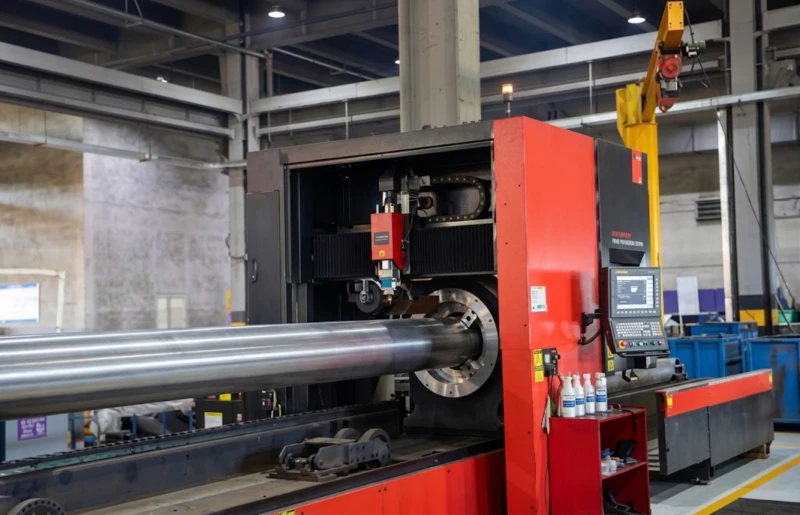
Roller surfaces undergo specialist heat treatment processes before installation, establishing the wear-resistant outer layer that maintains surface geometry through thousands of high-density baling cycles. Bearings, sprockets, and hydraulic components are sourced from established industrial suppliers and undergo incoming quality inspection before entering the production line. This supply chain discipline ensures that the machine leaving the facility matches the design specification, not a compromised version that field experience and quality control variation have degraded.
The production process is conducted under ISO 9001 quality management system certification and ISO 14001 environmental management system certification. The S9000 meets EU CE standards for emission, noise, and vibration — certifications that support equipment export to European, Australian, and other regulated markets and that provide independent verification of manufacturing quality to buyers in all regions.
8. Why Choose the 9YG-2.24D (S9000)? Four Commercial Advantages
9. Related Product: Why the PTO Shaft Is Critical to S9000 Performance
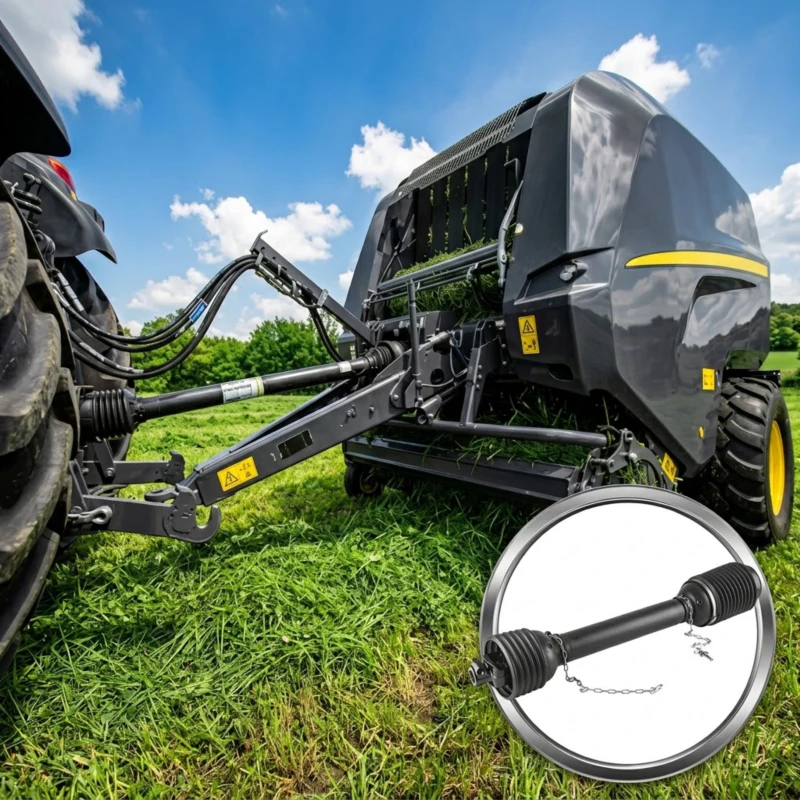
The 9YG-2.24D (S9000) is a tractor-powered implement: every function — the pickup reel, the compression rollers, the hydraulic density control, the automatic net wrap system — draws its energy from the tractor engine through a single mechanical link. A correctly specified, well-maintained pto shaft is therefore not a secondary component — it is the prerequisite that determines whether the S9000’s sensor control system operates accurately and whether the compression rollers deliver their specified density output.
Function 1: Core Power Transmission
The driveshaft transmits the tractor engine’s rotational energy directly to the S9000’s input gearbox at the specified 720 r/min. The internal gear train then distributes this power to the pickup cam drive, the compression roller chain system, and the hydraulic pump that powers the density control and gate operation circuits. Any power loss in the driveshaft — from worn splines, improper specification matching, or a damaged cross joint — reduces the energy available to the compression system and causes density output to fall below the sensor-set target.
Function 2: Terrain and Steering Compensation
During field operation, the distance and angle between the tractor’s PTO output shaft and the baler’s input shaft change continuously with ground undulation and turning. Universal joints at both shaft ends allow smooth power delivery across changing angles, especially important during headland turns and uphill-downhill transitions. The telescoping spline in the shaft centre accommodates distance variation without binding or pulling. A safety clutch or shear-pin overload protection device provides instantaneous disconnection when the compression chamber encounters a sudden hard obstruction — protecting the gearbox, rollers, and tractor PTO from the impact damage that would otherwise result from the sudden torque spike.
Selection, Maintenance, and Safety Guidelines
10. Frequently Asked Questions (FAQ)
Yes. The S9000 is designed for 55–100 kW (75–136 HP), and 80 HP falls within this range. However, your tractor must provide a 720 r/min PTO output and have at least two hydraulic output circuits. At 80 HP, the machine will operate effectively under light to moderate workloads. For heavy-density baling or continuous high-speed operation, a tractor in the 90–100 HP range delivers better sustained output and greater power reserve for demanding field conditions.
Yes, two tractor-related causes account for the majority of intake jamming events. First, PTO speed below 720 r/min means the pickup reel and feeder mechanism rotate below design speed — material enters faster than it can be processed, causing blockage at the intake throat. Confirm PTO speed matches specification before investigating mechanical causes. Second, excessive ground speed relative to windrow density overloads the intake volume. Recommended ground speed for standard crops is 5–8 km/h; reduce speed in heavy or dense windrows and increase speed in thin windrows to maintain consistent intake flow.
High-horsepower tractors apply greater peak and sustained torque to the drivetrain. Three components warrant increased inspection frequency: (1) The PTO shaft coupling sleeve — check weekly for play or wear; replace promptly if movement is detected to prevent unstable power transmission. (2) The traction hitch pin and bushing — apply high-temperature grease monthly; heavy-load operation generates impact forces that accelerate wear at this connection point. (3) Compression roller bearings — high-load baling raises bearing operating temperatures; check lubrication level at every 50-hour service and top up as needed to prevent thermal overload.
Follow this sequence: (1) Park on level ground, engage handbrake, shift to neutral. (2) Lower the baler pickup arm to the ground using the tractor hydraulics — the baler’s weight must be fully supported before disconnection. (3) Switch off the PTO, remove the safety pin from the coupling sleeve, and disconnect the PTO shaft. (4) Release the three-point hitch locking pin and raise the hydraulic arms to separate from the baler connection points. (5) Remove the drawbar pin to complete disconnection. Never attempt disconnection on a slope or with the PTO engaged.
The S9000 handles alfalfa, ryegrass, oat grass, wheat straw, rice straw, corn stalks, soybean straw, reed, and sugarcane leaves. Each crop type requires corresponding adjustment of density target and working speed. Corn stalks and sugarcane leaves represent the most demanding materials — operate at 5–8 km/h in dense fields and confirm spring tines are in good condition before processing abrasive materials.
For dry hay baling, optimal moisture is 12%–18%. The maximum for standard dry hay operation is 25% — above this level, reduce working speed to maintain bale quality and protect the net wrap system from adhesion issues caused by high-moisture surface material. For silage baling at higher moisture content, the S9000 can produce bales but these should be film-wrapped within four hours of ejection to initiate anaerobic fermentation before oxygen penetration causes spoilage.
Follow a structured interval schedule: Every shift — clear debris from pickup, feeder, and net dispenser; check accessible fasteners. Every 50 hours — lubricate all marked grease points; check chain tension and net guide roller alignment; inspect PTO shaft guards. Every 200 hours — replace hydraulic filter elements; inspect roller surface wear; check spring-tine condition. End of season — full bearing inspection; hydraulic oil change; roller diameter measurement against minimum specification; chain elongation measurement.
The S9000 series includes several variants with different feeder configurations, structural weights, and feature packages suited to different operating priorities. The core specifications — 2240mm pickup width, 18-roller chamber, sensor density control, net wrap — are consistent across the series. Selection between variants depends on your primary crop type, daily bale volume requirement, and tractor specification. Contact our product specialists with your operational parameters and we will recommend the best-matched variant for your requirements.
Ready to Maximize Your Harvest Profits with the S9000?
Get the 2240mm wide pickup, 18-roller sensor-controlled baling, and fully automatic net wrap that commercial forage operations need — in a machine proven across large farms, forage contractors, and silage producers worldwide. Request your customized quote and technical specification today.