Round Baler vs Square Baler: A Complete Comparison for Hay and Forage Farmers
Whether you are managing a small family farm or operating a large-scale commercial forage operation, selecting the right baling equipment is one of the most critical decisions you will make. The choice between round and square balers can significantly impact your harvest efficiency, storage capacity, operational costs, and long-term profitability. This comprehensive guide breaks down the key differences, advantages, and disadvantages of each type to help you make an informed decision that aligns with your specific farming needs.
Understanding the Basics: Round Balers vs Square Balers
Before diving into detailed comparisons, it is essential to understand what defines each baler type. A round baler operates on a cylindrical compression chamber design, producing large, drum-shaped bales that typically measure 4 to 5 feet in diameter and weigh between 400 to 1,200 pounds depending on the model and material density. Square balers, conversely, use a rectangular compression chamber and produce uniform rectangular packages that are easier to stack and transport. These bales generally measure 36 to 48 inches in width and height, with adjustable lengths ranging from 24 to 48 inches.
The fundamental operational difference lies in how each type compresses and shapes forage material. Round balers use a series of rollers or belts arranged in a cylindrical chamber, continuously rotating and compressing material as it feeds into the chamber. Square balers employ a plunger mechanism that compresses material into rectangular bale chambers, with adjustable stroke lengths to control bale density and dimensions. Understanding these mechanical differences is crucial for evaluating which type will perform best on your property.
Pickup Efficiency and Crop Feeding Performance
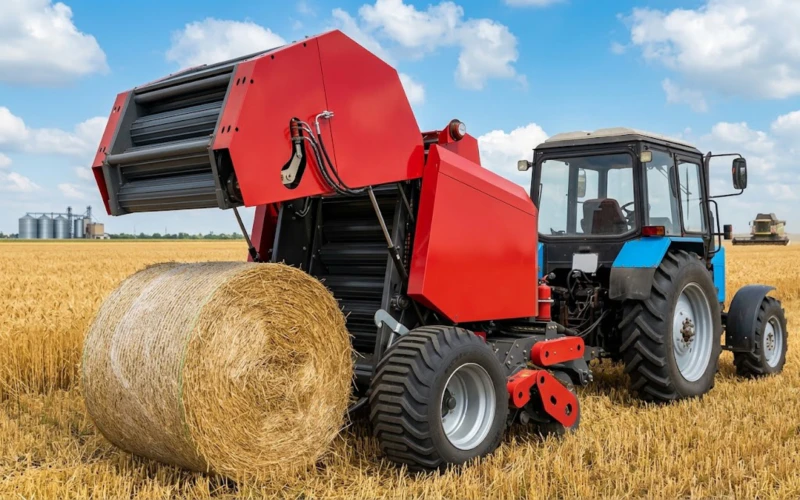
The pickup mechanism is where the initial performance differences between round and square balers become evident. Round balers typically feature pickup widths ranging from 5 to 7 feet (approximately 800mm to 2200mm), with most commercial models operating at 6 to 7 feet. Square balers generally offer comparable pickup widths, though the design and operation of the picking mechanism differ substantially.
Round baler pickups employ spring-tooth or cam-controlled tine bars that gently lift and feed material into the cylindrical chamber. This design excels at handling varying windrow densities and can process materials ranging from light, fluffy hay to denser silage crops. The continuous feeding mechanism means the baler does not need to stop between bales, maintaining higher field productivity during extended harvesting periods.
Square baler pickups typically use similar spring-tooth designs but feed material into a rectangular chamber. The key difference is that square balers must stop periodically to eject completed bales before accepting the next load. This discontinuous operation can result in slightly longer cycle times, though modern hydraulic systems have significantly reduced the downtime between bales. Additionally, square balers often allow for adjustable feeding mechanisms, such as fork feeders or screw conveyors, providing operators with greater flexibility when handling different crop types.
Bale Density and Compression Characteristics
Key Point: Bale density directly impacts storage efficiency, nutritional preservation, and transportation economics. Denser bales reduce storage space requirements by up to 30% and maintain forage quality more effectively during long-term storage.
One of the most significant performance differentiators between round and square balers is their ability to achieve and maintain consistent bale density. Round balers with hydraulic density adjustment systems can produce bales ranging from 20 to 35 pounds per cubic foot, offering flexibility to adapt to different crop conditions and storage requirements. Modern heavy-duty round baler models feature 16 to 20 steel rollers with individual hydraulic tension control, enabling precise density management throughout the baling process.
Square balers, particularly large square baler models with high-speed plungers delivering 40 to 50 strokes per minute, achieve exceptional density consistency. Large square balers can compress forage into dense packages reaching 35 to 45 pounds per cubic foot, with some high-density models exceeding 45 pounds per cubic foot. This superior density is particularly advantageous for commercial hay operations and feed mills, where uniform density ensures consistent nutritional delivery and reduces feed waste.
Storage and Space Utilization Comparison
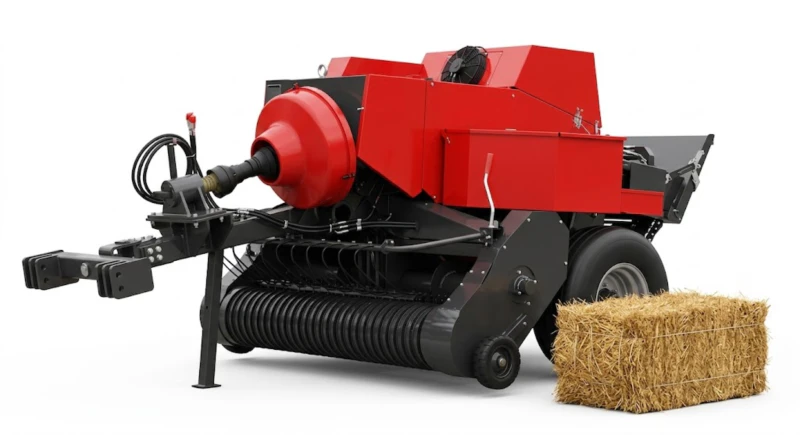
Storage efficiency is a critical economic consideration that often receives insufficient attention when selecting baling equipment. Round bales, due to their cylindrical shape, cannot be stacked as efficiently as square bales. A typical large round bale occupies approximately 38 to 42 cubic feet of storage space per bale, though much of this space remains empty between the bales when stored in rows or stacked configurations.
Square bales, with their rectangular geometry, nestle together perfectly when stacked, utilizing approximately 85 to 95 percent of available storage space. This superior space efficiency means that a 50,000 square-foot storage structure can accommodate significantly more hay weight in square bale format compared to round bales. For farms with limited storage infrastructure or those operating in regions with frequent rain or snow, this difference can translate to substantial storage cost savings and improved forage preservation.
Additionally, the stacking characteristics influence handling requirements. Round bales can be stacked 2 to 3 layers high without specialized equipment, making them suitable for outdoor storage under tarps or simple structures. Square bales, particularly large square bales weighing 1,200 to 1,500 pounds, typically require front-end loader or specialized bale handling equipment for vertical stacking, but once stacked, they remain more stable and require less protective covering to prevent weather damage.
Transportation and Logistics Efficiency
The economics of transportation significantly influence overall forage harvesting profitability. Round bales, while individually manageable for many operators, require specialized handling equipment such as spear attachments or bale carriers. A standard farm trailer can accommodate approximately 30 to 40 large round bales, depending on the bale size and trailer configuration.
Square bales present a more favorable transportation profile. A single trailer can transport 70 to 100 large square bales, representing a 100 to 150 percent increase in per-load capacity compared to round bales. For operations engaged in commercial hay sales or operating feed mills, this transportation advantage translates directly to reduced fuel costs, fewer trips between field and storage facility, and lower labor requirements per ton of forage harvested.
The superior stackability of square bales also simplifies logistics at the delivery destination. Livestock operations and feed mills prefer receiving square bales due to the ease of mechanized unloading and precise weight control when formulating rations. This market preference often results in a price premium for quality square bales compared to round bales of equivalent nutritional content, further strengthening the economic case for square baler investment in commercial operations.
Operational and Maintenance Considerations
Round Baler Maintenance Requirements
Round balers generally feature simpler mechanical designs with fewer wearing parts compared to equivalent square baler models. The roller-based compression system requires regular inspection of roller bearing condition, with replacements typically needed every 2,000 to 3,000 operating hours. Hydraulic systems remain relatively straightforward, with main functions limited to pickup height adjustment and bale density control.
Common maintenance tasks include roller bearing lubrication, belt inspection and replacement (typically every 1,500 to 2,000 hours), and periodic adjustment of pickup float and tine tension. The net wrap or twine application system requires regular attention, with operators monitoring wrap feed mechanisms and ensuring consistent tension throughout the season. Most farmers experience downtime of 4 to 8 hours annually for routine maintenance, with major overhauls required every 3 to 5 years depending on usage intensity.
Square Baler Maintenance Requirements
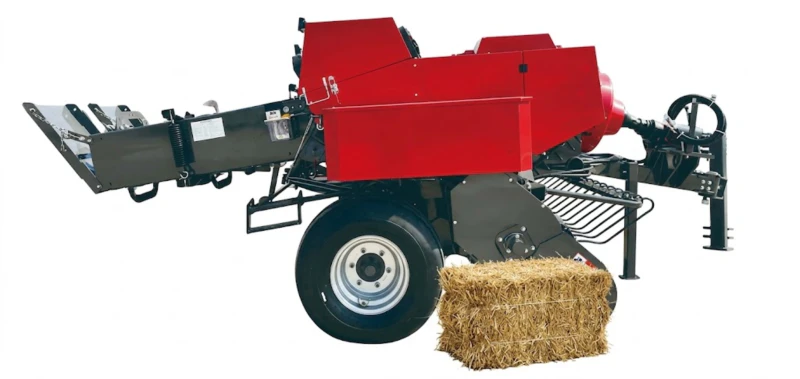
Square balers involve more complex hydraulic systems with additional control functions. The plunger mechanism, knotter system, and density adjustment components require more frequent inspection and maintenance than comparable round baler systems. Knotter maintenance is particularly critical, as knotter timing directly affects bale binding quality and field performance consistency.
Square balers demand more attention to bearing greasing points, with operators typically required to perform lubrication at more frequent intervals than round baler systems. The higher plunger stroke rates mean increased wear on mechanical components, with more frequent replacement requirements for wear plates, bearings, and shear pins. Annual maintenance typically requires 8 to 15 hours of technician time, compared to 4 to 8 hours for round balers of similar size.
| Performance Factor | Round Baler Characteristics | Square Baler Characteristics |
|---|---|---|
| Bale Density | 20–35 lbs/cu.ft (adjustable) | 35–45 lbs/cu.ft (very consistent) |
| Bale Shape Consistency | Variable (depends on crop moisture) | Highly uniform and square-shouldered |
| Storage Efficiency | 40–60% space utilization | 85–95% space utilization |
| Transport Capacity | 30–40 bales per trailer load | 70–100 bales per trailer load |
| Annual Maintenance Hours | 4–8 hours typical | 8–15 hours typical |
| Initial Equipment Cost | $35,000–$85,000 | $45,000–$110,000 |
| Typical Bale Weight | 400–1,200 lbs (4–5 ft diameter) | 800–1,500 lbs (3–4 ft wide) |
| Field Productivity | 10–15 acres per day (continuous) | 8–12 acres per day (intermittent) |
Crop Suitability and Versatility Assessment
Different crop types present distinct challenges to baling equipment, and understanding crop-specific suitability is essential for successful forage harvesting. Round balers excel with dry hay crops, particularly tall grasses, timothy hay, and alfalfa mixtures. The gentle, rolling action of the roller-based compression system handles delicate forage species without excessive leaf shatter or nutritional degradation.
Round balers also demonstrate superior performance with high-moisture silage crops due to their sealed chamber design and ability to handle sticky, wet material without frequent jamming. The continuous feeding mechanism prevents material compaction issues common in square balers when processing silage with moisture content exceeding 55 percent.
Square balers perform exceptionally well with cereal straw crops, including wheat straw, rice straw, and barley straw. The aggressive plunger action creates the density necessary for economical straw storage and transportation. Operators who incorporate crop processing capabilities, such as built-in shredding mechanisms, further enhance square baler versatility for difficult materials like corn stalks and sorghum stover.
Cost Analysis and Return on Investment
The financial decision between round and square balers extends beyond initial purchase price to encompass total cost of ownership, including fuel consumption, maintenance, repair, and operational efficiency. Round balers of comparable capacity typically cost 15 to 20 percent less than equivalent square baler models, though this initial savings must be weighed against operational economics.
Round balers demonstrate lower annual fuel consumption, approximately 20 to 30 percent less than square balers of similar pickup width, due to their more efficient mechanical operation and continuous baling cycle. Maintenance costs remain lower, with annual spare parts expenses typically 25 to 35 percent below square baler requirements.
Square balers justify their higher initial investment and maintenance costs through superior field productivity in certain applications, particularly commercial hay operations where bale uniformity, density consistency, and transportation efficiency command market price premiums. For farms producing 200 to 500 tons of forage annually, the reduced transportation costs alone from square baler use often exceed the difference in equipment purchase price within 3 to 4 operating seasons.
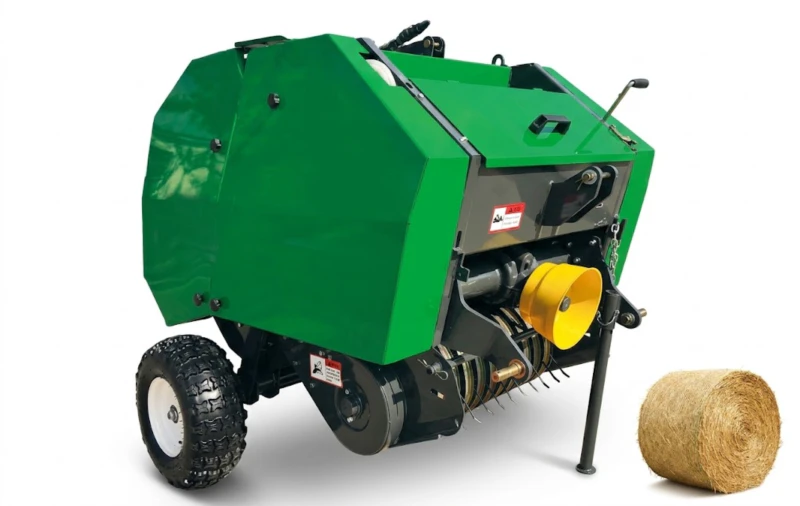
Selection Framework for Different Farm Sizes
Small Farm Operations (Under 100 Acres)
For small-scale farmers and hobby farm operations, compact round balers measuring less than 900mm in bale diameter represent the optimal choice. These units require only 25 to 50 horsepower, integrate easily with small farm tractors, and demand minimal maintenance expertise. Small round balers produce bales weighing 300 to 500 pounds, matching the feeding requirements of small livestock operations and eliminating waste from oversized bales.
Recommendation: Farmers with fewer than 100 acres of forage should consider compact round balers for their lower initial cost, simplified operation, and compatibility with standard farm equipment. These models provide excellent value for small-scale applications.
Mid-Size Farm Operations (100-300 Acres)
Mid-size farming operations can benefit from either full-size round balers (4 to 5 feet diameter) or small square balers. The optimal choice depends on specific crop mix and market orientation. If hay is primarily used for on-farm livestock feeding, round balers offer superior economics. If forage is marketed commercially, square balers provide advantages through improved transportability and market preference for uniform bales.
Large-Scale Commercial Operations (Over 300 Acres)
Large commercial forage operations typically justify investment in large square balers, particularly dual-chamber models that maximize field productivity. The superior density, transportation efficiency, and market price premiums for high-quality square bales offset higher equipment costs and maintenance requirements. Commercial operations processing 500 or more tons of forage annually almost universally prefer square baler equipment.
Environmental and Sustainability Considerations
Modern forage operations increasingly evaluate equipment selections through environmental sustainability lenses. Round balers consume less fossil fuel per ton of forage harvested due to their mechanical efficiency, resulting in reduced carbon emissions per unit of production. However, square balers offer environmental advantages through superior storage efficiency, requiring less protective covering material and reducing weather-related forage losses that necessitate replanting or supplemental feed purchases.
Frequently Asked Questions
Making Your Final Decision
The choice between round and square balers ultimately depends on your specific farm profile, operational goals, and financial constraints. Round balers offer simplicity, lower costs, and superior performance with delicate forage crops. Square balers excel in high-volume commercial operations where bale uniformity, transportation efficiency, and storage density command market premiums.
Evaluate your operation across all relevant dimensions: farm acreage, equipment horsepower availability, storage infrastructure, primary forage crop types, whether production is for on-farm use or commercial sale, and your proficiency with equipment maintenance. Consider consulting with successful farmers in your region who operate both types—their practical experience often provides insights not available from manufacturer specifications alone.
For comprehensive information about specific baler models and their suitability for your operation, explore our detailed baling equipment comparison resources where you’ll find detailed specifications, user reviews, and performance metrics for round and square baler options across all equipment sizes and crop applications.
Ready to Find Your Perfect Baling Solution?
Our equipment specialists can help you select the ideal round or square baler for your specific farming operation. Whether you’re transitioning between equipment types or investing in your first professional baling system, we provide comprehensive consultation and support throughout the decision process.
Contact Our Equipment Specialists
Explore our full range of premium baling equipment to compare models, specifications, and find the perfect solution for your harvesting needs.
Conclusion
Both round and square balers serve essential roles in modern forage production, each excelling in specific operational contexts. The most successful farms often employ equipment selection strategies driven by data—analyzing crop types, field acreage, storage capacity, equipment investment budgets, and market conditions to identify the baler type offering optimal long-term value. Whether you ultimately select a round baler for its simplicity and lower costs or choose a square baler for superior density and transportation efficiency, investing in quality equipment and committing to comprehensive maintenance practices will maximize your forage harvesting success.
The forage industry continues evolving with technological advances in baling equipment, hydraulic systems, and automation features. Whatever your current equipment status, staying informed about available options and remaining flexible about equipment choices as your operation evolves ensures you maintain competitive advantages in forage production and livestock operation economics. Your investment in the right baling equipment today will drive productivity and profitability for years to come.