
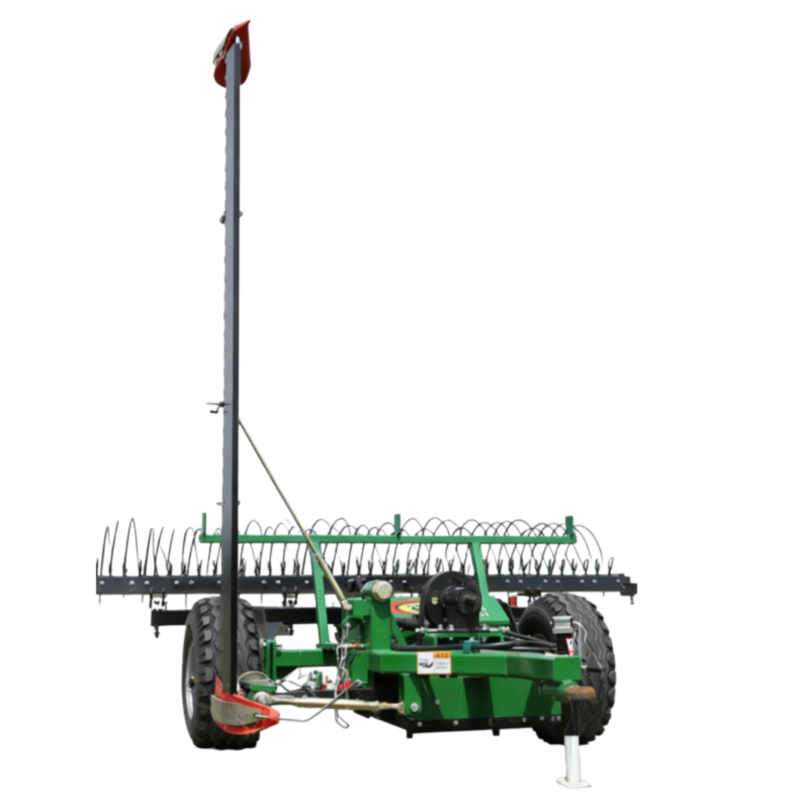
9GL-2.5/2.9 Tractor Lawnmower
9GL-2.5/2.9 Tractor Lawnmower — 2.5m or 2.9m PTO rotary mowing, free-swinging blade protection, 50–150mm cut height, up to 1.5m veg. Suits 40–80kW tractors. 3-point hitch.
9GL-2.5/2.9 Tractor Lawnmower: Rear-Mounted Rotary Mowing for Grassland Management, Orchard Maintenance, and Field Edge Clearing
Two width options — 2.5m and 2.9m working width — PTO-driven heavy-duty rotary blade system, three-point hitch rear mounting, adjustable cutting height, and robust blade protection for versatile grassland mowing, roadside vegetation management, and green biomass collection from medium tractors.
1. Introduction: Versatile PTO-Driven Rotary Mowing for Diverse Grassland and Vegetation Management
Commercial and institutional vegetation management spans a wide range of applications that share a common requirement: reliable, high-coverage mowing that handles diverse plant materials — from fine-stemmed grasses to coarse weeds, low-growing scrub, and established roadside vegetation — without frequent blockages or mechanical failures that interrupt the working day. Farm operations need to manage grassland swards between hay cuts, clear field margins before harvest, and maintain orchard floors between rows. Road and rail corridor managers need to clear vegetation growth from verges and embankments on regular maintenance cycles. Municipal parks and green space operators need to process rough-cut areas that standard ride-on mowers cannot handle efficiently. The 9GL-2.5/2.9 Tractor Lawnmower is designed for all these applications — a PTO-driven rear-mounted rotary mowing machine built for continuous-duty operation on medium tractors in the most demanding vegetation management contexts.
Available in two working widths — 2.5m and 2.9m — the 9GL series provides the width flexibility to match the working width to the specific application: the 2.5m model suits orchard row work, narrow grassland strips, and applications where implement width is constrained by row spacing or passage width; the 2.9m model maximises coverage rate on open grassland, roadside verges, and field margin clearance where the primary objective is completing the largest possible area per tractor hour. Both models use the same PTO-driven rotary blade architecture, three-point hitch rear mounting, and adjustable cutting height system that make the 9GL series adaptable across the full spectrum of commercial vegetation management requirements. For the forage baling equipment that processes the material after mowing, explore our complete forage harvesting equipment range.
The 9GL series’ rotary blade design delivers the practical advantage that matters most in commercial vegetation management: consistent mowing performance across material types that would stall or damage a reciprocating sickle bar machine. Lodged vegetation, mixed grass-and-weed swards, partially dry stems, and moisture-laden early-morning growth all present uniformly to the rotating blade assembly — the high disc tip speed severs material cleanly regardless of stem orientation, moisture content, or species mix. This material-independent performance is what makes the 9GL series the practical choice for applications where the vegetation type varies across the site or across the season.
2. How the 9GL-2.5/2.9 Works: PTO-Driven Rotary Blade Mowing Principle
PTO Power Transmission and Blade Drive System
The 9GL tractor lawnmower is powered entirely by the tractor’s PTO output shaft. Rotational energy from the tractor engine travels through the PTO driveshaft to the machine’s input gearbox, which distributes power across the full cutting deck width through a belt or gear drive system to each blade disc or blade carrier. The blade tips rotate at high peripheral speed — typically in the range of 60–80 metres per second — generating the impact energy that severs vegetation through kinetic impact rather than the mechanical shear that sickle bar machines use. This impact-cutting mechanism handles dense, varied, and irregularly oriented vegetation without the blade-coordination requirement that makes sickle bar systems sensitive to material density and orientation.
Free-Swinging Blade Safety System
The cutting blades are mounted on free-swinging pivot pins on the blade carrier disc. This free-swing mounting is the rotary mower’s primary overload protection and safety mechanism. When a blade contacts a solid object — a stone, buried root, metal stake, or hardened soil mound — it swings backward on its pivot pin, absorbing the impact energy through rotation rather than transmitting it to the blade carrier, gearbox, and driveshaft. Immediately after passing the obstruction, centrifugal force returns the blade to its active cutting position. This deflect-and-return cycle occurs in milliseconds without operator intervention and without the structural damage that a rigid-blade impact would cause. The result is a blade system that clears stones and debris from diverse field surfaces without the catastrophic failures that make blade replacement and gearbox repair the dominant maintenance cost of rigid-blade alternatives.
Adjustable Cutting Height and Material Discharge
Cutting height is adjusted through the machine’s skid or roller height mechanism, which sets the minimum clearance between the blade tips and the ground surface. For grassland sward management applications where regrowth speed is a priority, a higher cutting height preserves the growing point that drives rapid canopy recovery. For biomass collection applications where maximising cut material volume is the objective, a lower cutting height captures more plant material per pass. The rear discharge system directs cut material in a consistent rearward arc, either distributing it as a mulch across the mowed surface or laying it in a light windrow behind the machine that can be collected by a following rake and baler for green biomass applications.
Reciprocating sickle bar mowers require two counter-moving blades to shear each stem between them — a mechanism that depends on consistent stem orientation and spacing. When stems are lodged, tangled, or presented at angles outside the sickle’s design range, the shearing action fails and material accumulates between blades until the jam must be cleared manually. Rotary impact cutting severs material through kinetic energy regardless of orientation — a stem presented sideways, upright, or at any angle is cut equally well by a blade tip travelling at 60+ m/s. This orientation independence is the primary reason the 9GL series is the preferred tool for roadside verge management, grassland with diverse species mixes, and any application where material presentation cannot be controlled. For complete forage harvesting systems, browse our full round baler and mowing equipment range.
3. Complete Technical Specifications
The 9GL series is available in two working width variants. Both share the same PTO-driven rotary blade architecture, three-point hitch connection, and adjustable cutting height system — the specification differences reflect the coverage width and corresponding power demand of each model.
| Parameter | 9GL-2.5 | 9GL-2.9 |
|---|---|---|
| Model | 9GL-2.5 | 9GL-2.9 |
| Hitch / Connection | Three-Point Hitch, Rear-Mounted | |
| Working Width | 2.5 m | 2.9 m |
| Mowing Type | Rotary Disc / Blade Type | |
| Drive Method | PTO-Driven (540 r/min) | |
| Required Tractor Power | 40–70 kW (55–95 HP) | 55–80 kW (75–110 HP) |
| Working Speed Range | 5–12 km/h | |
| Blade Configuration | Free-Swinging Blades (Anti-Overload) | |
| Cutting Height (Adjustable) | 50–150 mm (Stepless or Multi-Step) | |
| Material Discharge | Rear Discharge (Mulch / Light Windrow) | |
| Maximum Applicable Vegetation Height | Up to 1.5 m standing crop height | |
| Machine Weight | ~650 kg | ~780 kg |
| Applicable Terrain | Plains, Gentle Slopes (≤15°), Orchard Rows, Roadside Verges | |
| Operator Count | 1 (tractor driver) | |
The 9GL-2.5 suits orchard rows with tight row spacing, narrow field margins, and applications where tractor width limits the implement to 2.5m maximum. The 9GL-2.9 maximises coverage on open grassland and wide roadside verges where every additional 0.4m of width delivers proportionally higher hourly hectarage. At 8 km/h, the 2.9m model covers 2.32 ha/h versus 2.0 ha/h for the 2.5m — a 16% productivity advantage on open terrain that compounds into significant daily coverage difference across a full working shift. For applications where both width options are plausible, choose the 2.9m unless a specific passage width or row spacing constraint forces the narrower selection.
4. Five Core Advantages
Advantage 1: Wide-Width Rotary Mowing for Maximum Hourly Coverage
At 2.5m and 2.9m working widths, the 9GL series covers substantially more area per tractor pass than compact single-axle ride-on mowers or sub-metre tractor-mounted flail attachments. At the recommended working speed of 8 km/h, the 9GL-2.9 delivers approximately 2.3 ha/h — enabling a single operator to clear 18+ hectares per 8-hour working day. This coverage rate makes the 9GL series economically viable for medium-scale grassland operations, municipal green space management, road corridor maintenance contracts, and farm margin clearing programs where the total mowing area per season justifies the investment in wide-width tractor-mounted equipment over smaller alternatives. The two-width option means operations can select the model that best matches their specific productive area without paying for capacity they do not need or being constrained by a width that cannot serve their full application range.
Advantage 2: Free-Swinging Blade Anti-Overload Protection for Field Debris Safety
Commercial grassland and roadside vegetation management consistently encounters embedded objects — stones, metal debris, broken posts, and hardened soil mounds — that would cause catastrophic blade or gearbox failure in rigid-blade designs. The 9GL series’ free-swinging blade system is the engineering solution that makes continuous commercial mowing in debris-present environments economically sustainable. Each blade pivots rearward on its mounting pin when it contacts a solid object, dissipating the impact energy through rotation and returning to active cutting position immediately afterward. This deflection cycle protects the blade, the blade carrier disc, the gearbox, and the PTO driveshaft from the impact load that would otherwise fracture or bend rigid components. For road verge management contractors who routinely mow areas with unknown debris content, this protection mechanism is the difference between acceptable blade wear as a predictable consumable cost and catastrophic gearbox failures as unpredictable downtime events.
Advantage 3: Versatile Multi-Application Performance Across Diverse Vegetation Types
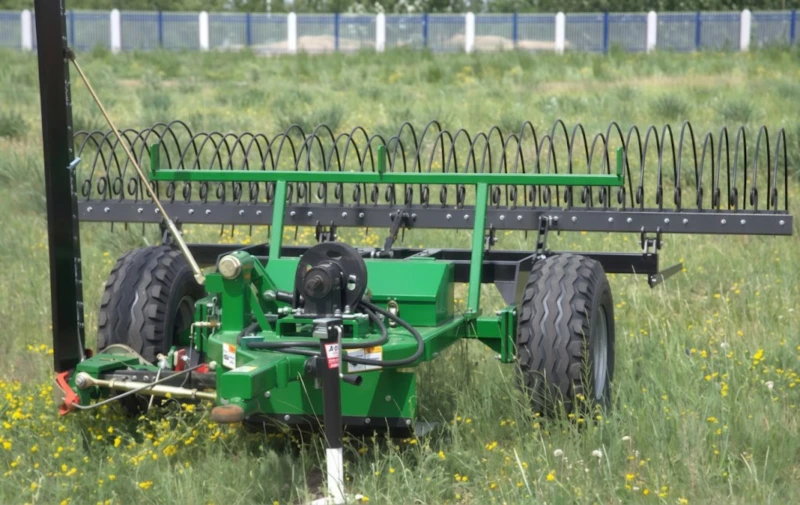
The rotary blade impact mechanism cuts effectively through grass, weeds, coarse vegetation, and mixed swards without operator adjustment between material types. Where a sickle bar mower requires reduced speed or stops when moving from short grass into taller weeds, the 9GL series maintains consistent working speed across these transitions — the blade tip speed provides sufficient impact energy to sever coarser material without speed reduction. Maximum applicable vegetation height of 1.5m standing crop means the 9GL series handles grassland that has been left uncut for a full season or longer — the category of vegetation management task that most compact mowers cannot address effectively. This height capability makes the 9GL series valuable for first-cut management of neglected grassland, one-pass clearance of roadside growth before regular maintenance cycles begin, and emergency clearance operations where vegetation height has exceeded normal management windows.
Advantage 4: Rear Three-Point Hitch Mounting for Easy Tractor Integration
The standard Category I/II three-point hitch rear mounting connection is the most universally compatible implement attachment system in agricultural machinery — compatible with effectively all tractors in the 40–80 kW power range manufactured in the last four decades. Coupling and decoupling the 9GL series takes approximately 10 minutes and requires no tools or special equipment. The PTO input shaft connection locks with a standard click-pin collar that any operator familiar with tractor-implement combinations can connect safely. This universal compatibility means the 9GL series can be added to existing tractor fleets without modifications, brackets, or compatibility concerns — a direct advantage over compact mowers or side-arm flail attachments that may require specific tractor hydraulic configurations or bracket fitment before operation.
Advantage 5: Low Running Cost and Simple Maintenance for Commercial Operations
The 9GL series’ maintenance cost profile is dominated by blade replacement as the primary consumable — a predictable wear item with a unit cost that is modest relative to the area cleared between replacement intervals. Gearbox and driveshaft components, protected by the free-swinging blade safety mechanism, should reach multi-season service intervals under normal debris-impact operating conditions. The simple mechanical architecture — rotary drive through a gearbox, without electronic controls, sensors, or hydraulic actuators in the cutting circuit — means fault diagnosis is straightforward and most field-level issues can be resolved by an operator without specialist tools or workshop support. For commercial vegetation management contractors where equipment downtime during active contracts has direct financial consequences, this operational simplicity and predictable cost profile is a significant economic advantage over more complex implement designs with higher maintenance burden per hour of operation.
5. Field Application Scenarios
Grassland Sward Management Between Hay Cuts
On permanent grassland and managed pastures, sward topping between hay cuts controls problem weeds that have bolted past the grass canopy height, removes coarse ungrazed material rejected by livestock, and stimulates tillering in grass species that respond to regular cutting. The 9GL series’ adjustable cutting height allows topping at 100–150mm — the height range that removes stem material above the productive grass canopy without cutting into the growing point zone that drives regrowth. Wide working width and high working speeds ensure that topping operations can be completed rapidly between grazing rotations without removing animals from pasture for extended periods. The mulched discharge of the cut material returns nutrients to the soil surface rather than removing them as hay — a sustainable nutrient management advantage for permanent pasture systems.
Orchard Floor and Row Management
Orchard floor vegetation management between tree rows requires an implement that fits within the row spacing, operates reliably at the slow ground speeds required for safe operation near tree trunks, and handles the diverse vegetation mix — grass, broad-leaf weeds, fallen fruit, and occasional woody debris — typical of managed orchard floors. The 9GL-2.5 model at 2.5m working width is specifically sized for standard tree row spacings in most fruit and nut orchard configurations. The free-swinging blade protection prevents blade damage on fallen woody debris and stones that accumulate under tree canopies. Mulch discharge returns cut vegetation as organic matter to the orchard floor, improving soil structure and moisture retention — the agronomic benefit that makes mulching mowers the preferred choice for orchard management over collection systems that remove the organic matter.
Roadside Verge and Transportation Corridor Clearance
Road verge and transportation corridor vegetation management is among the most demanding commercial mowing applications — high debris content, variable vegetation height, pressure to complete long corridor lengths within traffic management windows, and the legal requirement to complete mowing without scattering stones or other projectiles onto traffic lanes. The 9GL series’ rear-discharge configuration directs material back into the verge strip rather than laterally toward traffic lanes, and the free-swinging blade mechanism reduces the stone-throw risk that rigid-blade systems present when blades contact road surface debris at high tip speed. The wide working width enables corridor clearance at productivity rates that match the economic requirements of maintenance contracts measured in kilometres-per-day completed.
Green Biomass Collection for Silage or Compost
For applications where the mowed material has commercial value as green biomass — silage for livestock, green material for composting, or substrate for biogas production — the 9GL series’ rear discharge can be configured to lay cut material in a light windrow that a following rake can consolidate for collection. This green biomass mowing application connects the 9GL series to the complete forage harvesting chain: 9GL mows and lays material, the 9LZY-9.0 finger-wheel rake or 9LH-12 horizontal rake consolidates it into windrows, and a round baler from our series produces bales for transport to the processing facility. For operations that manage diverse green space areas and want to extract commercial value from the cut material rather than mulching it in place, this integrated approach provides a complete system from mowing to baled product.
6. Compatible Tractors and Connection Requirements
The 9GL series connects to any tractor with a rear three-point hitch (Category I or II) and a 540 r/min PTO output shaft — the most common configuration on mid-range tractors worldwide. The following table provides commonly deployed compatible models across major brands:
| Brand | Compatible Models | Suitable for | Notes |
|---|---|---|---|
| John Deere | 5045D/5055E/5075E, 6D Series | Both models | 5075E preferred for 2.9m at high speed |
| New Holland | Workmaster 55/65/75, T4.75/T4.90 | Both models | Excellent 540rpm PTO standard fit |
| Kubota | M5-091, M6S-111, L5702 | Both models | Reliable hydraulic systems; L5702 for 2.5m |
| Case IH | Farmall 55A/75A, JX80/JX90 | Both models | Farmall 75A ideal for 2.9m |
| Massey Ferguson | MF 4700 Series, MF 5700 Series | Both models | Wide global parts availability |
| Dongfeng / YTO | DF504 / YTO-504 and above | 9GL-2.5 primary | Widely deployed in Asian markets |
| Deutz-Fahr | Agrotron K420 / 5G Series | Both models | Strong European market fit |
7. Related Product: PTO Drive Shaft for Tractor Lawnmower Operation
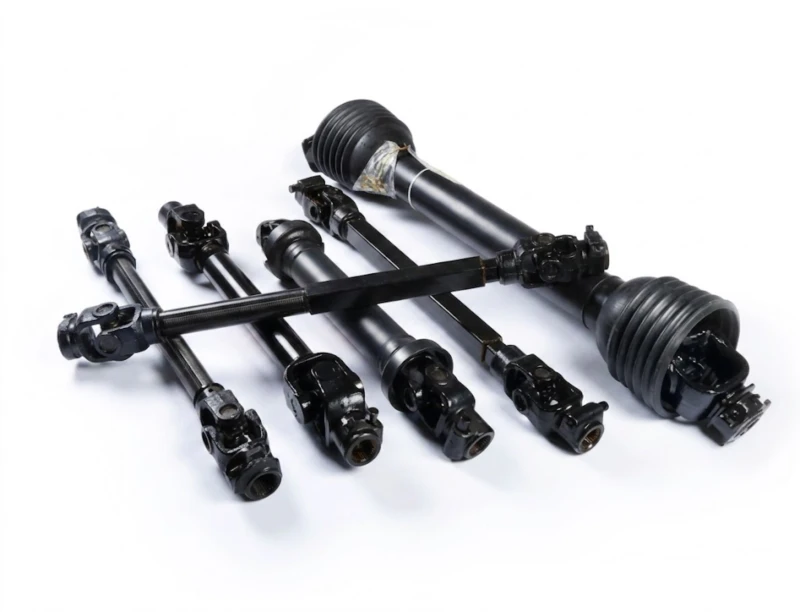
The 9GL tractor lawnmower is powered entirely through its PTO driveshaft connection. Unlike the 9LH-12 finger-wheel rake which requires no PTO drive, the 9GL’s entire rotary blade system draws its power from the tractor engine via the PTO connection at 540 r/min. A correctly specified, well-maintained pto shaft is therefore the critical power transmission link on which the entire machine’s performance depends — blade tip speed, mowing quality, and overload protection mechanism all require stable, correctly rated power delivery at 540 r/min.
Why Shaft Quality Matters in Rotary Mowing
Overload protection at the shaft level: When the 9GL series’ free-swinging blades deflect on a solid impact, the resultant torque spike is absorbed primarily at the blade pivot — but a secondary protection mechanism at the driveshaft level (shear bolt or friction clutch overload device) provides backup protection for the gearbox when the blade pivot mechanism cannot fully absorb extreme impacts. This shaft-level overload device must be rated and calibrated for the torque range at 540 r/min to provide effective protection without false tripping during normal heavy-cut mowing.
Speed stability for consistent blade tip velocity: The mowing quality of a rotary blade machine depends on consistent blade tip velocity across the full working speed range. Speed variation caused by worn or imbalanced driveshaft components produces variation in cut material length and surface uniformity. A dynamically balanced shaft rated for 540 r/min maintains consistent speed delivery to the blade gearbox throughout the mowing session.
Guard integrity at all times: At 540 r/min, the rotating driveshaft’s outer surface moves at speeds that cause immediate entanglement of clothing or limbs on contact. The full-length plastic guard enclosing the shaft is a legal safety requirement and an operational necessity — not an optional accessory. Inspect the guard before every shift and replace it immediately if any section is cracked, deformed, or missing.
8. Manufacturing Quality and Long-Term Reliability
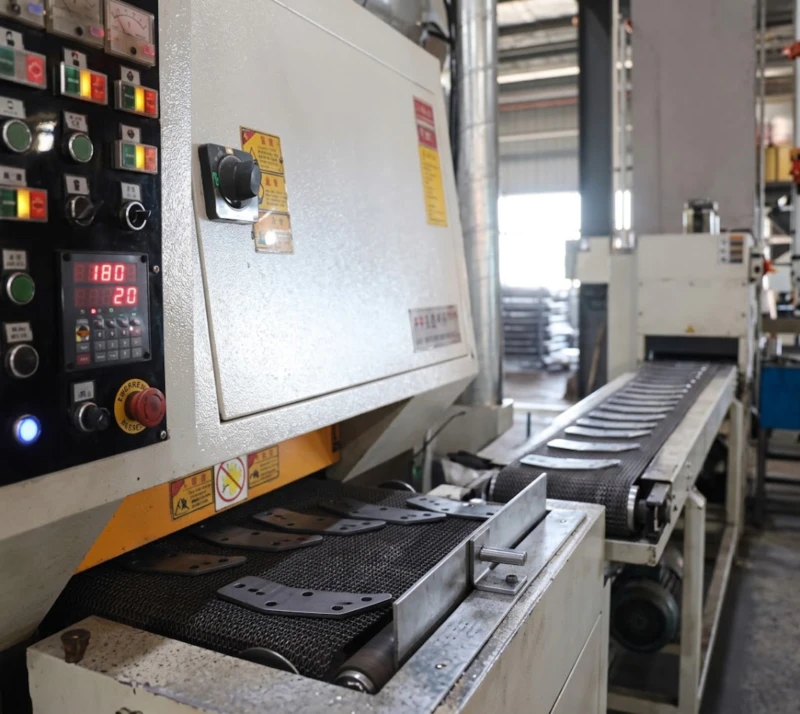
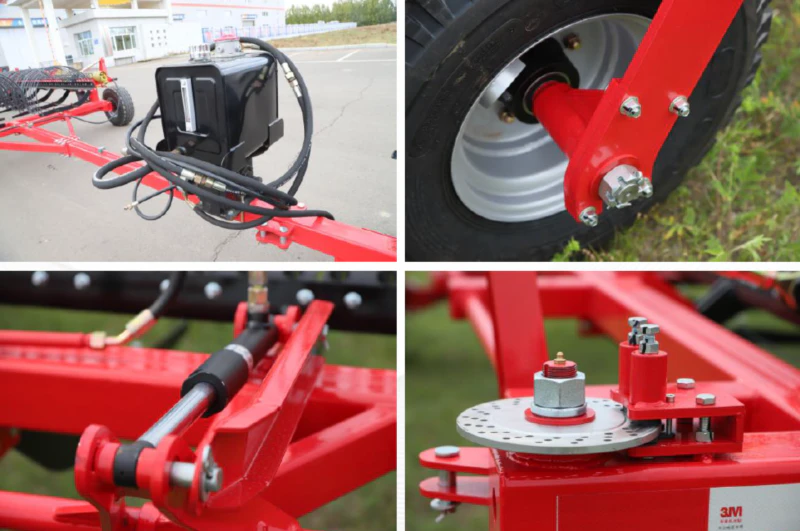
The 9GL series operates under sustained mechanical stress: the blade gearbox transmits full engine PTO power to high-speed rotating blade carriers for hours at a time, the chassis absorbs the vibration of unbalanced blade impact events across stone-scattered terrain, and the three-point hitch mounting points bear the dynamic loads of a 650–780 kg implement following terrain at working speed. The manufacturing specifications that determine whether this stress produces premature failure or service life consistent with commercial expectations are established in the fabrication and assembly process.
9. Frequently Asked Questions (FAQ)
The rotary impact mechanism cuts through dense, tall vegetation by tip speed rather than through mechanical shear — blade tips at 60+ m/s impact velocity sever stems regardless of density. For very tall stands (above 1m), reduce working speed to 5–6 km/h to prevent the machine from trying to process a larger material volume per unit time than the discharge system can handle. Working slowly through the first cut on previously unmanaged tall vegetation is the standard approach; subsequent maintenance cuts at normal speed are straightforward once vegetation height is controlled.
Choose the 9GL-2.9 if your primary application is open grassland, wide roadside verges, or field margin clearing where passage width is not constrained. The 2.9m model delivers 16% more area per hour than the 2.5m at the same speed. Choose the 9GL-2.5 if orchard row spacing, narrow field access gates, or passage width limitations prevent the 2.9m machine from fitting. Both models perform identically in cut quality and material handling — the only difference is coverage width and corresponding tractor power requirement.
For sward topping on permanent pasture: 100–150mm preserves the grass crown and growing point for rapid regrowth. For grassland hay crop mowing with biomass collection: 50–70mm maximises material collection yield. For orchard floor management: 80–120mm to avoid contact with surface roots and maintain organic matter mulch layer. For roadside verge clearance: 80–100mm provides a clean appearance while preserving ground cover that stabilises the verge slope. Never cut below 50mm unless the soil surface is confirmed free of stones, roots, and debris that blades would contact at minimum height.
Blade service life varies significantly with soil type and debris content. On sandy soil with stone presence, expect 50–80 hours per blade set. On clean clay or loam soils with minimal stones, 150–250 hours is achievable. Inspect blades at each daily maintenance check: a blade worn to less than 80% of its original length, showing chips or cracks in the cutting edge, or with visible deformation at the pivot hole should be replaced immediately. Worn blades produce ragged cut surfaces and increased vibration — both indicators visible before the blade reaches failure point. Always replace blades in balanced sets across the full carrier disc to maintain rotational balance.
Daily: inspect all blades for wear, cracks, or deformation; clear accumulated vegetation from around the blade carrier and discharge area; check PTO shaft guard integrity. Every 50 hours: check gearbox oil level; grease PTO shaft universal joints and splines; inspect blade pivot pin condition for wear or bending; check three-point hitch connection points for looseness. Every 200 hours: drain and refill gearbox oil; inspect belt or chain drive condition if applicable; check and repack wheel/skid pivot bearings if fitted. At season end: clean all surfaces, apply corrosion protection to exposed metal, store in a covered location.
Yes — with a rear discharge configuration that lays cut material in a light windrow, the 9GL series is compatible with green biomass collection workflows. Cut material from the 9GL can be consolidated by the 9LZY-9.0 finger-wheel rake or 9LH-12 horizontal rake into windrows sized for a following round baler. For silage-quality biomass, the mowed material must be baled and wrapped within approximately four hours of cutting to prevent aerobic deterioration before anaerobic fermentation begins. For dry biomass applications (straw, dried grass), field curing time of one to three days at appropriate conditions reduces moisture to baling range before raking and baling.
The cutting mechanism requires only PTO drive — no hydraulic remote is needed for mowing operation. A hydraulic remote connection (single valve) allows the operator to raise and lower the cutting deck from the tractor cab for headland turns, which is operationally convenient but not essential — the three-point hitch lift function on most tractors achieves the same result using the tractor’s standard top link and lift arms. For operations where repeated headland turns are frequent, connecting a hydraulic remote valve to the lift circuit reduces fatigue from manual linkage operation over a long working day.
Approach drainage ditch and embankment edges at reduced speed (3–5 km/h) with the outer edge of the mowing deck positioned 0.5m from the top edge of the embankment. Avoid positioning the tractor wheels within 1m of the embankment edge — soft embankment material may not support the tractor weight at the outer wheel position, particularly after recent rainfall. For slopes steeper than 10°, always work parallel to the contour rather than up or down slope. Do not mow within 2m of standing water — wet soil at the waterline may cause traction loss that puts the tractor at risk of sliding toward the water. For embankment-specific mowing requirements, consider a side-arm flail attachment rather than the rear-mounted 9GL configuration. For further technical guidance, contact our team.
Wide-Width PTO Rotary Mowing — From Grassland Management to Green Biomass Collection
The 9GL-2.5/2.9 Tractor Lawnmower brings 2.5m or 2.9m wide-cut rotary mowing to any tractor with a 540 r/min PTO and rear three-point hitch — free-swinging blade protection, adjustable cutting height from 50–150mm, and handling of vegetation up to 1.5m standing height. Single-operator, no-tool tractor coupling, ready for grassland, orchards, roadside verges, and green biomass applications.