What Is a Mini Round Baler? Features, Specs, and Best Use Cases Explained
For small-scale farmers, hobby farm enthusiasts, and operators with limited acreage, a mini round baler represents an ideal forage harvesting solution. These compact, lightweight machines deliver professional-grade baling performance while requiring significantly lower horsepower investments and minimal storage space. This comprehensive guide explores the technical specifications, operational advantages, and practical applications that make mini round balers indispensable equipment for small farm operations.
Understanding Mini Round Balers: Definition and Basic Characteristics
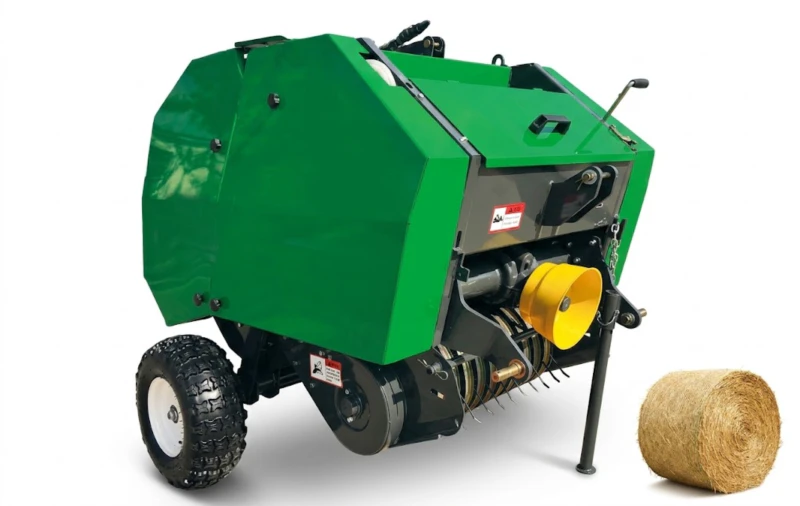
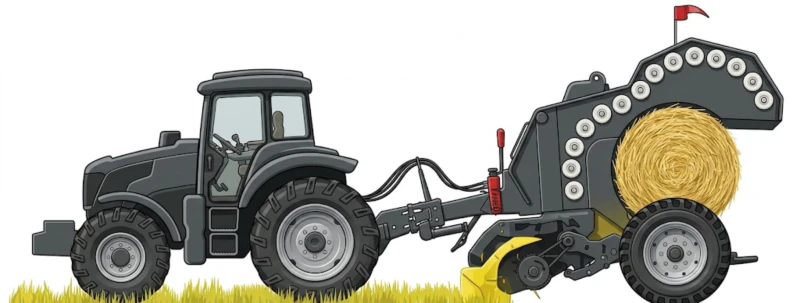
A mini round baler, often referred to as a compact round baler, is a forage harvesting machine designed specifically for small-scale agricultural operations. Unlike their full-size counterparts that produce bales with diameters ranging from 48 to 60 inches, mini round balers typically produce bales measuring between 24 to 28 inches in diameter, weighing between 300 to 500 pounds depending on crop moisture content and bale density settings.
These machines feature compact overall dimensions, with total weights typically ranging from 400 to 600 pounds. This lightweight construction makes mini round balers uniquely suited for small farm tractors operating in the 25 to 50 horsepower range—equipment categories that are standard on most hobby farms and small-scale agricultural operations. The reduced mechanical complexity of mini balers, combined with their streamlined design, results in equipment that is easier to operate, maintain, and repair than larger baling machines.
Most mini round balers operate on 540 revolutions per minute power take-off (PTO) shafts, a standard agricultural power transmission system found on virtually all farm tractors. This universal compatibility eliminates the need for expensive tractor upgrades or specialized equipment modifications, making mini balers particularly attractive for farmers with existing small-to-mid-range tractor investments.
Technical Specifications and Mechanical Design
Key Specification: Standard mini round baler bale dimensions measure 24 to 28 inches in diameter with circumference of approximately 6 to 7 feet, producing uniform cylindrical packages weighing 300 to 500 pounds per bale at standard density settings.
The pickup mechanism on mini round balers typically features five to seven spring-tooth tine bars, narrower than full-size models but engineered for efficient crop gathering from windrows. Pickup widths on mini balers generally range from 28 to 32 inches (approximately 700 to 800mm), matching the typical cutting width of small farm mowers and ensuring efficient harvesting on farms with modest acreage.
The bale chamber emploves a simplified roller-based compression system with typically eight to twelve steel compression rollers mounted on individual bearings. This design provides adequate bale density control while maintaining the mechanical simplicity that makes mini balers accessible to farmers with limited mechanical expertise. Roller bearing replacements—normally occurring every 2,500 to 3,500 operating hours—represent routine maintenance activities that most farm operators can perform independently.
Hydraulic systems on mini round balers remain deliberately simplified, typically incorporating only essential functions. Many models feature manual density adjustment via mechanical linkages rather than fully automated hydraulic density control, reducing both equipment complexity and maintenance requirements. Power delivery typically requires 25 to 50 horsepower, with baling capacity ranging from 15 to 25 bales per hour depending on crop density, field conditions, and ground speed.
Pickup Efficiency and Crop Feeding Characteristics
Despite their compact size, mini round balers demonstrate surprising efficiency in crop gathering. The spring-tooth pickup system on these machines operates at ground speeds ranging from 3 to 6 kilometers per hour, allowing operators to adjust forward speed based on windrow density and crop moisture conditions. Slower ground speeds through dense windrows ensure thorough pickup without leaving significant crop material on the ground.
The continuous feeding mechanism means that mini balers operate without stopping between completed bales, maintaining consistent productivity throughout the harvesting day. This contrasts with square balers, which require brief pauses for bale ejection. For small farm operations harvesting 10 to 50 acres annually, mini round balers typically complete daily harvesting requirements in 4 to 8 hours of field time, a schedule that aligns well with part-time farming operations and hobby farm timeframes.
The pickup float mechanism—a critical component that maintains consistent ground contact while navigating terrain variations—is straightforward on mini balers, typically adjusted via simple spring tension rather than complex hydraulic linkages. This simplified design enables operators to make pickup height adjustments in the field using basic hand tools, supporting responsive harvesting strategy adjustments as conditions change.
Bale Density and Forage Quality Considerations
Mini round balers typically produce bales with density ranging from 15 to 25 pounds per cubic foot, values that are appropriately suited for small-scale livestock operations. While this density range falls below full-size round balers producing 20 to 35 pounds per cubic foot, it remains adequate for hay preservation when storage conditions are appropriate. The lighter bale weight actually provides advantages for small farm operations—a 300 to 500 pound bale can be handled by individual operators using hand tools or small equipment without specialized bale-handling machinery.
The forage quality preservation achieved by mini balers depends primarily on harvest timing and crop moisture content rather than baler type. Operators who harvest hay at appropriate moisture levels (12 to 18 percent for dry hay) and utilize bales within reasonable timeframes will achieve forage quality equivalent to hay baled with larger equipment. The continuous roller compression system treats delicate forage species gently, minimizing leaf shatter and maintaining nutritional content comparable to hand-raked hay.
Many mini baler operators find that lower bale density actually provides storage advantages. Lighter, fluffier bales shed rainwater more effectively than high-density bales, reducing weather damage risk during outdoor storage. For farms relying on open-air storage without protective structures, mini baler output often provides superior forage preservation compared to denser bales that trap moisture between outer and inner layers.
Storage, Handling, and Transportation Advantages
One of the most significant practical advantages of mini round balers is the minimal storage and handling infrastructure required for their output. A completed mini bale, weighing 300 to 500 pounds, can be lifted by two individuals without mechanical assistance, loaded into small trailers manually, and stacked in storage areas using hand tools. This characteristic eliminates the capital investment required for front-end loaders, bale handlers, and specialized equipment needed to manage large-diameter round bales.
Standard pickup trucks can transport 15 to 20 mini bales, enabling farmers to complete small-scale hay harvesting operations without large agricultural trailers. This transportation efficiency is particularly valuable for part-time farmers who harvest hay in multiple small sessions rather than single large operations. The ability to store forage in barns, sheds, or small structures without specialized stacking equipment means that hobby farm operations benefit from simplified logistics throughout the harvest and storage cycle.
Storage density for mini bales remains reasonable without stacking equipment. Bales can be stacked in standard barn configurations to heights of 6 to 8 feet using only hand-placement, occupying approximately 40 to 50 cubic feet per bale including air space. A typical small barn measuring 30 by 40 feet can accommodate 200 to 300 mini bales, adequate for year-round forage storage for small livestock operations maintaining 10 to 25 head of cattle or equivalent sheep and goat populations.
Maintenance Requirements and Technical Service
Maintenance Advantage: Mini round balers require significantly less routine maintenance compared to full-size equipment, typically demanding only 2 to 4 hours of annual preventive service including lubrication, belt inspection, and bearing checks.
The simplified mechanical design of mini balers translates directly into reduced maintenance demands and lower annual operating costs. Standard maintenance tasks include weekly bearing lubrication during harvesting season, monthly visual inspections of belts and roller condition, and annual replacement of wear items such as pickup tines and drive belts. Most farm operators without specialized mechanical training can perform these maintenance activities independently using basic hand tools.
Bearing replacement, the most complex maintenance procedure on mini balers, typically requires 2 to 4 hours per bearing when performed by experienced farm operators. Replacement bearing kits are inexpensive relative to full-size equipment, usually costing $50 to $150 per bearing set. Parts availability for mini balers remains excellent due to their widespread use on small farms, with standard agricultural dealers maintaining stocks of common wear items.
The 540 RPM PTO power standard means that mini baler drive shafts, belt systems, and gearboxes are standardized components available from multiple suppliers. This standardization ensures that replacement parts remain affordable and accessible throughout the equipment’s operational lifespan, typically 15 to 20 years with proper maintenance. Farmers are never dependent on specialized dealership parts channels for routine maintenance and repairs.
Ideal Applications and Operating Scenarios
Family Farm and Homestead Operations
Mini round balers are perfectly suited for family farms maintaining small livestock herds of 5 to 25 animals. A typical family farm might harvest 10 to 30 acres of hay annually, producing 200 to 400 bales using a mini baler. This scale of operation aligns precisely with mini baler capacity and the infrastructure typical of family farm operations—tractors in the 30 to 50 horsepower range, modest barn storage, and manual labor availability during summer harvesting season.
Hobby Farm and Part-Time Agricultural Operations
Hobby farm operators—individuals maintaining small livestock operations as secondary income sources or recreational activities—represent the largest market segment for mini round balers. These operators typically harvest 5 to 20 acres annually, producing 100 to 300 bales for personal livestock use and local sales. The minimal equipment investment, simplified operation, and low maintenance demands make mini balers ideal for operators with limited farming experience or part-time availability.
Specialty Crop and Organic Production
Organic and specialty crop producers frequently utilize mini balers for forage production systems emphasizing soil health and pasture-based livestock production. The gentle crop handling and lower bale density of mini balers appeal to operators prioritizing forage quality and sustainable agricultural practices. Organic certification requirements often favor smaller-scale equipment with simplified maintenance, making mini balers particularly attractive for organic farm operations.
Pasture and Grazing Management
Rotational grazing operations that require frequent hay supplementation during grazing season transitions benefit significantly from mini baler efficiency. The ability to rapidly harvest small areas and produce manageable bales that can be distributed throughout pastures without heavy machinery makes mini balers invaluable for intensive grazing operations. Operators can complete harvesting operations with minimal soil compaction and field disturbance.
Equipment Cost and Financial Analysis
Mini round balers represent the most affordable baling equipment category, with new equipment typically priced between $8,000 and $18,000 depending on brand, features, and distributor location. This price range is 50 to 70 percent below comparable full-size round baler costs, making mini balers accessible for farmers with limited equipment capital budgets. Equipment financing programs and lease options make mini balers even more accessible for first-time buyers.
Used mini round balers represent exceptional value in the secondary equipment market. Five to ten-year-old equipment typically sells for $3,000 to $7,000, providing entry-level access for budget-conscious operations. The robust build quality and simplified design of mini balers means that used equipment with proper maintenance remains highly functional, often delivering another 10 to 15 years of productive service.
Annual operating costs for mini round balers remain remarkably low. Fuel consumption typically ranges from 1 to 1.5 gallons per hour of operation, equivalent to $100 to $200 annually for farms harvesting 100 to 200 acres. Maintenance costs remain modest at $200 to $400 annually for bearing replacements and wear items. Total cost of ownership for mini balers often remains below $3,000 annually for typical small farm operations, making them among the most economical forage harvesting solutions available.
Comparison with Alternative Forage Harvesting Methods
Hand raking and hand binding forage represents the lowest-cost harvesting method but demands significant labor time—typically 40 to 60 hours per 100 bales produced. For small operations producing 200 to 400 bales annually, the labor savings from mini balers justify equipment investment in approximately 2 to 3 harvesting seasons. Beyond this payback period, mini balers provide continuous economic advantages through reduced harvesting time and improved forage quality.
Renting baling services from contractors represents an alternative to equipment ownership. Typical contractor rates range from $10 to $25 per hour, or approximately $0.50 to $1.50 per bale produced. For operations harvesting 200 to 300 bales annually, contractor services cost $100 to $450 per season. Mini baler ownership investment is recovered within 5 to 10 harvesting seasons through direct cost savings, after which equipment provides essentially cost-free forage harvesting.
Wrapping and Binding System Options
Mini round balers offer two primary bale binding options: twine binding and net wrap systems. Twine binding uses plastic or sisal twine applied via an automated knotter system, costing approximately $0.10 to $0.20 per bale in consumable materials. This method remains popular among mini baler operators due to low consumable costs and the environmental compatibility of biodegradable twine materials.
Net wrap systems apply high-strength plastic mesh around completed bales, costing approximately $0.30 to $0.50 per bale in consumable materials. Net wrap provides faster bale ejection and potentially more secure bale containment during transport. Many operators prefer net wrap for silage applications requiring anaerobic sealing, while dry hay operations typically utilize twine binding for cost efficiency.
Frequently Asked Questions
Crop-Specific Harvesting Recommendations
For dry hay crops, harvest when moisture content reaches 15 to 18 percent, typically one to two days after mowing. This timing produces bales with minimal moisture risk during storage. Allow cut hay to wilt for 24 to 48 hours depending on weather conditions, temperature, and humidity before baling. Ground speed during baling should remain below 6 kilometers per hour to ensure complete windrow pickup and minimize crop loss.
Alfalfa harvesting requires careful timing to optimize both yield and nutritional quality. Harvest when bloom stage reaches 10 to 25 percent to balance protein content and digestibility. Minimize tedding operations to preserve leaves—the most nutritious component. Handle alfalfa bales gently during harvesting and storage to prevent excessive leaf shatter.
For grass-legume mixtures, optimize harvest timing to match legume bloom stage rather than grass maturity. The greater nutritional value and animal preference for legume-based hay justifies harvesting slightly earlier than pure grass hay. Preserve bale quality through careful handling and appropriate storage conditions.
Making the Mini Baler Investment Decision
Small-scale farmers evaluating equipment investments should consider mini round balers as primary candidates for forage harvesting solutions. The combination of low capital investment, simple operation, minimal maintenance requirements, and high reliability makes mini balers ideal for farmers with acreage under 100 acres and livestock populations under 25 head.
Farmers with existing small tractors (25 to 50 horsepower) will find that mini balers represent the optimal equipment choice requiring no tractor upgrades or additional infrastructure investments. The ability to complete harvesting operations with existing equipment at minimal annual operating costs provides compelling economic justification for mini baler ownership.
For detailed information about mini round baler models, specifications, and performance comparisons, explore our comprehensive round baler equipment guide featuring detailed specifications, user reviews, and technical comparisons across all equipment sizes and manufacturers.
Ready to Select the Right Mini Baler for Your Farm?
Our equipment specialists understand the unique requirements of small farm and hobby farm operations. We can help you identify the perfect mini round baler matching your specific acreage, livestock needs, and equipment budget while ensuring compatibility with your existing tractors and infrastructure.
Contact Our Small Farm Equipment Specialists
Explore our complete line of mini and compact baling equipment to find the ideal solution for your small-scale forage harvesting needs.
Conclusion: Why Mini Round Balers Remain the Gold Standard for Small Farms
Mini round balers represent proven, reliable forage harvesting solutions specifically engineered for small-scale agricultural operations. The combination of affordable initial investment, simplified operation and maintenance, universal tractor compatibility, and minimal infrastructure requirements makes mini balers the logical equipment choice for family farms, hobby farm operations, and small-scale livestock producers.
The operational characteristics of mini balers—lightweight construction, compact dimensions, and simplified mechanical systems—make them uniquely suited to the constraints and opportunities of small farm operations. These machines deliver professional-grade forage harvesting performance while remaining accessible to farmers with limited mechanical expertise and modest equipment budgets.
Whether you are a beginning farmer establishing your first forage harvesting system, a hobby farm enthusiast seeking simplified equipment, or an established small-scale operation evaluating equipment upgrades, mini round balers deserve serious consideration. The thousands of satisfied mini baler operators worldwide demonstrate that these compact machines consistently deliver the reliability, performance, and economic value that small farm operations require. Your investment in quality mini baler equipment today will provide dependable forage harvesting support for decades to come, supporting your animals’ nutrition and your operation’s profitability throughout years of productive service.