
描述
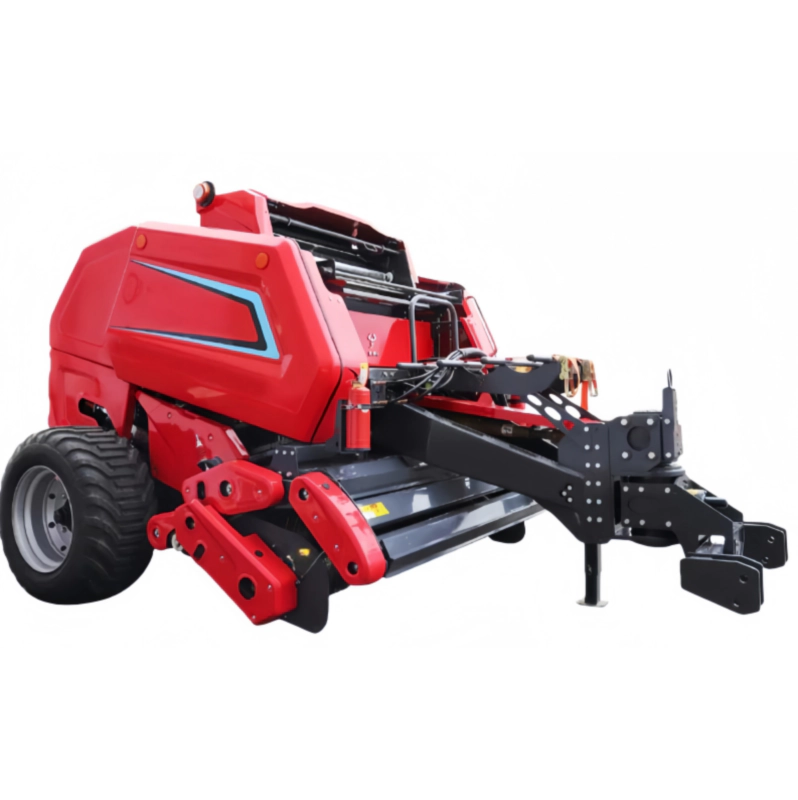
The 9YG-2.24D (S9000 Beyond) is a high-end round baler designed for modern, large-scale agriculture. It integrates an advanced electro-hydraulic control system with a proven, robust mechanical structure, aiming to provide users with extremely high-density, uniformly shaped bales while ensuring efficient operation and an ultra-low failure rate under various forage and crop straw conditions. The S9000 Beyond is not just a machine, but a reliable partner for improving forage quality and reducing operating costs.
What is a round strapping machine?
A round bale baler is an agricultural implement used to collect and pack loose agricultural materials. Its working process is as follows:
1. Picking up: As the machine moves forward, rotating pickers collect hay, straw, or other stalks from the ground.
2. Conveying and forming: The material is fed into the forming chamber, where it is compressed into a tight cylindrical bale by the rotation of belts, rollers, or chains.
3. Wrapping with netting/rope: Once the bale reaches the preset size, the control system automatically starts wrapping it tightly with plastic netting or rope to maintain its shape for easy transport and storage.
4. Unloading: The rear door opens, and the wrapped bale is smoothly unloaded onto the ground.
Core Value: Transforming loose, land-consuming agricultural waste into high-density, commercially viable bales significantly saves storage space and transportation costs, making it an indispensable key link in the livestock and modern agricultural industry chain.
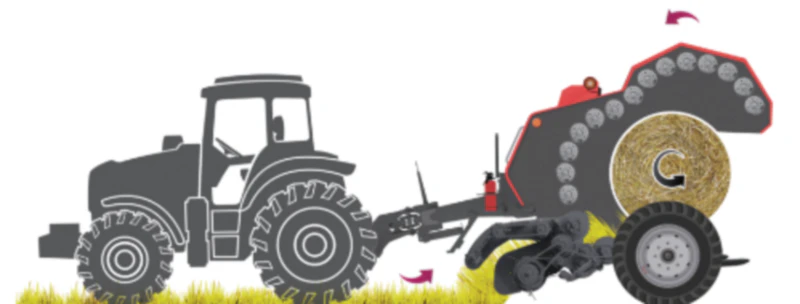
Having observed this, you should now have a general understanding of the working principle of our round baler. Below, I will present the technical parameters of the 9YG-2.24DRround baler (S9000 Beyond) to give you a more intuitive understanding of the product or to help you make selections.
Technical parameters
| Item | Unit | Specification |
|---|---|---|
| Model Name | / | 9YG-2.24D Round Baler (S9000 Beyond) |
| Connection Method | / | Towed Type |
| Pickup Width | mm | 2240 |
| Pickup Structure Type | / | Spring Tooth Type |
| Feeder Structure Type | / | Pin Roller + Roller Type |
| Baling Mechanism Type of Compression Chamber | / | Roller Type |
| Compression Chamber Width | mm | 1400 |
| Compression Chamber Diameter | mm | φ1200 |
| Number of Rolling and Pressing Working Parts | pcs | 18 (Rollers) |
| Rolling Roller Diameter | mm | φ222 |
| Binding Method | / | Net Wrapping |
| Supporting Power | kw | 55-100 |
| Structural Weight | kg | 4570 |
| PTO Shaft Speed | r/min | 720 |
| Overall Dimensions (L×W×H) | mm | 4600×3010×2370 (Working State) |
| Bale Density Control | / | Sensor Control |
| Bale Size (Diameter×Width) | mm | φ1300×1400 |
| Bale Density | Kg/m³ | 100-200 |
| Productivity | bales/h | 40~100 |
| Wheel Track | mm | 2600 |
| Working Speed | Km/h | 5-35 |
| Net Specification (Length×Width) | / | 2000×1.4m/bale |
After reviewing the technical specifications, we’re confident you’ve gained a comprehensive understanding of our product’s capabilities. Now, let’s dive deeper into its core advantages to showcase how it stands out in industrial/agricultural applications and delivers tangible value for your operations.
Core advantages
1. High-efficiency operation and superior productivity
• Extra-wide picking width: With a picking width of 2240mm and a wide operating speed range of 5-35km/h, it ensures that a larger area can be covered in a given time, with a maximum productivity of up to 100 bales/hour, significantly improving operational efficiency.
• Rapid forming technology: A winding and pressing system composed of 18 rollers with a diameter of 222mm, combined with a toothed feeder and roller feeder, enables fast and smooth feeding and baling of hay, reducing blockages and ensuring continuous and efficient operation.
2. Excellent bale quality and precise density control
• High-density bales: Bale density can be adjusted within the range of 100-200 kg/m³. Thanks to a sensor-controlled density system, the compression force can be precisely controlled for different materials (such as lightweight hay or tough straw), ensuring that the bales are tight, uniformly shaped (φ1300×1400mm), facilitating transportation and storage, and reducing mold loss.
• Uniform wrapping: Utilizing a reliable “sewn net” binding method, combined with 2000×1.4 meter binding netting, ensures that the bales are wrapped evenly and securely, suitable for long-distance transportation and open-air storage.
3. Strong adaptability and reliability
• All-condition operation capability: The combination of a spring-tooth pickup and a roller-type compression chamber effectively handles a variety of materials, from soft hay to hard corn stalks, offering strong adaptability and good field mobility.
• Heavy-duty structure ensures robustness: Weighing only 4570kg, the machine boasts a sturdy and robust structure. Reinforced key components ensure durability and reliability under heavy loads and continuous high-intensity operation, extending the equipment’s lifespan.
4. Convenient Operation and Maintenance
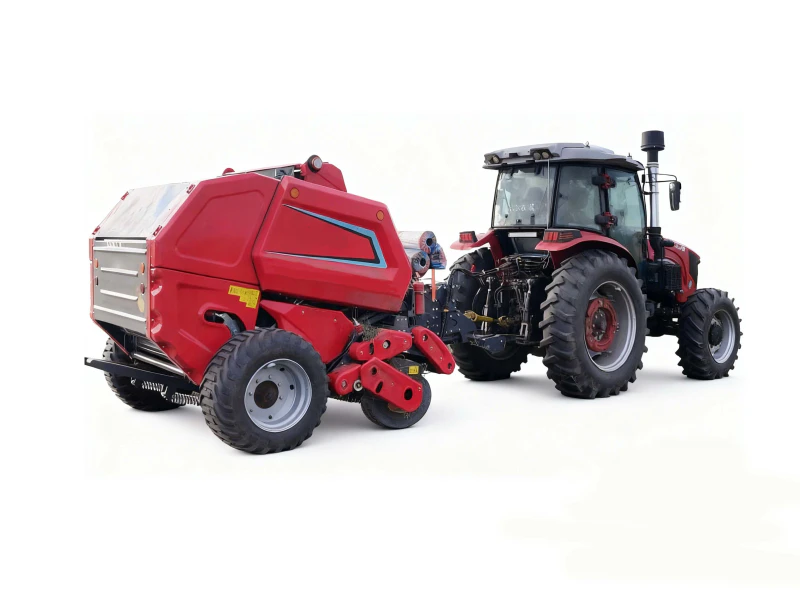
• Towing Design: Standard towing attachment allows for quick connection to 55-100kW (approximately 75-135 hp) tractors. Matching a 720r/min power take-off shaft, it offers wide adaptability and flexible relocation and deployment.
• User-friendly design: Reasonable dimensions (4600×3010×2370mm) and a 2600mm wheelbase ensure stability during operation and transportation while maintaining ease of operation.
5. Outstanding cost-effectiveness and economic benefits
• Low power consumption and high efficiency: While guaranteeing a maximum production capacity of 100 bundles per hour, it only requires a mainstream medium-sized tractor power source, effectively reducing the user’s initial investment and energy costs during operation.
• Robust and durable with low maintenance costs: Mature and reliable design and manufacturing processes reduce the failure rate, simplify daily maintenance, effectively reduce downtime, and provide users with a higher long-term return on investment.
Customer feedback
1. Large-Scale Australian Farm: Efficiency Proven in Harsh Environments
User: John Anderson, Operations Manager, Southern Cross Farm, New South Wales
Background: This farm operates on 20,000 hectares, primarily growing oat hay for export to Asian markets, with stringent requirements for bale density and operational efficiency.
Feedback:
“In Australia’s vast farmlands, equipment reliability directly impacts operational efficiency. In 2023, we introduced three 9YG-2.24D round balers, whose 2240mm pick-up width perfectly suits our field operations. Precise calculations showed that this equipment increased our operational efficiency by 35%, maintaining a stable bale density of 190kg/m³, fully meeting export standards. Particularly noteworthy is the stable performance of the hydraulic system under continuous 45°C conditions, completing 2000 hours of operation in a single season without major repairs. Its exceptional reliability ensured we completed all operations within the limited harvest window, crucial for securing export orders.”
2. Large-scale ranch operators: Focusing on precise cost and efficiency calculations
User: Li Jianguo, Head of Machinery Department, a dairy ranch with 10,000 head of cattle in Hulunbuir, Inner Mongolia
Background: This ranch owns over 30,000 mu of forage land and needs to produce approximately 50,000 alfalfa bales annually for its own use and commercial sales.
Feedback:
“For a ranch of our size, equipment uptime is the lifeline. In the 2023 forage season, we introduced two 9YG-2.24D round balers. Their 2240mm pickup width directly increased our operational efficiency by about 30%. What we are most satisfied with is its bale density control. Sensors stabilized the alfalfa bale density at around 180 kg/m³, which reduced our long-distance transportation costs by about 15% per ton. Over a working season (approximately 90 days), each machine operated for over 1500 hours, and apart from routine maintenance, no structural failures occurred. Its reliability directly ensured that we completed the harvesting and storage work during the optimal window, which is crucial for preserving the nutritional value of the alfalfa.”
3. Professional Agricultural Machinery Cooperative: Focusing on Equipment Versatility and Return on Investment
User: Wang Lihong, Chairman of a modern agricultural machinery cooperative in Suihua City, Heilongjiang Province
Background: The cooperative provides full-process mechanized services from planting to harvesting to surrounding towns, requiring the processing of large quantities and diverse types of straw.
Feedback: “The farmers we serve grow a variety of crops, from corn and rice to soybeans, which requires the baler to be ‘unbiased.’ The combination of the 9YG-2.24D’s drum-type compression chamber and spring-tooth pickup performs excellently when handling lodged and tangled corn stalks, with very few blockages. We’ve calculated that its average operating speed can reach 8-10 km/h, producing an average of 50-60 strong and uniform bales per hour. As an operator, I value its resale value and uptime even more. This machine has been working with us for two quarters; its robust structure and strong resale value have brought our cooperative a real and stable cash flow and a considerable return on investment.”

Applicable models and scope of application
| Category | Item | Specifications |
|---|---|---|
| Compatible Tractors | Power Requirement | 55-100kW (75-135 HP) |
| Power Take-off | Standard 720r/min PTO shaft | |
| Hydraulic System | Minimum 2 sets of hydraulic output interfaces required | |
| Hitch Type | Three-point hitch, Category II | |
| Representative Brands | John Deere 6-7M Series, Case IH Maxxum Series, New Holland T6 Series, Case IH Magnum Series, Deutz-Fahr 6 Series, Fendt 200 Vario Series, CLAAS ARION 600 Series, Kubota M6 Series, Yanmar YT Series |
|
| Application Scope | Crop Types | Forage: Alfalfa, Ryegrass, Oatgrass, Leymus chinensis Straw: Corn stover, Wheat straw, Rice straw, Soybean straw Others: Reed, Sugarcane leaves, etc. |
| Working Scenarios | Commercial production: Large-scale baling operations for forage companies Farm self-use: Forage reserves for large breeding farms Straw utilization: Collection operations for straw recycling companies Government projects: Vegetation recycling in ecological management |
|
| Suitable Regions | Plain areas: Continuous operation in large farms Hilly areas: Operation in gentle slopes (slope ≤15°) Arid areas: Arid and semi-arid grassland regions Humid areas: Areas with sufficient rainfall (material moisture control required) |
|
| Operating Requirements | Material Moisture | Optimal: 12%-18% Maximum allowed: ≤25% (requires reduced working speed) |
| Field Conditions | Recommended field area ≥2 hectares Field weeds and debris height ≤15cm |
|
| Ambient Temperature | -10℃ to 45℃ (special maintenance required beyond this range) |
Notes:
- Power Matching Recommendation: Tractors in the 85-110kW range are recommended to ensure optimal operational efficiency and fuel economy
- Special Configurations: Anti-rollover devices are recommended for hilly areas; anti-corrosion kits are suggested for rainy regions
- Crop Adaptability: For particularly tough materials (e.g., sugarcane leaves), reinforced spring tines and special netting are recommended
- Efficiency Reference: Under ideal conditions with a 90kW tractor, operational efficiency can reach 80-100 bales/hour
This table provides basic guidance. For specific configurations, please consult our technical engineers based on actual operational requirements. We will provide personalized adaptation solutions.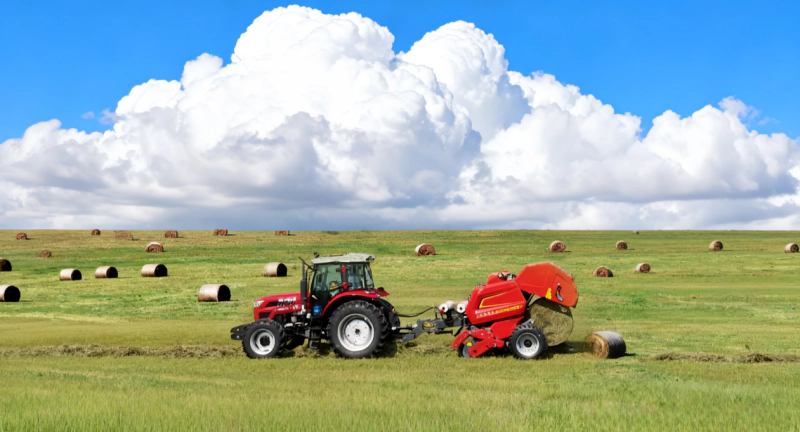
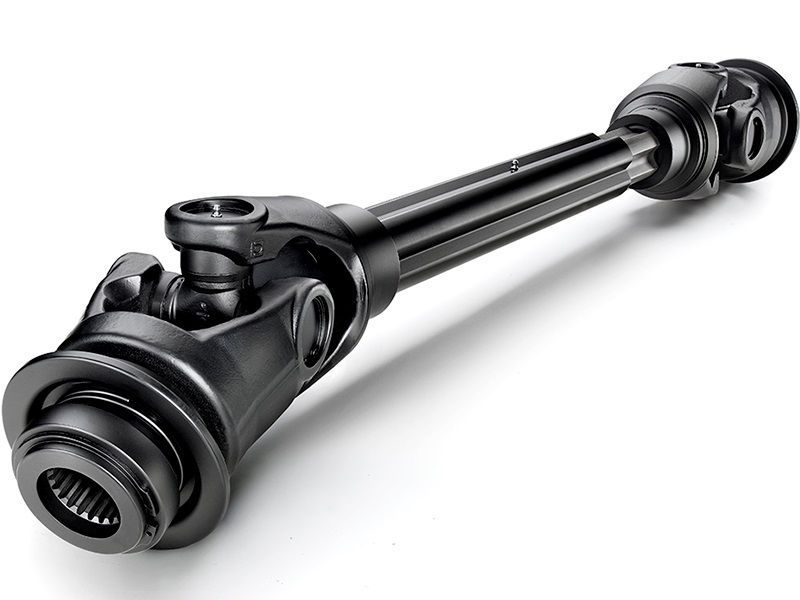
Related product – PTO shaft
The PTO driveshaft is the core power transmission component connecting the tractor and the round baler, acting as the equipment’s “power artery.” It precisely and efficiently transmits the rotational power generated by the tractor engine to the round baler’s input shaft via a standardized spline interface. Without the PTO driveshaft, the round baler cannot obtain the necessary operating power, and the entire system becomes inoperable.
**Speed Synchronization:** The round baler is designed with a stable input speed of 720 r/min (this may vary depending on the model). The PTO driveshaft ensures precise speed synchronization between the tractor’s power take-off shaft and the round baler’s input shaft, preventing efficiency losses or equipment damage due to speed mismatch.
**Torque Transmission:** Round balers generate significant resistance when compressing materials. The PTO driveshaft must have sufficient torque capacity to transmit the powerful torque generated by the tractor to the round baler’s compression system without loss, ensuring the formation of tight, uniform bales.
**Overload Protection Mechanism:** Modern PTO driveshafts are typically equipped with shear pins or friction clutch-type safety devices. When the round baler suddenly encounters a hard foreign object (such as a stone or metal piece), causing a sharp increase in load, the safety device immediately cuts off power transmission, effectively preventing serious damage to the round baler’s core components (such as the gearbox and compression rollers).
**Physical Isolation Protection:** The driveshaft guard completely encloses the high-speed rotating shaft, effectively preventing operator clothing and limbs from being caught, while also preventing weeds, mud, and other foreign objects from interfering with the transmission system’s operation.
**Physical Isolation Protection:** Universal Joint Compensation Function: During field operations, the relative position and angle between the tractor and the round baler constantly change. The PTO driveshaft automatically compensates for these changes through a universal joint device, ensuring smooth and continuous power transmission in any operating posture and preventing abnormal stress on the equipment.
Extendable Adjustment Function: The extendable design of the driveshaft allows it to adapt to changes in the connection distance between different tractor models and round balers, while providing necessary length compensation when the equipment turns.
Transmission Efficiency: A high-quality, properly matched PTO driveshaft can achieve a transmission efficiency of over 95%, maximizing the conversion of tractor power into effective round baler operating power. Inferior or mismatched driveshafts result in significant power loss, leading to decreased operating efficiency and increased fuel consumption.
Vibration Control: A precisely dynamically balanced PTO driveshaft significantly reduces vibration and noise during equipment operation, improving operator comfort and extending the service life of tractor and round baler components.
Selection and Usage Recommendations: Specification Matching: Always select a driveshaft that is completely compatible with the tractor’s PTO output specifications (such as speed and spline type) and the round baler’s input requirements.
Regular maintenance: Lubricate universal joints and telescopic splines on time, replace worn parts promptly, and keep the protective cover in good condition.
Safe operation: When the equipment is running, it is strictly forbidden to approach or cross the rotating drive shaft.
Frequently Asked Questions (FAQ)
Q1: What types of materials can the equipment process?
A: It can process various forage and straw materials, including:
• Forage: Alfalfa, ryegrass, oat grass, etc.
• Straw: Corn stalks, wheat straw, rice straw, etc.
• Others: Reeds, sugarcane leaves, etc. Different materials require adjustments to density settings and operating speed.
Q2: What is the optimal operating moisture range?
A: The best results are achieved when the material moisture content is between 12% and 18%. It should not exceed 25%. Exceeding this range requires reducing the operating speed; otherwise, it will affect the quality of the bales and the lifespan of the equipment.
Q3: What are the key points for routine maintenance?
A: We recommend the following maintenance schedule:
• Every shift: Clean debris from the equipment surface and check critical fasteners.
• Every 50 hours: Lubricate all lubrication points and check belt tension.
• Every 200 hours: Check wear on vulnerable parts and replace the hydraulic oil filter.
• Every quarter: Conduct a comprehensive overhaul and replace worn parts.
Q4: What are the common malfunctions? How to troubleshoot them?
A: Common malfunctions and solutions:
• Loose bales: Check density settings and adjust pressure.
• Abnormal netting: Check netting installation and clean the guide mechanism.
• Abnormal noise and vibration: Stop the machine immediately and check for any obstructions.
• Hydraulic system malfunction: Check oil level and locate leaks.
If you are interested in our forage balers, please contact us for the latest quote.
Editor: WLB























评价
目前还没有评价