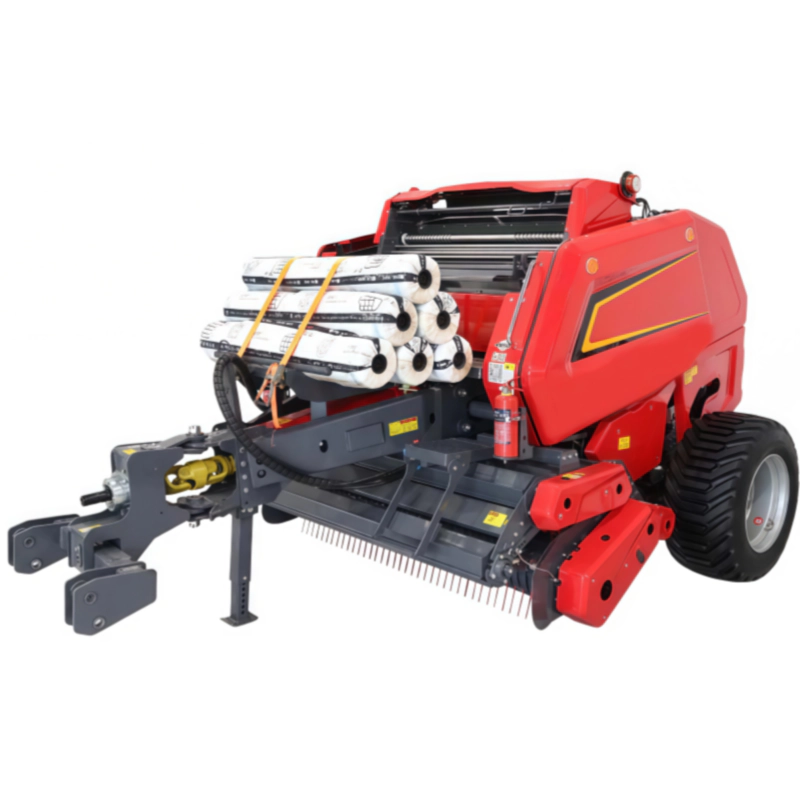
9YG-2.24D Round baler(S9000 Classic)
9YG-2.24D Round Baler (S9000 Classic) — 2240mm pickup, 18-drum chamber, sensor density control, 40–100 bales/h. Suits 55–100kW tractors. ISO & CE certified.
The Complete Technical Guide to the 9YG-2.24D Round Baler (S9000 Classic): Industrial-Scale Hay Baling with Proven Reliability
Engineered for medium to large-scale farms and forage contractors — featuring a 2240mm pickup, 18-drum compression chamber, sensor-controlled bale density, and a design built to exceed 3000 working hours of continuous commercial service.
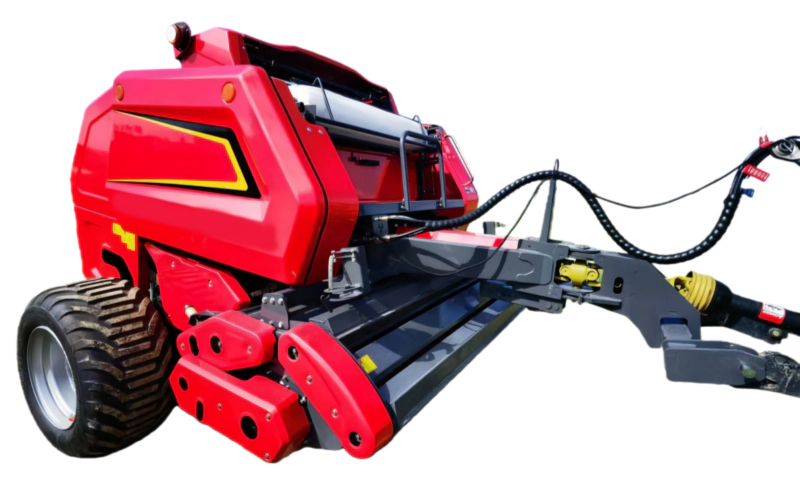
1. Introduction: What Makes the S9000 Classic a Commercial-Grade Forage Baler
Large-scale forage production demands equipment that combines three qualities that rarely coexist in the same machine: maximum field throughput, consistent bale quality, and the structural durability to sustain commercial-intensity operation across multiple seasons. Many balers achieve one or two of these qualities; the 9YG-2.24D Round Baler (S9000 Classic) is engineered to deliver all three simultaneously.
As the flagship model in our company’s series of large round balers, the S9000 Classic has been validated in some of the world’s most demanding forage environments — from the high-production grain belt farms of Heilongjiang Province, where single units process over 15,000 bales annually, to 45°C commercial ranches in New South Wales, Australia, where the machine completes extended operating seasons without structural failures. This performance record has established the S9000 Classic as the preferred equipment for farms, hay harvesting contractors, and silage producers requiring equipment that earns its investment back within two operating seasons.
The S9000 Classic shares the 2240mm pickup width and 18-drum compression chamber architecture of its S9000 stablemate models, but delivers these capabilities in a 4312 kg structural package that has been refined through extensive field testing across Northeast China, Australia, and Russia. Its sensor-controlled density system, heavy-duty gearbox, and dual-side sprocket drive structure represent a comprehensive engineering approach to the challenge of high-volume, high-density round baling that stands apart from simpler or more lightly built alternatives in its class.
2. How a Round Baler Works: The Four-Stage Baling Cycle
Understanding the mechanical cycle of a round baler clarifies why specific design choices in the S9000 Classic translate into measurable operational advantages at commercial production scale. The baling process follows four sequential stages that repeat continuously throughout the working day.
Stage 1 — Crop Pickup
The 2240mm spring-tooth pickup reel lifts windrowed material from the field surface as the baler advances. At 2240mm, the pickup spans wide enough to cover twin windrows in a single pass on most crop types, eliminating secondary windrow merging and reducing field passes by up to 40% compared to narrower machines. Spring tines deflect safely when contacting field obstructions, maintaining clean, continuous intake without gouging the soil surface or losing crop material at the reel margins.
Stage 2 — Feed and Compression
The Rake Root + Drum Type feeder channels material into the drum compression chamber, where 18 rotating drums — each 222mm in diameter — build a tight cylindrical core from the inside outward. The sensor-controlled density system monitors chamber pressure continuously, triggering hydraulic adjustments to maintain the operator-set density target regardless of windrow weight variation or working speed changes. This automated feedback loop is the mechanism that delivers the bale-to-bale consistency commercial buyers require.
Stage 3 — Net Wrap Application
Once the target density is reached, the net wrap system automatically dispenses 2000 × 1.4m netting around the completed bale in two to three spiral passes. The net provides full edge-to-edge coverage, sealing the bale surface against rain infiltration and UV degradation. Compared to twine binding, net wrap application is approximately 32% faster and reduces outdoor storage dry matter loss by up to 65% — a critical advantage for operations that store bales in the field before transport.
Stage 4 — Ejection and Chamber Reset
The hydraulic rear gate opens and the completed φ1300 × 1400mm bale rolls cleanly onto the field. The dedicated buffer cylinder design in the rear chamber reduces closing-impact vibration, protecting gate hinges and compression components from cumulative fatigue damage that shortens equipment lifespan on machines without this feature. The chamber resets within seconds and the next baling cycle begins immediately, supporting the 40–100 bales-per-hour productivity rating at appropriate working speeds.
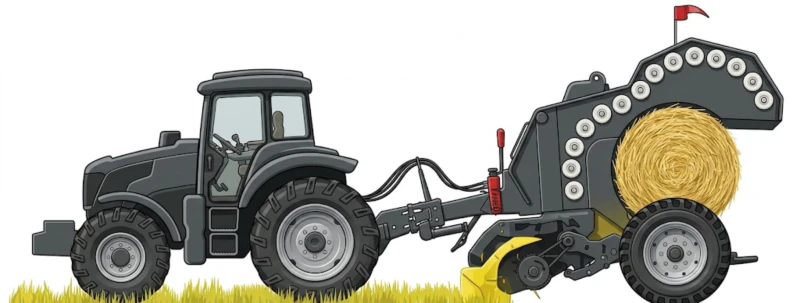
Every additional kilogram of density packed into a φ1300 × 1400mm bale reduces transport trips, storage positions, and handling events per tonne of dry matter. At commercial scale — 15,000 bales per season for a single machine — the density advantage compounds into substantial operational savings. The S9000 Classic’s sensor-controlled system maintains target density within tight tolerance across a full working day, making this advantage consistent rather than dependent on operator skill or windrow uniformity. Explore the full forage baler product range to compare models by pickup width, density range, and power requirement.
3. Full Technical Specifications
The following table contains the complete engineering specification sheet for the 9YG-2.24D Round Baler (S9000 Classic). All data is transcribed directly from factory test documentation conducted under standard operating conditions.
| No. | Item | Unit | Specification |
|---|---|---|---|
| 1 | Model Name | / | 9YG-2.24D Round Baler (S9000 Classic) |
| 2 | Hitch Type | / | Trailed |
| 3 | Pickup Width | mm | 2240 |
| 4 | Pickup Structure Type | / | Spring Tooth Type |
| 5 | Feeder Structure Type | / | Rake Root + Drum Type |
| 6 | Baling Chamber Structure Type | / | Drum Type |
| 7 | Baling Chamber Width | mm | 1400 |
| 8 | Baling Chamber Diameter | mm | φ1200 |
| 9 | Number of Compression Drums | pcs | 18 (Drum) |
| 10 | Rolling Drum Diameter | mm | φ222 |
| 11 | Binding Method | / | Net Wrap |
| 12 | Required Power | kW | 55–100 |
| 13 | Structural Weight | kg | 4312 |
| 14 | PTO Speed | r/min | 720 |
| 15 | Overall Dimensions (L×W×H) — Working State | mm | 4470 × 3010 × 2370 |
| 16 | Bale Density Control | / | Sensor Control |
| 17 | Bale Size (Diameter × Width) | mm | φ1300 × 1400 |
| 18 | Bale Density | kg/m³ | 100–200 |
| 19 | Productivity | bales/h | 40–100 |
| 20 | Wheel Track | mm | 2600 |
| 21 | Working Speed | km/h | 5–35 |
| 22 | Net Specification (Length × Width) | / | 2000 × 1.4 m/bale |
4. Five Core Advantages of the S9000 Classic
Advantage 1: Extra-Wide Pickup and High-Throughput Field Efficiency
The 2240mm spring-tooth pickup spans wide enough to eliminate secondary windrow merging on most commercial crop types. Combined with a continuously variable working speed range of 5–35 km/h, a single S9000 Classic unit can process 800–1,200 bales per day under good field conditions — more than 50% higher daily throughput than machines with narrower pickups and fixed-ratio transmissions. The roller-type compression chamber maintains stable bale formation quality at high working speeds, preventing the core loosening and edge deformation that undermine density consistency on simpler high-speed machines.
Advantage 2: Sensor-Controlled Density with Intelligent Monitoring
Bale density in the S9000 Classic is managed by an integrated pressure sensor network that monitors chamber load in real time and feeds data back to the hydraulic control system. The system automatically adjusts compression force for different materials — lightweight ryegrass, dense alfalfa, tough corn stover — maintaining target density in the 100–200 kg/m³ range without requiring operator adjustment between crop types or windrow conditions. The built-in operating efficiency monitoring function analyzes output data continuously and optimizes parameter settings to reduce unit operating energy consumption by 15–20% compared to manually controlled equivalents.
Advantage 3: Superior Structural Durability — Engineered for 3000+ Working Hours
Key structural components in the S9000 Classic use Q345B high-strength steel throughout the primary load path, with the compression chamber drum surfaces treated by tungsten carbide spraying to achieve wear resistance three times greater than standard surface treatments. This combination extends drum service life to over 3000 working hours — approximately 2–3 full commercial seasons at typical large-scale operation intensity. The transmission system uses heavy-duty bearings and hardened gears validated through 2000 hours of accelerated life testing, and the hydraulic system incorporates a dual filtration circuit that maintains reliability in dusty field environments where single-filter systems progressively degrade.
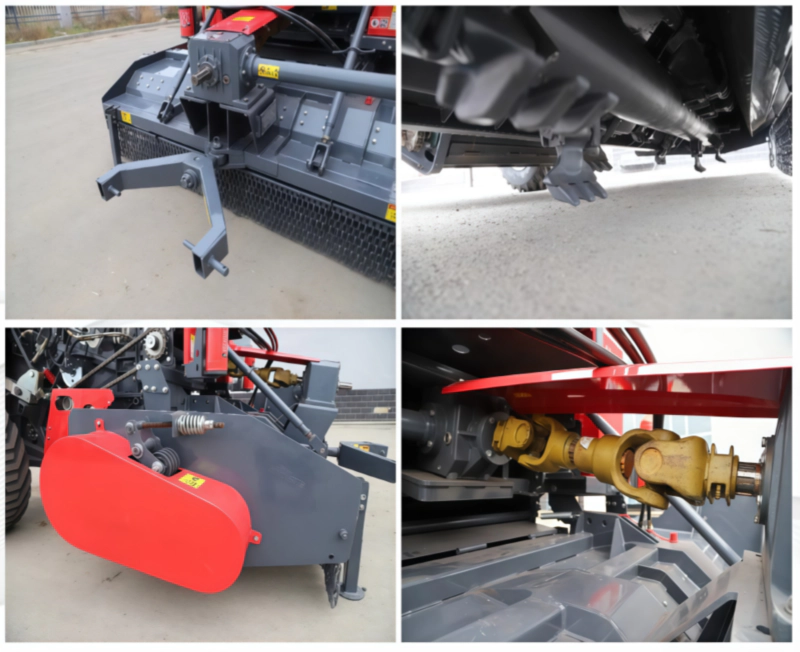
Advantage 4: Wide Material and Terrain Adaptability
The optimized Rake Root + Drum feeder system and adjustable density settings allow the S9000 Classic to handle alfalfa, corn stalks, rice and wheat straw, and specialty crops without configuration changes. The machine performs particularly well on silage baling at material moisture content of 45–65% — a range where many standard balers struggle with feeder bridging and inconsistent chamber fill. Environmental testing confirms stable operation from −20°C to 45°C, with hydraulic and electronic components rated to IP65 dust and water ingress protection standards. The 2600mm wheel track delivers the lateral stability needed for operation on slopes up to 15°, and the reinforced chassis maintains structural integrity on rough terrain where lighter machines develop chassis flex and alignment drift.
Advantage 5: Strong Economic Return and High Resale Value
Optimized power matching and a high-efficiency transmission system reduce fuel consumption by 18–25% per equivalent workload compared to less-efficient drive configurations. The combination of reduced fuel cost, low maintenance burden from the modular design and centralized maintenance point layout, and high throughput productivity compresses the investment payback period to 1.5–2 operating seasons under standard commercial conditions — a payback timeline that makes the S9000 Classic viable for operations of various scales. In the used equipment market, the machine retains over 60% of initial value after three years of operation, providing meaningful residual value that reduces the effective ownership cost across its full service life.
5. Engineering Highlights: Key Design Innovations
Dual Drive Shaft with Safety Torque Protection
The traction device employs a self-developed dual 10-inch drive shaft with an integrated safety torque drive shaft. This configuration protects the main drive components from sudden overload events while solving a practical field problem that affects productivity on smaller machines — drive shaft jamming during tight turns in small or irregularly shaped plots. The dual shaft geometry maintains smooth power transmission through the full turning arc, allowing operators to bale right to the field edges without reducing speed or risk of drivetrain damage. The H-type compression joints in the hydraulic system significantly improve pressure resistance and accelerate the opening and closing speed of the baling chamber, increasing the number of complete baling cycles achievable per working hour.
Rear Chamber Buffer Cylinder and Heavy-Duty Gearbox
The rear baling chamber incorporates a dedicated buffer cylinder that absorbs the closing-impact vibration that occurs when the gate seals after each bale ejection. Without this buffer, cumulative impact energy causes progressive fatigue damage to the gate hinge points, locking mechanism, and surrounding frame — a failure mode that becomes costly in machines logging 1000+ operating hours per season. The heavy-duty gearbox combined with a dual-side sprocket drive structure increases transmission torque capacity through the compression cycle, ensuring the 18 drums maintain consistent rotational speed and compression pressure even when processing maximum-density bales of tough, dry straw at high working speed.
Modular Maintenance Design with Intelligent Diagnostics
The S9000 Classic’s modular architecture consolidates all key maintenance access points into accessible locations on both sides of the machine, reducing the daily maintenance routine by approximately 40% compared to machines requiring component removal or repositioning for access. The integrated intelligent diagnostic system monitors key system parameters and provides fault location data through the operator display, reducing troubleshooting time and enabling targeted maintenance rather than broad inspection. For commercial operations where every hour of downtime during harvest season has measurable financial cost, this capability to identify and address issues quickly is a meaningful operational advantage.
Certified Quality and International Compliance
The S9000 Classic is manufactured under ISO 9001 quality management system certification and ISO 14001 environmental management system certification. The machine meets EU CE emission standards, operates at noise levels below 85 decibels, and complies with ISO vibration standards — certifications that are increasingly required for equipment export to European and Australian markets and that provide independent verification of design and manufacturing quality for buyers in all markets. Safety systems include PTO overload protection, hydraulic system pressure relief valves, and emergency stop functions positioned for rapid operator access.
6. Compatible Tractors and Full Scope of Application
The S9000 Classic is designed for seamless compatibility with mainstream mid-size tractors in the 55–100 kW power range, covering the majority of tractor models deployed on medium to large-scale commercial farms worldwide. The standardized 720 r/min PTO input and Category II three-point hitch connection make this baler compatible with virtually all tractor brands operating in this power class.
| Category | Item | Specification |
|---|---|---|
| Compatible Tractors | Power Requirement | 55–100 kW (75–135 HP) |
| PTO Speed | Standard 720 r/min | |
| Hydraulic Requirement | Minimum 2 hydraulic output circuits required | |
| Compatible Brands | John Deere 6–7M, Case IH Maxxum, New Holland T6, Deutz-Fahr 6 Series, Fendt 200 Vario, CLAAS ARION 600, Kubota M6, Yanmar YT Series | |
| Application Scope | Crop Types | Forage: Alfalfa, Ryegrass, Oat Grass, Leymus chinensis Straw: Corn stover, Wheat straw, Rice straw, Soybean straw Silage: 45–65% moisture corn silage and wet hay Other: Reed, Sugarcane leaves |
| Working Scenarios | Commercial farms: Medium to large-scale hay production Forage contractors: High-volume per-bale service operations Silage producers: High-moisture baling with wrapper systems Straw collection: Biomass and recycling operations |
|
| Suitable Terrain | Plains: Continuous operation on large open farms Hilly areas: Stable operation on slopes up to 15° Temperature range: −20°C to 45°C with standard configuration |
|
| Operating Requirements | Optimal Moisture Range | Dry hay: 12%–18% | Silage: 45%–65% | Maximum for dry baling: ≤25% |
| Recommended Power | 85–100 kW for optimal efficiency and fuel economy |
✔
✔
✔
✔
7. Preventative Maintenance Protocol
The S9000 Classic’s modular design and centralized maintenance point layout reduce daily maintenance time by approximately 40% compared to conventionally arranged machines, but disciplined adherence to scheduled intervals remains essential for sustaining the reliability and output consistency that justify the machine’s commercial positioning.
✔
✔
✔
✔
8. Related Product: The Role of the PTO Shaft in Round Baler Operations
The PTO driveshaft is the core power transmission component linking the tractor to the S9000 Classic — the mechanical artery through which all rotational energy powering the compression drums, feeder system, hydraulic circuit, and net wrap dispenser must flow. The S9000 Classic operates at 720 r/min PTO input speed. Maintaining this input speed precisely and transmitting full rated torque without loss or vibration is the fundamental requirement of the driveshaft. A correctly specified, well-maintained pto shaft is not a secondary component — it determines whether the baler’s sensor control system operates accurately and whether the compression drums deliver consistent density output.
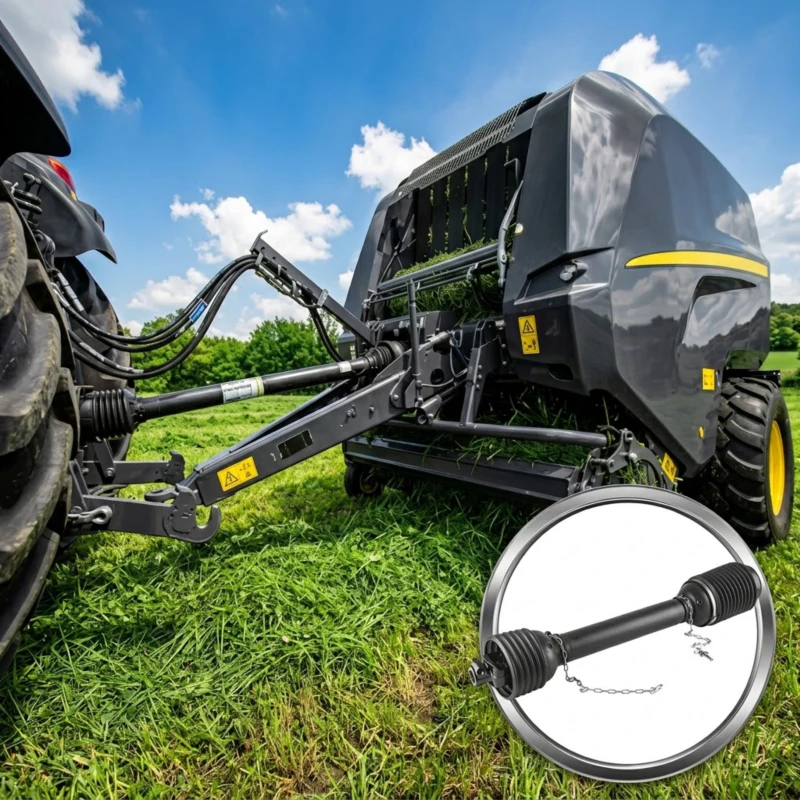
Function 1: Core Power Delivery
The driveshaft transmits the tractor engine’s rotational mechanical energy directly to the S9000 Classic’s gearbox. The internal gear, chain, and hydraulic system then distributes this power to the pickup, the compression drums, and the hydraulic control circuit. Any power loss in the driveshaft — from worn splines, mismatched specifications, or insufficient torque rating — reduces the energy available to the compression system and causes density variation that the sensor control system cannot fully compensate.
Function 2: Terrain and Steering Compensation
During field operation, the angular and distance relationship between the tractor PTO output and the baler input shaft changes continuously with ground undulation and turning. Three mechanical elements manage this: universal joints at both shaft ends allow smooth power transmission across changing angles, particularly important during uphill and downhill work and during tight headland turns; a telescoping spline in the shaft centre adjusts shaft length as the tractor-baler distance varies during turning; and safety clutch or shear-pin overload protection disconnects the drive instantaneously when the compression chamber encounters a sudden hard obstruction — protecting the gearbox, drums, and tractor PTO mechanism from impact damage.
Selection and Maintenance Guidelines
✔
✔
✔
✔
✔
9. Field Application Scenarios
The S9000 Classic’s combination of wide pickup, high throughput, and multi-material capability makes it effective across the full spectrum of commercial forage production contexts — from large state-owned farms in Northeast China processing tens of thousands of bales per season, to international hay export operations where consistent density and net wrap integrity are contractual requirements, to forage contractor services that must deliver uniform output across diverse crop types and farm conditions within compressed seasonal windows.
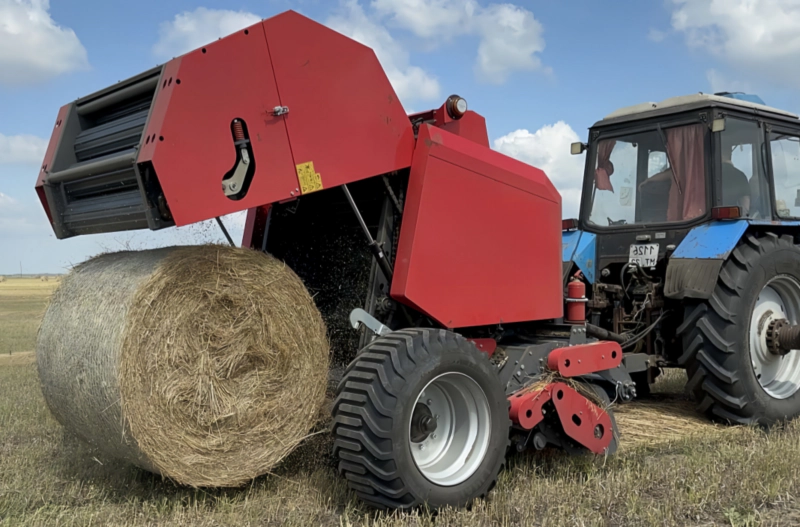
In large state-owned farms of Heilongjiang Province, single S9000 Classic units operating at sustained throughput rates regularly achieve over 15,000 bales per season with equipment availability rates exceeding 95% — a performance benchmark that reflects both the machine’s output capacity and its reliability under continuous commercial-intensity use. In 45°C operating conditions in New South Wales, Australia, the S9000 Classic has demonstrated stable continuous operation through full harvest seasons, with its wide-temperature-range hydraulic and electronic components maintaining performance where equipment designed for more moderate conditions fails. The machine’s reputation in these demanding environments has supported its adoption across major agricultural regions of Northeast China, North and Northwest China, Australia, and Russia.
For forage harvesting companies and silage producers evaluating their equipment requirements, the S9000 Classic represents a well-validated option that combines the scale economics of a wide-pickup, high-throughput design with the durability and low maintenance cost needed for sustainable commercial operation. Explore our complete range of round balers and hay harvesting equipment to compare the S9000 Classic against other models by pickup width, required power, and bale specification.
10. Frequently Asked Questions (FAQ)
Q1: What farm sizes and operations is the S9000 Classic best suited for?
The S9000 Classic is designed for medium to large-scale farms, forage harvesting companies, and silage producers. It is most economically suited to operations requiring sustained daily output of 400–1,200 bales, where the wide pickup width, high throughput, and sensor density control provide measurable cost and quality advantages over smaller or simpler machines. Its investment payback period of 1.5–2 operating seasons makes it viable for operations of varying financial scale.
Q2: How does the sensor density control system work during operation?
Pressure transducers in the compression chamber monitor bale-forming load continuously and feed data back to the hydraulic controller. The controller automatically adjusts compression force to maintain the operator-set target within the 100–200 kg/m³ range. When the target density is reached, the controller triggers the automatic net wrap cycle. This system maintains consistency across windrow weight variations, crop type changes, and working speed adjustments without requiring operator intervention during the baling cycle.
Q3: What is the difference between the S9000 Classic and the S9000 Beyond?
Both models share the 2240mm pickup width, 18-drum compression chamber, 720 r/min PTO input, and sensor-controlled density system. The primary structural difference is weight — the S9000 Classic weighs 4312 kg versus 4570 kg for the Beyond — reflecting different frame specifications and component configurations between the two variants. For detailed technical comparison between S9000 series models, contact our sales team who can provide side-by-side specification comparisons matched to your specific operation.
Q4: How demanding is routine maintenance on the S9000 Classic?
The modular design reduces daily maintenance time by approximately 40% compared to conventionally arranged balers of equivalent capability. Daily tasks include debris clearing and visual inspection. Lubrication intervals fall at every 50 operating hours. Filter changes and drum inspection occur at 200 hours. A full seasonal overhaul covers bearings, hydraulic oil, drums, and chains. The integrated intelligent diagnostic system assists in fault location, further reducing troubleshooting time when issues arise.
Q5: What is the optimal moisture range for material being baled?
For dry hay baling, optimal moisture is 12%–18% with a maximum of 25%. Above 25% moisture for dry hay requires speed reduction to maintain quality and protects equipment from accelerated wear. For silage baling, the S9000 Classic handles material at 45%–65% moisture effectively. For dedicated high-moisture silage, pair with a stretch-film wrapper and complete wrapping within four hours of baling.
Q6: Does the S9000 Classic meet international export certification requirements?
Yes. The S9000 Classic is manufactured under ISO 9001 quality management and ISO 14001 environmental management certifications, and meets EU CE emission standards. Noise is below 85 decibels and vibration complies with applicable ISO standards. These certifications support equipment import in European, Australian, and many other international markets, and provide independent quality verification for buyers globally.
Q7: What is the typical investment payback period?
Based on documented commercial operation data, the S9000 Classic typically achieves investment payback within 1.5–2 operating seasons under standard commercial conditions. The machine retains over 60% of initial purchase value in the used equipment market after three years of operation, which further improves the net cost of ownership across the equipment’s full service life.
Q8: How do I choose the right model for my specific operation?
Selection depends on your annual bale volume, primary crop types, tractor specifications, terrain conditions, and budget. If you are processing over 10,000 bales annually with mid-size tractors in the 85–100 kW range on mixed crop types including silage, the S9000 Classic is well-matched to your requirements. Contact our sales team with your operational details and we will provide a customized selection recommendation including model comparison and configuration options.
Equip Your Commercial Operation with the S9000 Classic
Get sensor-controlled bale density, 18-drum compression, 2240mm wide pickup, and a structure engineered for 3000+ working hours — all in a machine proven across commercial hay, silage, and straw operations on three continents. Investment payback in under two seasons.